
 E-Paper



SIR now in 12 states, UTs: Why 2003 is such a key year for voter revision, and how it affects you
There's a two-pronged reason for why 2003, or in some cases 2002 or 2004, is being considered a cut-off for the Special Intensive Revision (SIR) of voter rolls

 Prefer HTon Google


When the Election Commission of India announced the start of a wider recheck of all voter rolls in 12 states and UTs — calling it Phase 2 of Special Intensive Revision after Bihar earlier this year — the year 2003 became a central point for several reasons.
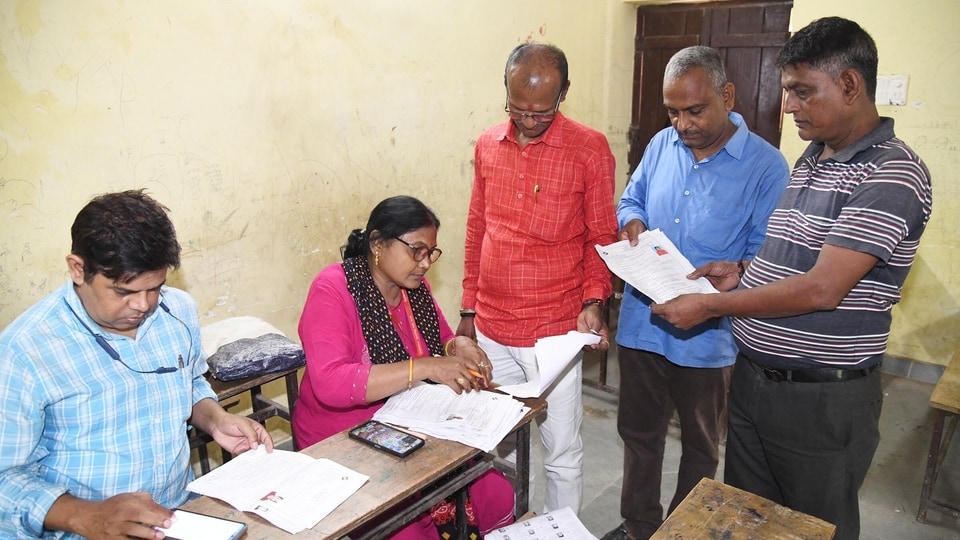
If your name is already on the old roll, mostly from 2003, and in some states' and UT's cases it's 2002 or 2004, then you need not prove anything else to stay on the rolls. Only the enumeration form would do in such cases. Chief Election Commissioner Gyanesh Kumar said this while explaining the process at a press conference in Delhi on Monday.
But what if it is not?
Before we get to what happens to those not on the older rolls, here's a list of the states and UTs where the SIR begins October 28:
- Andaman and Nicobar
2. Chhattisgarh
3. Goa
4. Gujarat
5. Kerala
6. Lakshadweep
7. Madhya Pradesh
8. Puducherry
9. Rajasthan
10. Tamil Nadu
11. Uttar Pradesh
12. West Bengal
What if you are not on the old rolls?
For those whose names are not on the 2002/03/04 voter rolls, the process is likely to be similar to that in Bihar, where the SIR was carried just ahead of polls scheduled for November. You can show your parents' names on the older lists, for instance, and prove your relationsip with them using an ID document.
If even that's not there, you will need to prove identity and residence using documents, for you to remain on the rolls even if you voted in the most recent election. A list has been shared by the EC, of proofs that will work. And this list is not exhaustive, which means the EC can add to it.
But why is 2003 such an important year?
There are two reasons why the year 2003 (or call it 2002-04 period) has been chosen.
One, that's when the last SIR was held in all states and UT, Gyanesh Kumar said. There have been revisions since but those are carried out the EC on its own, not necessarily requiring fresh proof-submission by people. So the EC is considering that as a cut-off.
Citizenship question
There is the other reason of citizenship too.
Since one of the stated goals of the SIR is to remove foreigners illegally present on current lists — and potentially find such illegal immigrants in general — the SIR also requires you to prove your citizenship.
As per the citizenship laws (as applicable to most of India, barring different dates for Assam), anyone born before July 1, 1987, is considered a citizen.
To be on a voter list, one has to be at least 18 years of age.
This means anyone on the the 2002/03/04 list would anyway have been born before 1987.
That takes care of the citizenship check if the 2003 lists are used as cut-off.
You can check for your name on the older lists by going to the chief electoral officer's website of your state or UT.
Why SIR is not that simple
The process, particularly the demand for specific documents initially excluding regular ones like Aadhar and ration cards, sparked a huge political row.
Opposition parties in Bihar and beyind have alleged the exercise is aimed at depriving people of their right to vote. The ruling BJP supported the exercise to be made pan-India.
The EC has maintained that the SIR's purpose is to ensure that the names of all eligible citizens feature in the electoral rolls and that no ineligible voter is included in it.


