
 E-Paper



Smriti Irani's school record not to be shared, Delhi HC quashes info panel order similar to Modi's case
The court said Smriti Irani's educational qualifications were not a statutory requirement for holding a public office or carrying out official responsibilities.

 Prefer HTon Google


The Delhi High Court on Monday set aside an order of the Central Information Commission (CIC) directing the Central Board of Secondary Education (CBSE) to provide copies of BJP leader Smriti Irani's records from Class 10 and 12.
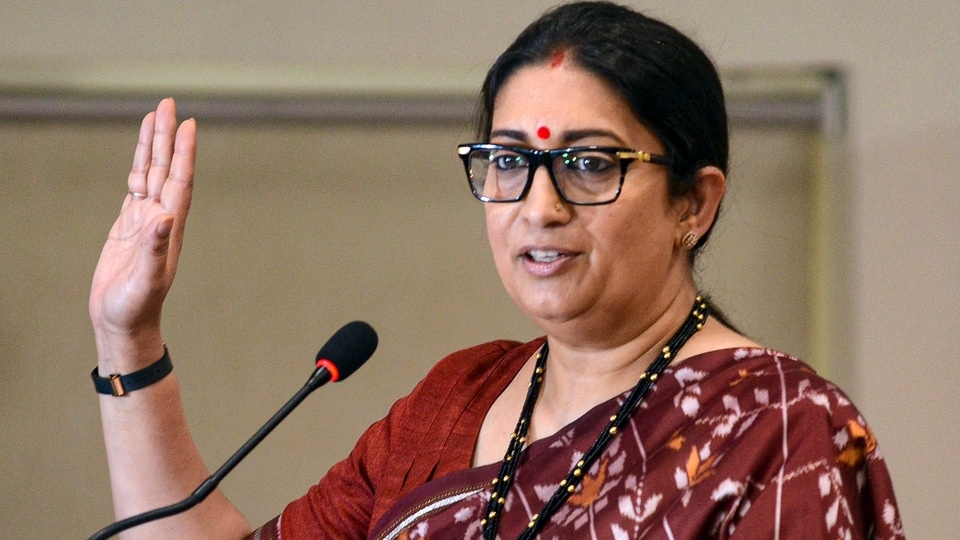
Justice Sachin Datta said that Smriti Irani's educational qualifications were not a statutory requirement for holding a public office or carrying out official responsibilities, news agency PTI reported.
The court allowed CBSE's petition challenging the CIC's January 2017 order which had directed the education board to "facilitate inspection of relevant records and provide certified copies of documents selected by the appellant free of cost, except personal details in admit card and mark sheet..."
The CIC orders were stated to be "de hors", that is, out of scope of the provisions of the Right to Information (RTI) Act.
The HC gave a similar verdict on the demand for PM Narendra Modi's university records to be made public. Justice Datta overruled the CIC's order in that case too.
‘No implicit public interest’
In Smriti Irani's case, Justice Datta found "no implicit public interest" with respect to the information sought by the RTI application.
"Again, the educational qualifications concerned are not in the nature of any statutory requirement for holding any public office or discharging official responsibilities," it said.
ALSO READ | Delhi HC sets aside CIC order to disclose information on PM Modi’s degree
The high court observed that public interest, under Section (8)(i) of the RTI Act, required an element of overriding necessity for disclosure to protect or promote a significant public cause.
"It needs to be emphasised that disclosure of academic details sans any overriding public interest, would amount to an intrusion into the personal sphere which is constitutionally protected… The fact that the information sought pertains to a public figure does not extinguish privacy/ confidentiality rights over personal data," it said.
Justice Datta said that what could "superficially" appear as an isolated disclosure could open "floodgates of indiscriminate demands, motivated by idle curiosity or sensationalism", instead of an objective for "public interest".
"The RTI Act was enacted to promote transparency in government functioning and not to provide fodder for sensationalism," the court said.
The court said that the CIC's directive to the private school to track down the roll number of the concerned public functionary and provide the same to the CBSE was "completely de-hors the provisions of the RTI Act".
A man named Mohd Naushadudin filed the RTI application and sought information from the CBSE, including "whether the (then) Union HRD Minister Smriti Irani has cleared the matriculation examination in the year 1991 and intermediate examination in the year 1993 from your Board?"
The plea said, "If yes, then I want Xerox copies of her class X and XII admit card (hall ticket) and mark-sheet."
However, the request was reportedly denied by the public information officer, following which the RTI applicant filed a first appeal before the First Appellate Authority of CBSE. The appellate upheld the PIO's decision.
The RTI applicant then filed a second appeal before the CIC, which then directed the CBSE to provide the requested information.
Earlier in the day, Justice Datta also decided the matter over Prime Minister Narendra Modi's degree in a 175-page judgment. The Delhi University had challenged the CIC's order asking it to disclose the details related to the PM's bachelor's degree.
The court set aside the CIC order in PM Modi's degree case and held it to be "personal information", ruling out any "implicit public interest" in the matter.


