E-Paper



Sonia Gandhi tells Delhi court plea on voter roll is baseless, politically driven
Sonia Gandhi tells Delhi court the plea challenging her voter enrolment is politically motivated and unsupported by documentary evidence

 Prefer HTon Google


New Delhi: Senior Congress leader Sonia Gandhi on Saturday informed a Delhi court that the complaint questioning her inclusion in the electoral roll was politically motivated and lacked documentary evidence to show any manipulation or forgery on her end.
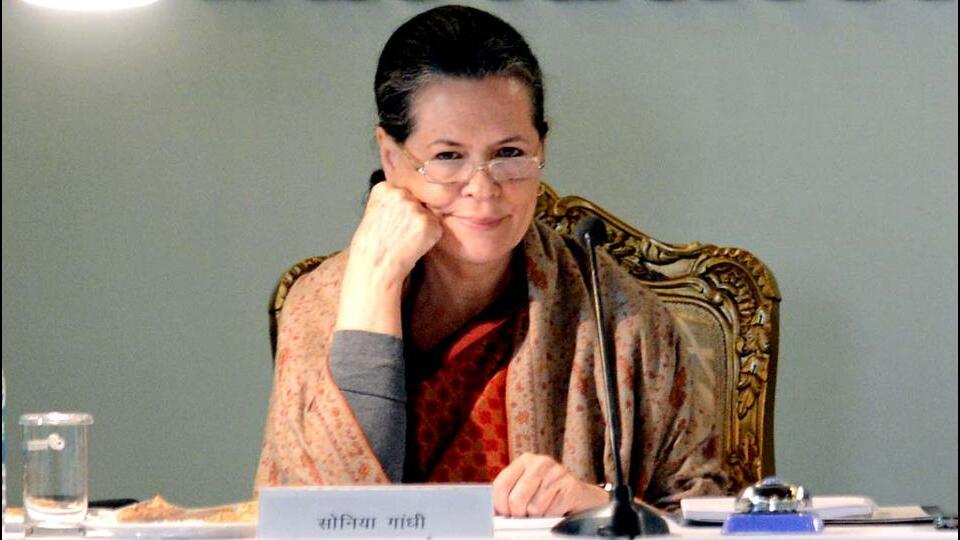
Gandhi, through advocates Tarannum Cheema and Kanishka Singh, filed a six-page response before Special Judge Vishal Gogne of Rouse Avenue Courts, who is presiding over a revision petition moved by one Vikas Tripathi, challenging an order passed on September 11 last year, wherein a magistrate dismissed his complaint after holding that the accusations against Gandhi lacked substance and abused the process of law.
While junking the plea, which sought directions for investigation, the magistrate pointed to the lack of any cogent evidence against the Congress leader that could prove she forged papers to enrol herself as a voter.
The court added that the issue went beyond its jurisdiction as it involved matters pertaining to the central government and the Election Commission of India (ECI).
Represented through senior advocate Pawan Narang and advocate Himanshu Sethi, Tripathi had filed a complaint claiming that while Sonia Gandhi took Indian citizenship on April 30, 1983, her name was enrolled as a voter in the electoral list three years earlier, in 1980.
The complaint alleged that Gandhi’s name was deleted in 1982 and re-entered again on January 1, 1983.
Advocate Narang had claimed that if the Congress leader had validly applied for Indian citizenship as per the country’s laws, then her name should not have been deleted from the electoral roll in 1982.
The complainant accused Gandhi of forgery was in her citizenship documents, which constituted a cognisable offence under the Bharatiya Nyay Sanhita and the Representation of the People Act, 1950.
During Saturday’s hearing, the court posted the matter for February 21, when oral arguments on the plea will proceed.
In her reply, Gandhi said that the revision plea was “wholly misconceived” and “politically motivated”, filed by the complainant to “abuse the process of law”.
She said that the magistrate’s court had rightly observed that matters of citizenship fell exclusively under the central government’s domain, while electoral roll disputes were the sole prerogative of the ECI.
“Criminal courts cannot usurp these functions by entertaining private complaints disguised under IPC/BNSS sections. This is barred by the doctrine of separation of powers and would violate Article 329 of the Constitution, which prohibits judicial interference in the electoral process,” the reply said.
Gandhi said that it was evident from the complaint that a controversy raised in the media more than 25 years ago was being recycled for the purpose of filing the present revision plea.
Referring to the complaint, the reply said, “…it is claimed that the answering respondent’s (Sonia Gandhi’s) application request in the year 1980 led to the inclusion of her name in the electoral roll. However, there is no mention of the date, other particulars, or contents of the application.”
Gandhi pointed out that the complainant claimed there was an outcry from the general public in 1982 resulting in her name being deleted from the electoral roll. “It is intriguing how, after 43 years of the so-called outcry of the general public/media, the complainant records a fact in a criminal complaint supposedly on his direct knowledge,” her response said.
Her counsel further said that the complainant’s assertion that Gandhi got her name re-entered in the electoral roll with a qualifying date of January 1, 1983, was incomprehensible and without any factual basis, as no documents were produced to show any alleged forgery or falsification.
They said that the complainant had relied on an “investigative report” in a national daily to discover the date on which Gandhi applied for Indian citizenship and was granted the same, without verifying the authenticity of the report.
Gandhi pointed out that it was the statutory function of the Election Commission to prepare the electoral roll in accordance with the Registration of Electors Rules, 1960, framed in tune with Article 324 of the Constitution of India.
“The Election Commission is required to prepare a correct electoral roll and keep it updated as per the law. It is misleading to suggest or presume that a person’s name is included in the roll because he or she applied for such inclusion by submitting Form 6 under the Registration of Electors Rules,” the reply read.