
 E-Paper



Monsoon rains cover country 6 days early
The southwest monsoon in India has covered the entire country six days ahead of schedule, according to the India Meteorological Department. This is only the third time in the past 24 years that the monsoon has covered the entire country in the first week of July. Rainfall activity is expected to pick up after 5 July, following a rain deficiency of 10% in June. The monsoon is critical for India's economy, as almost half of the farmed area and 47% of the population depend on agriculture.

 Prefer HTon Google


After a slow start to the season, the southwest monsoon on Sunday covered the entire country six days ahead of schedule, advancing into the remaining parts of Rajasthan, Punjab and Haryana, the India Meteorological Department (IMD) said.
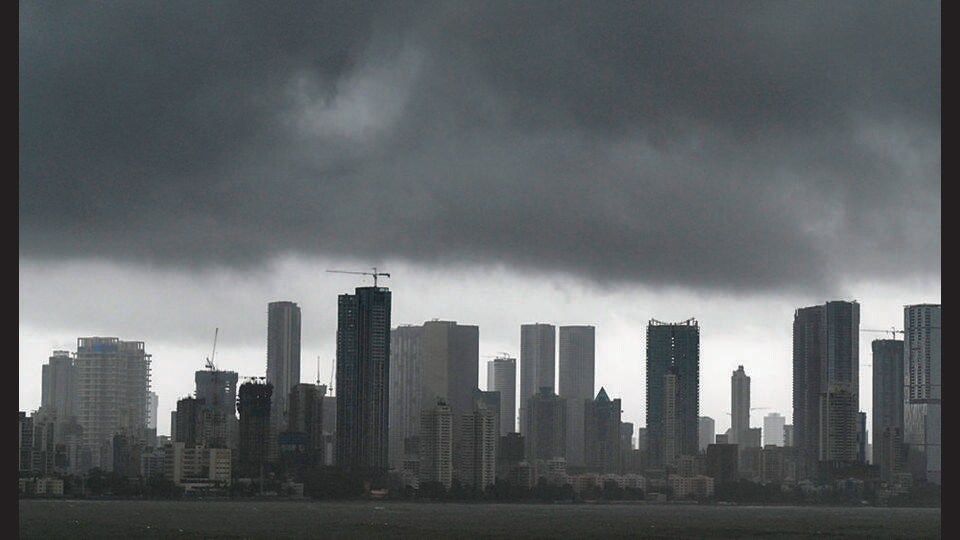
According to data from the Met department, this is only the third time that monsoon has covered the entire country in the first week of July in the last 24 years.
“The southwest monsoon has further advanced into remaining parts of Rajasthan, Haryana and Punjab today (Sunday). Thus, it has covered the entire country today, July 2, against the normal date of July 8 — six days before the normal date of covering the entire India,” IMD announced on Sunday.
Before this, monsoon covered all states on July 2 in 2001 and then again in 2022, and July 3 in 2001 and 2009, records maintained by IMD showed.
The earliest that monsoon covered the entire country was on June 16 in 2013.
Experts, meanwhile, said that rainfall activity is expected to pick up only after July 5.
“Rainfall activity over parts over most parts of northwest and central India is expected to be low in the coming days. After July 5, rains are expected to pick up again. In the coming weeks the monsoon activity over most parts of the country is looking promising,” Mahesh Palawat, vice-president (meteorology and climate change), Skymet Weather, said.
While June ended with a rain deficiency of 10%, IMD on Friday said rainfall was likely to be normal in July (between 94 to 106% of the long period average).
In June, 16 states received deficient rainfall, with Bihar and Kerala reporting large deficits at 69% and 60% below normal.
But, according to IMD forecast, the rain deficiency is likely to be covered in July which gets around 32% of the season’s rainfall. Based on data from 1971 to 2020, the LPA for July is 280.4mm.
Monsoon this year has careened off course from the outset.
Following a week-late onset over Kerala — on June 8 instead of June 1 — the progress of monsoon in the southern, and the western, belts remained slow. Between June 11 and June 23, Cyclone Biparjoy pulled moisture away, stalling the progress of Arabian Sea branch of monsoon over the western parts of the country.
The sluggish movement, in an El Nino year, raised concerns about the impact of the delayed progress of the country’s annual summer rain, which is the lifeblood for the country’s rain-fed farmlands, and in turn, a large part of the economy.
However, monsoon then covered almost the entire country by June 30 on a sprint, leaving only parts of Gujarat, Rajasthan and Punjab.
As monsoon finally set in on the national capital last weekend, it set another record by arriving in Delhi and Mumbai on the same date for the first time in 60 years.
The onset on June 25 was two days ahead of the June 27 schedule for Delhi, but nearly a fortnight late for Mumbai, where it was expected to arrive on June 11.
The southwest monsoon is critical for India’s economy as almost half of India’s farmed area accounting for about 40% of production is rain-fed. As many as 47% of the country’s population is dependent on agriculture for livelihood.


