
 E-Paper



Striking down marital rape exception could destabilise marriages: Centre tells Supreme Court
The Centre stressed the issue of marital rape is not solely a constitutional question, but a complex social issue.


The Union government has cautioned the Supreme Court against the "far-reaching socio-legal implications" of criminalising marital rape, urging the court to adopt a comprehensive approach that goes beyond a strictly legal framework. In an affidavit submitted to the apex court, the Centre contended that any judicial review on the issue should acknowledge the broader social consequences and the stance of Parliament.
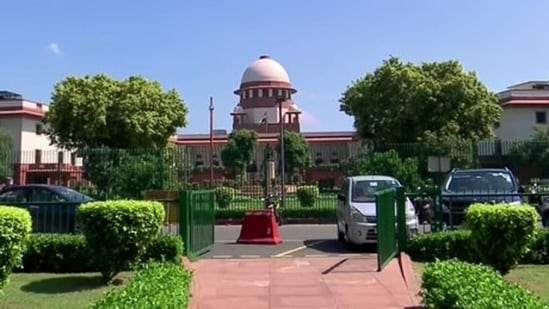
The affidavit was filed in response to a series of petitions challenging the constitutionality of the marital rape exception under Indian law, which exempts a husband from being prosecuted for rape if the wife is an adult. The provision, originally enshrined in Section 375 of the Indian Penal Code (IPC), was retained in its successor legislation, the Bharatiya Nyaya Sanhita (BNS), enacted earlier this year.
Also Read | SC to decide on marital rape law despite Centre’s silence
In its submission, the Centre stressed the issue of marital rape is not solely a constitutional question, but a complex social issue.
"While exercising judicial review on such subjects, it is to be appreciated that the present question is not only a constitutional question, but essentially a social question on which the Parliament, after being apprised and being aware of all sides of the opinion on the present issue, has taken a position," the affidavit stated.
Also Read | ‘Consent immaterial’: Madhya Pradesh HC says unnatural sex with wife not rape
The government pointed out that during the 2013 amendments to the IPC, Parliament had carefully considered the issue and opted to retain the marital rape exception. The Centre argued that any move to strike down the exception would have a profound impact on the institution of marriage in India.
The affidavit warned that criminalising marital rape could disrupt conjugal relationships and destabilise marriages.
It also expressed concern that, given the evolving nature of social and family structures, the amended provisions could be misused.
"In the fast-growing and ever-changing social and family structure, misuse of the amended provisions can also not be ruled out, as it would be difficult and challenging for a person to prove whether consent was there or not," the affidavit added.
Also Read | Marital rape grave offence, illegal in many countries: Gujarat high court
Under the now-repealed IPC, Section 375 exempted a man from being charged with rape if the victim was his wife and she was not a minor. The BNS, which came into effect in July 2023, retains this exemption, now under Section 63. The provision has faced legal challenges from several petitioners who argue that it discriminates against married women by denying them legal protection against sexual assault by their husbands.
In January 2023, the Supreme Court sought the Centre's response to a series of petitions that questioned the legality of the marital rape exception. The court issued a similar notice in May 2023 on pleas challenging the provisions in the newly enacted BNS.
One of the petitions before the Supreme Court stems from a split verdict delivered by the Delhi High Court in May 2022, where two judges differed on the constitutionality of the marital rape exception.
Justice Rajiv Shakdher had argued that the marital rape exception was unconstitutional, stating that it was time for the court to hear the "call for justice" from married women who have endured sexual violence. In contrast, Justice C Hari Shankar upheld the validity of the exception, suggesting that it was based on "intelligible differentia" – a legal principle used to distinguish between groups for legitimate purposes.
Another plea involves a man challenging a Karnataka high vourt ruling, which allowed his prosecution for allegedly raping his wife. In March 2022, the Karnataka high court had ruled that exempting husbands from prosecution for rape was contrary to Article 14 of the Constitution, which guarantees equality before the law.
With inputs from agencies


