
 E-Paper



Supreme Court to hear pleas challenging the abrogation of Article 370 today. 10 points
Centre defended its stance on abrogating the Article and said the region witnessed an ‘unprecedented era of peace, progress and prosperity’ after the changes.

 Prefer HTon Google


The Supreme Court will hear a slew of petitions on Tuesday challenging the Centre's decision to dissolve Article 370 – a provision in the Indian Constitution that provided a special status to Jammu and Kashmir – and bifurcate the erstwhile state into two Union territories.
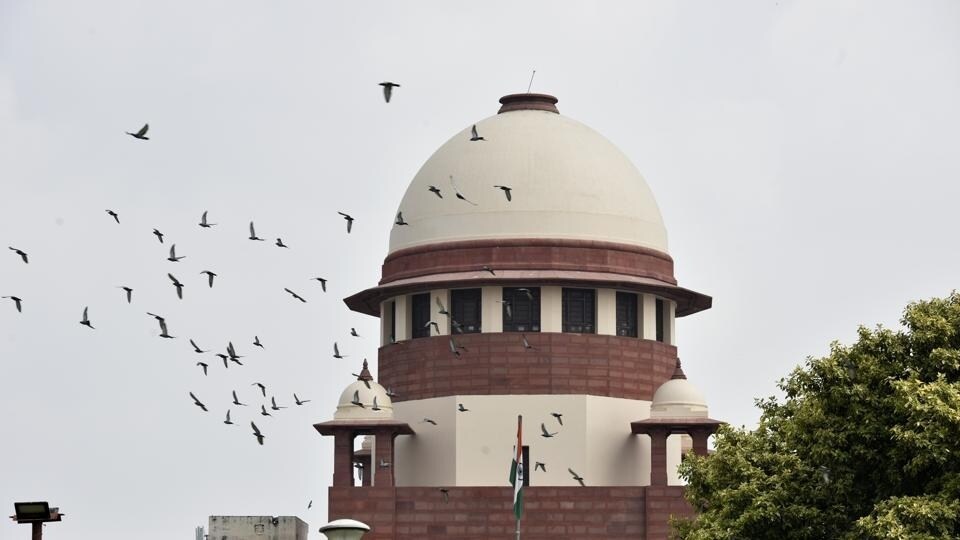
Defending its decision on the abrogation of the Article, the central government on Monday told the apex court in an affidavit that post the changes, the region witnessed an ‘unprecedented era of peace, progress and prosperity’.
Also read: Valley leaders welcome SC decision to begin hearing on Article 370 pleas from July 11
"The earlier practice of strikes and bandhs is a thing of the past. Participation in sporting activities is phenomenal having reached 60 lakhs in 2022-23. These facts clearly prove the positive impact of the constitutional changes effected in 2019," it said.
- A five-judge Constitution bench headed by Chief Justice of India (CJI) DY Chandradchud is scheduled to hear the case. It will take care of the preliminaries issuing directions over document and written submission filing.
- Other judges of the bench are Justices Sanjay Kishan Kaul, Sanjiv Khanna, BR Gavai and Surya Kant.
- The apex court will hear petitions filed by IAS officer Shah Faesal, Javid Ahmad Bhat, Shehla Rashid Shora, Ilyas Laway, Saif Ali Khan and Rohit Sharma and Mohammad Hussain Padder.
- The petitioners argued the constitutionality of abrogating the special status through the Presidential proclamation during President's rule.
- The Presidential rule was imposed as the state assembly was not functioning long after BJP pulled out from the Mehbooba Mufti-led ruling alliance.
- The top court is expected to examine whether the legislature could have scrapped the Article without the consent of citizens in Jammu and Kashmir.
- In 2020, the case was heard by a different five-judge bench and it refused to refer the matter to a larger bench.
- The Centre pointed out in the affidavit that incidents of 52 organised bandh/hartal were seen in 2018, which came down to zero in 2023.
- After the bifurcation, UTs of Jammu and Kashmir and Ladakh have witnessed profound ameliorative, affirmative and progressive changes in the last four years encompassing its entire governance - including the developmental activities, public administration and security matters which has positively impacted every resident irrespective of caste, creed or religion, the central government said.
- The abrogation of Article 370 was announced on August 5, 2019 and the government passed the Jammu and Kashmir Reorganisation Act to split the erstwhile state into two UTs.


