
 E-Paper



SC can’t direct high court in administrative matters: Attorney General Venugopal
“The question to be decided here is whether passing these orders lies within this court’s power. My answer is it is not, as it lies within the jurisdiction of the high court on the administrative side. This question of jurisdiction has to be first decided or else these kinds of orders will have far reaching consequences,” Attorney General (AG) KK Venugopal said.


An order passed by the Supreme Court two months ago asking the Allahabad high court to take corrective steps for the expeditious disposal of commercial cases led to a war of words on Tuesday, with Attorney General (AG) KK Venugopal submitting on behalf of the high court that the apex court had no jurisdiction to pass such orders.
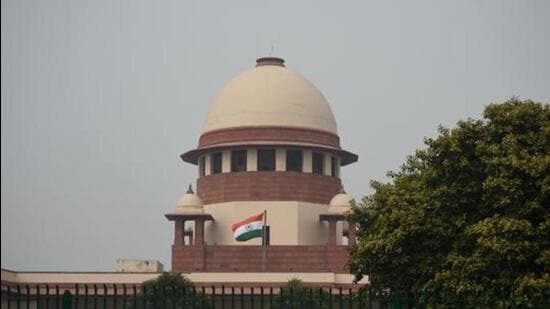
“The question to be decided here is whether passing these orders lies within this court’s power. My answer is it is not, as it lies within the jurisdiction of the high court on the administrative side. This question of jurisdiction has to be first decided or else these kinds of orders will have far reaching consequences,” the country’s top law officer said.
Venugopal referred to the top court’s order passed on May 19, when it asked the high court to constitute a Special Arrears Committee comprising judges of even the Lucknow bench to monitor the progress in disposing petitions filed under the Arbitration Act for the execution of arbitral awards and decrees.
Reacting to Venugopal’s submission, the bench of justices MR Shah and BV Nagarathna said, “You only say that for ease of doing business and speedy disposal of commercial disputes, the judiciary should not fail the economy. Our order was meant to be a nudge to the high court. It was not meant to be adversarial. The high court should not treat it as a prestige issue.”
The status report submitted by the Allahabad high court in the top court revealed that 43,521 execution petitions were pending in the state, of which 30,154 petitions were pending before regular (district) courts and 13,367 before commercial courts.
Even for cases under Section 34 of the Arbitration Act dealing with setting aside of arbitration decrees, it was disclosed that, as on March 31, 2022, there were 11,645 cases pending, of which 10,436 were before non-commercial courts and 1,209 before commercial courts.
The top court got into these numbers while it was examining a petition filed by Chopra Fabricators & Manufacturers, which got an arbitration award against a public sector undertaking in 1992 but an execution petition filed by it in 2003 was still pending. Calling this a “glaring example of frustrating the arbitration proceedings”, which is meant to be a short-cut to end long winding civil disputes, the top court on April 1 sought for a report from the Allahabad high court on the pendency position of execution petitions and Section 34 applications (to set aside the arbitration decree) across district and commercial courts in the state.
Responding to the submissions by AG, the bench said, “The question to be asked is whether the Supreme Court can direct the high court when the high court has failed to perform its duty on the administrative side.”
Referring to orders passed in the past asking high courts to take corrective measures to pursue setting up more courts and formation of Arrears Committee, it added, “In our earlier order, we emphasised on early disposal of commercial matters which ultimately will help the economic growth and ease of doing business. High court ought not to have taken it as an ego issue. Before this Court intervened, no serious effort was made by the high court to see that commercial cases are disposed at the earliest.”
However, the Court noted the submission. “AG Venugopal has emphatically argued that this court has no jurisdiction to issue directions on the administrative side of the high court. The larger issue will be considered later,”the bench, said, posting the matter after four weeks. Till then, it requested the high court to submit a further status report on the progress achieved in disposing commercial matters in the state.
To be sure, some progress was achieved since the Supreme Court’s previous order as the high court said in its latest status report filed last week that, till July 4, over 9,000 pending executions petitions were disposed of in the state.


