
 E-Paper



SC refuses to commute Babbar Khalsa terrorist Rajoana’s death sentence
The Supreme Court left it for the Union government to consider his mercy plea in connection with former Punjab chief minister Beant Singh’s assassination in 1995

 Prefer HTon Google


The Supreme Court on Wednesday declined to commute Babbar Khalsa terrorist Balwant Singh Rajoana’s death sentence to life imprisonment, leaving it for the Union government to consider his mercy plea in connection with former Punjab chief minister Beant Singh’s assassination in 1995.
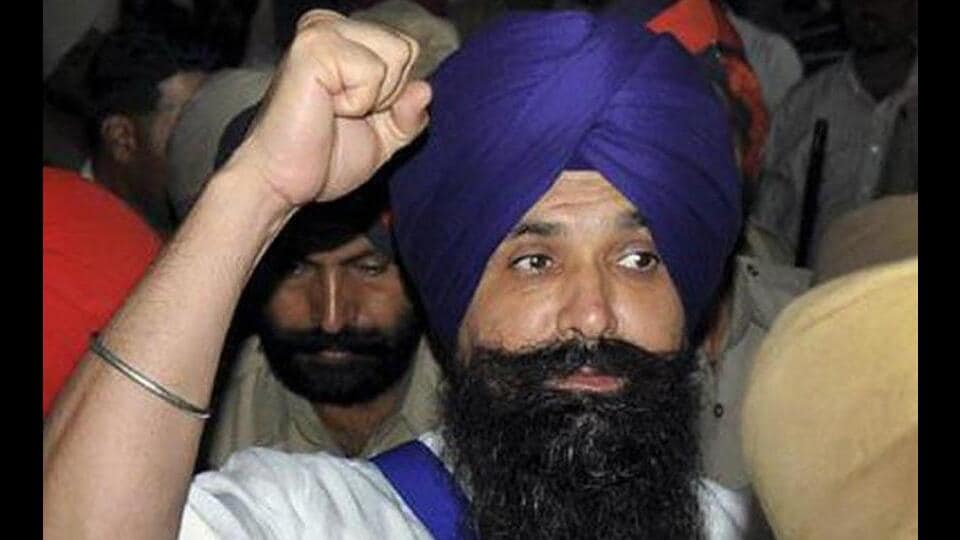
A bench led by Justice BR Gavai noted that the delay by the ministry of home affairs (MHA) in deciding Rajoana’s mercy plea can be construed as its disinclination to commute his sentence.
The bench, which included justices Vikram Nath and Sanjay Karol, held the MHA could consider the request again at an appropriate time.
The Supreme Court on March 2 reserved its verdict on a petition filed by Rajoana in 2020 for commuting his punishment in view of a communication issued by the MHA in September 2019 to Punjab for commuting his death sentence to a life term coinciding with the 550th birth anniversary of Guru Nanak Dev.
Rajoana, a former Punjab Police constable, was convicted for his involvement in an explosion outside the Punjab civil secretariat that killed Beant Singh and 16 others in 1995.
A special court in July 2007 awarded the death sentence to Rajoana, along with another terrorist Jagtar Singh Hawara, in the assassination case. Rajoana was the second human bomb in case the first one would have failed in killing the Congress leader. Rajoana was scheduled to be hanged on March 31, 2012.
The execution was stayed on March 28, 2012, by the then Congress-led government at the Centre after the Shiromani Gurdwara Parbandhak Committee (SGPC), a Sikh religious body, filed a mercy petition with the President. The Shiromani Akali Dal, which was then in power in Punjab, also campaigned against his execution.
The President at that time forwarded the mercy plea to the MHA. Since then, the petition has been pending.
During hearings before the top court, the bench questioned the delay in a decision on Rajoana’s mercy plea one way or the other.
But the Union government and the Central Bureau of Investigation, which investigated the 1995 assassination case, opposed Rajoana’s plea on the grounds that he never filed any mercy plea himself and that such representations only came from organisations such as the SGPC
It added that the President is the final authority in the matter, arguing that the September 2019 decision by MHA will not confer any right on the petitioner since it was not a final decision.
The Union government added any decision on his clemency must await the outcome of the appeal filed by co-accused Hawara pending before the Supreme Court.
Representing Rajoana, senior counsel Mukul Rohatgi, emphasised his client was entitled to commutation in light of the 2019 communication and because he has been on death row for 15 years and incarcerated for 26 years.
He cited the case of another terror case convict Devinder Pal Singh Bhullar, whose life term was commuted by the Supreme Court in 2014 over an inordinate delay by the government in deciding his mercy plea.



