
 E-Paper



HT archives: ‘Quit India’ begins, British crack down with tear gas squibs, lathis, arrests
Yet, the crackdown failed to dampen the spirit of the movement, instead inspiring a new generation of young leaders.

 Prefer HTon Google


By the summer of 1942, India’s patience with its colonial masters appeared to have run its course. Lord Linlithgow had plunged India into World War II without consulting Indian political representatives or provincial ministries, triggering tremendous unrest and the en-masse resignation of Congress-ruled provincial governments.
Successive debacles by Allied Powers in East Asia had brought Japanese troops to the gates of erstwhile Burma, British promises of eventual self-governance had repeatedly dissolved into stonewalling, and the failure of Sir Stafford Cripps – who only offered dominion status after the war, expressly ruled out independence, and refused to commit to a clear timeline – had frustrated even the moderates within the Congress and convinced its leadership that further negotiation with London or the viceroy was futile.
Against this backdrop, the mood in the Congress was hardening. It was clear that drastic action was the only recourse for the nationalist movement. On August 8, 1942, the All India Congress Committee met in erstwhile Bombay and passed the Quit India resolution, demanding immediate British withdrawal from the country. That evening, Mahatma Gandhi delivered his memorable call, “Do or Die.”
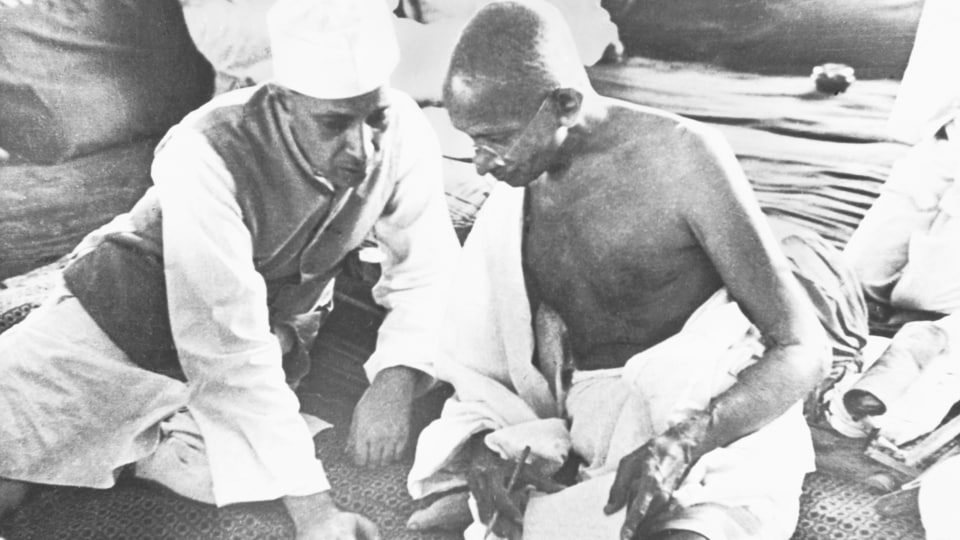
The British response was immediate. Within hours, the entire Congress leadership — including Gandhi, Jawaharlal Nehru and Sardar Vallabhbhai Patel — was arrested, and the party banned. “The police in Bombay opened fire about a dozen times in different localities on August 9, 1942. Five persons have been killed and twenty others received bullet wounds, while thirty-five more, including police, received injuries resulting from stone-throwing. The demonstrations marked the start of the “Quit India” movement against British rule, launched after the Congress resolution adopted in Bombay on August 8,” this newspaper reported on August 10, 1942.
The repression was not limited to Maharashtra but quickly spread across the country even as the second-rung leadership of the Congress – people like Ram Manohar Lohia, Jayaprakash Narayan, and Sucheta Kripalani — took over coordination and running the movement. Hundreds of strikes and hartals, walkouts and mass demonstrations crippled major cities.
“Curfew has been enforced in Bombay…In the city, 149 persons, including Mrs. Kasturba Gandhi and Mr. Pyarelal, have been arrested so far, while elsewhere in the country Dr. Rajendra Prasad and Mr. Vinoba Bhave were also taken into custody. The police had to resort to firing in Poona and Ahmedabad also. In Poona, one man was killed and another seriously injured when the police opened fire near the Congress House, and in Ahmedabad the military was called out to deal with the crowd which had gathered on Gandhi Road, where one man was killed and another injured as the result of firing,” HT reported.
Yet, despite the absence of front-tier leadership, ordinary people rose to the occasion, fighting against the colonial police force and often deploying novel agitation tactics. One such instance unfolded at the famous Shivaji Park.
“Police parties and large crowds were engaged in outwitting each other for over four and a half hours at Shivaji Park on August 9, where originally it was announced that Mahatma Gandhi would address a public meeting that evening. Despite his arrest thousands of people streamed into the park, where a posse of armed police, tear gas squads and some lathi police were stationed to prevent the holding of any public meeting. The park was too big to be cleared of the crowds that repeatedly dodged the police, and frequent use of tear gas squibs did not result in their complete dispersal. With buckets of water and sand the dispersed crowds re-entered the park and smothered the tear gas squibs that were thrown on them. There were a few minor clashes between the police and sections of the crowd that kept on shouting Congress slogans, and the police, it is stated, fired a few shots, one person being removed to hospital with a bullet wound. At about 8.30 p.m. the crowd had completely left the park and the police also withdrew,” HT reported.
Yet, the crackdown failed to dampen the spirit of the movement, instead inspiring a new generation of young leaders. In the absence of central leadership, resistance turned local. Students walked out of colleges. Workers struck in mills and factories. Protestors blocked railway lines, cut telegraph wires, and torched police stations and government offices.
By the time Gandhi was released one May morning in 1944, the tide had turned, both globally and nationally. The Allied Powers had their boots on the neck of the Axis Powers. And in India, the question was no longer whether the British would leave India, but when.


