
 E-Paper



Supreme Court to review Delhi’s old vehicle ban today: What's the policy and why was it paused?
The Delhi government's plea seeks a comprehensive study by the Centre and CAQM to assess the actual environmental benefits of age-based restrictions.

 Prefer HTon Google


The Supreme Court will review the controversial ban on older petrol and diesel vehicles in the National Capital Region (NCR) on Monday. The hearing follows a plea by the Delhi government, challenging the blanket ban on diesel vehicles older than 10 years and petrol vehicles older than 15 years, arguing the restrictions lack scientific backing.
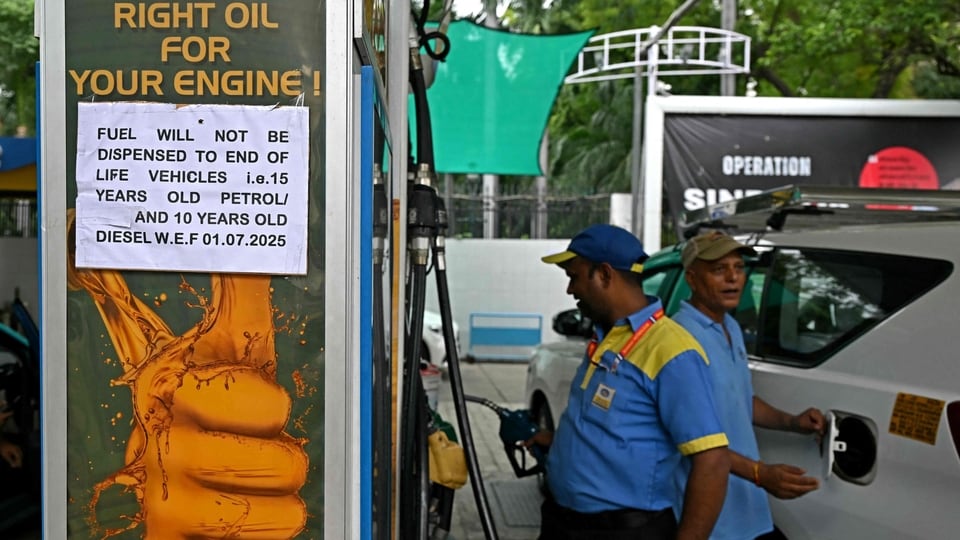
A bench led by Chief Justice of India BR Gavai and Justice K Vinod Chandran will take up the matter. One of the most pertinent questions to be answered from the hearing is whether Bharat Stage VI (BS-VI) compliant vehicles should still face arbitrary end-of-life restrictions based solely on age.
The Delhi government's plea seeks a comprehensive study by the Centre and CAQM to assess the actual environmental benefits of age-based restrictions versus emission-based criteria.
What's the ban?
The current ban traces back to a 2015 order by the National Green Tribunal (NGT), which prohibited diesel vehicles older than 10 years and Petrol vehicles older than 15 years.
"The vehicles which are more than 15 years old will not be permitted to be parked in any public area, and they shall be towed away and challenged by the police in accordance with the law. This direction would be applicable to all vehicles without exception, i.e. two wheelers, three wheelers, four wheelers, light vehicles and heavy vehicles, irrespective of whether commercial or otherwise," the NGT said in its November 26, 2014, order.
The Supreme Court upheld this ruling in 2018, citing alarming air pollution levels in Delhi-NCR and a need to protect public health. In line with this, the Commission for Air Quality Management (CAQM) directed that fuel stations stop supplying petrol and diesel to these "end-of-life" vehicles from July 1, 2025.
Why was the policy paused?
The Delhi government, under chief minister Rekha Gupta, rolled out the 'No fuel for old vehicles' policy on July 1, 2025, but it was paused within two days after facing public backlash.
The government then cited logistical hurdles and infrastructure gaps, especially in identifying and enforcing the ban effectively.
Delhi environment minister Manjinder Singh Sirsa said last week that pollution levels of vehicles should be determined based on their usage rather than their age, ahead of the Supreme Court hearing on the End-of-Life (EoL) vehicle policy.
"There are many vehicles that have aged, but because they haven't been used much, their pollution levels are lower. There are so many new vehicles whose age is less but have been used a lot; so we believe that the parameter to determine pollution levels must be the use of the vehicle instead of its age," Sirsa told news agency ANI.


