
 E-Paper



Supreme Court holds abrogation of Article 370 ‘valid’: Key takeaways
The apex court also upheld the validity of the decision to carve out the union territory of Ladakh from Jammu and Kashmir
Published on: Dec 11, 2023, 13:33:10 IST

 Prefer HTon Google
Share via


Copy link

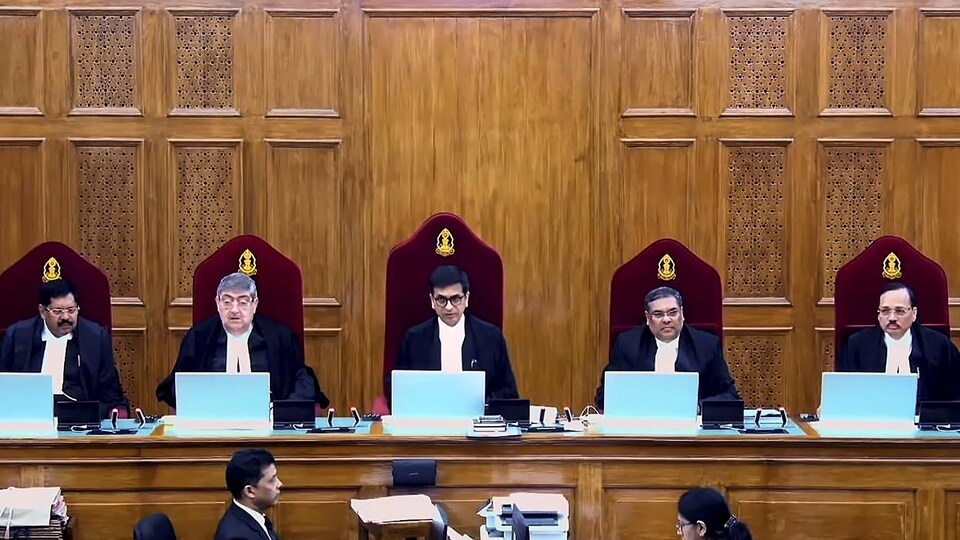
The Supreme Court on Monday, in a landmark judgment, upheld the central government's decision to abrogate Article 370 of the Constitution in 2019. The five-judge bench headed by Chief Justice of India (CJI) DY Chandrachud also directed to restore the statehood to the Union territory of Jammu and Kashmir at the earlier as well as the Election Commission of India (ECI) to conduct legislative elections by September 30, 2024.
Follow Live updates on Supreme Court's verdict
The apex court also upheld the validity of the decision to carve out the union territory of Ladakh from Jammu and Kashmir on August 5, 2019.
Here are the key takeaways from the SC's verdict:
- CJI Chandrachud held that every decision taken by the central government on behalf of states cannot be subjected to legal challenge and may bring the state's administration to a standstill.
- The court also said the President of India had the power to abrogate Article 370 without a prerequisite for a recommendation by the Jammu and Kashmir assembly.
- It was also ruled that the principle of consultation (with stakeholders) was not required to be followed during the exercise of presidential power.
- The CJI also said that Article 370 was an interim arrangement due to the war conditions in the erstwhile state.
- "The proclamation of Maharaja stated that the Constitution of India will supersede. With this, the para of Instrument of Accession ceases to exist...Article 370 was an interim arrangement due to war conditions in the State. Textual reading also indicates that Article 370 is a temporary provision," the court observed.
- Prime Minister Modi on Monday termed the Supreme Court verdict on the abrogation of Article 370 as “historic”. Modi said the verdict is a “resounding declaration of hope, progress, unity for our sisters and brothers in J&K, Ladakh”.
- Members of the Gupkar alliance including PDP chief Mehbooba Mufti and NC vice-president Omar Abdullah claimed they were put in house arrest before the SC verdict was set to pronounce.
- However, Lieutenant Governor Manoj Sinha had dismissed the claims by terming them “baseless”. The Srinagar Police also clarified, “No person has been put under house arrest.”
(With inputs from agencies)


