E-Paper



Supreme Court puts Hyatt hotel’s valuation under scrutiny: 'This money belongs to people'
The court issued notice to the Union government, Punjab National Bank, Bank of Maharashtra and Asian Hotels (North) Pvt Ltd, seeking their responses.

 Prefer HTon Google


The Supreme Court on Wednesday put under scrutiny the valuation of Delhi’s Hyatt Regency Hotel in one-time settlement (OTS) deals between Asian Hotels (North) Pvt Ltd and two public sector banks, observing that it must be satisfied that the settlement was arrived at in a “clean and transparent manner” since public money was involved.
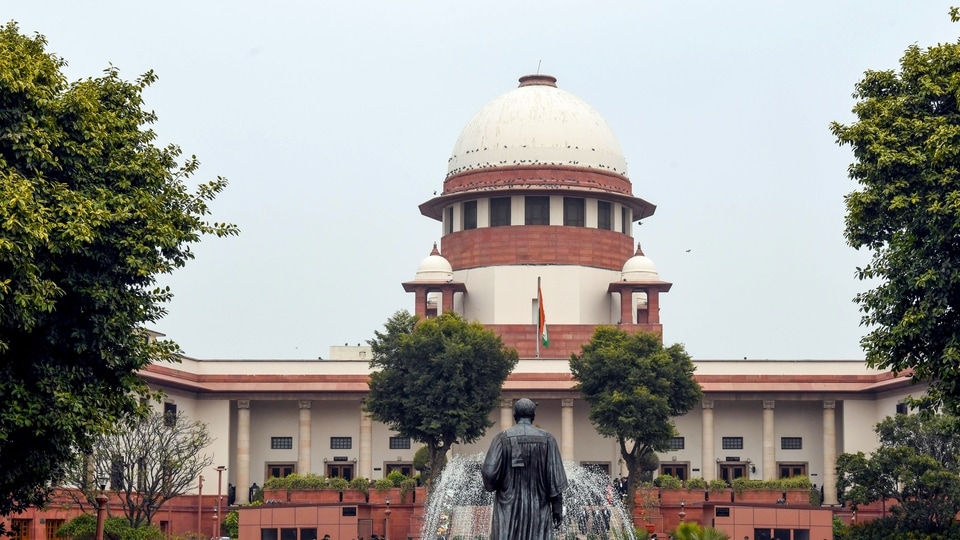
“This money belongs to the people of the country…We understand the issue of commercial wisdom in such matters, but we have to see whether this commercial wisdom is in the interest of the people of the country or someone else,” a bench comprising Chief Justice of India Surya Kant and justices Joymalya Bagchi and Vipul M Pancholi said while hearing a plea filed by NGO Infrastructure Watchdog.
The court issued notice to the Union government, Punjab National Bank (PNB), Bank of Maharashtra (BoM) and Asian Hotels (North) Pvt Ltd, which owns the Hyatt Regency in Delhi, seeking their responses.
Also read: Ajit Doval told Marco Rubio India 'won't be bullied, will wait out Trump's term': Report
The bench was hearing a challenge to a November 3, 2025 Delhi high court judgment that had dismissed a public interest litigation seeking a CBI and CVC probe into the OTS deals entered into by the two public sector banks with Asian Hotels.
During the hearing, advocate Prashant Bhushan, appearing for the petitioner, argued that the banks had bypassed the mandatory auction route despite the stressed loans exceeding ₹100 crore. “There was no auction. The agreement was that we will enter into a one-time settlement,” Bhushan, assisted by advocate Pranav Sachdeva, told the court.
Responding on behalf of the Centre, additional solicitor general N Venkataraman submitted that the outstanding amount had been reduced from ₹242 crore to ₹226 crore and that the banks had recovered ₹114 crore, pointing to the impact of the Covid-19 pandemic on the hospitality sector.
Senior advocate Mukul Rohatgi, appearing for Asian Hotels, said the hotel had been declared a non-performing asset (NPA) and had no room bookings during the pandemic, making repayment impossible then.
The bench, however, questioned the timing and valuation of the settlement. “We can understand if this amount was recovered in 2020 or 2021, but this settlement took place in 2025, when Covid was long over and the hotel business was flourishing,” the court observed, adding if assets were valued higher after being declared NPAs, “people will go and auction”.
When the Centre submitted that auction attempts had failed twice, the bench asked the Centre and banks to place records of the auction process on file. “Please produce the records of the auctioning,” the court said.
Emphasising that judicial restraint does not mean abdication where public funds are involved, the bench said that while courts ordinarily do not interfere in commercial decisions, “commercial wisdom is for benefiting the public”.
The court also noted the petitioner’s contention that the hotel property was allegedly undervalued despite the hospitality sector’s recovery by 2025. “Who is going to the street to see whether this hotel is valued at ₹300-400 crore?” the bench remarked.
Infrastructure Watchdog appealed in the top court, arguing that the OTS was finalised in violation of Reserve Bank of India guidelines mandating auction of stressed assets above ₹100 crore, and that valuations of the Hyatt property were drastically slashed from over ₹2,600 crore in 2021 to about ₹970 crore in 2024, despite rising real estate prices in Delhi-NCR.