
 E-Paper



Gyanvapi ASI survey gets apex court’s nod
Representing ASI and the Uttar Pradesh govt, solicitor general Tushar Mehta assured the bench that they will abide by the undertaking given before the HC.

 Prefer HTon Google


The Supreme Court on Friday refused to halt a controversial survey of the Gyanvapi Masjid premises by the Archaeological Survey of India (ASI) to determine if the 17th century structure was built upon a pre-existing temple, observing that it cannot find fault with the Varanasi district court’s order of July 21, nor would it interfere with every interlocutory direction passed in the case.
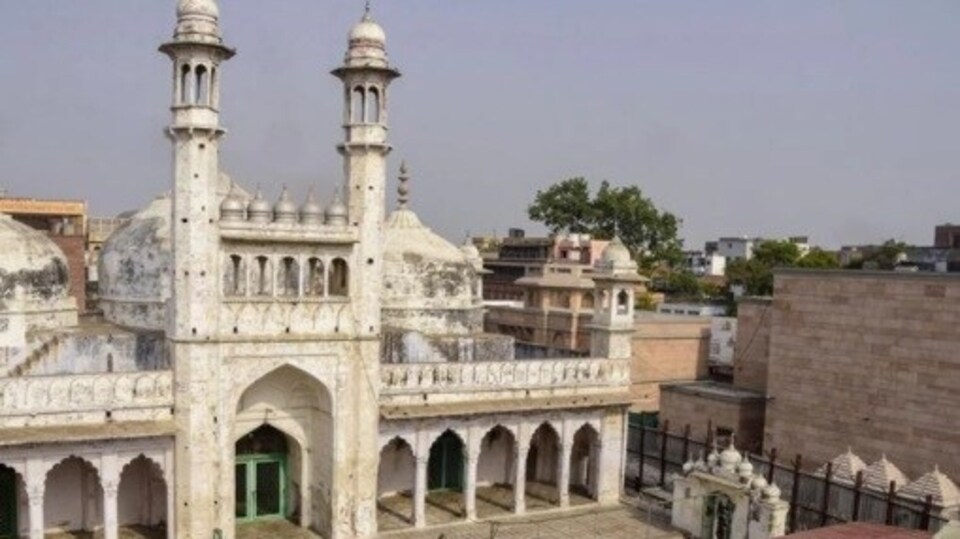
“It’s basically an interlocutory order. Why does every matter have to be taken to the level of a great debate? Normally, does the Supreme Court interfere in such a matter? We must treat it like any other suit...We will keep all your objections open but why should we interfere at this stage?” a bench headed by Chief Justice of India (CJI) Dhananjaya Y Chandrachud asked the mosque management committee.
The order came hours after a 40-member team of ASI began the scientific survey at the Gyanvapi premises in Varanasi around 8am, a day after the Allahabad high court upheld the district court order and said a survey would help the cause of justice and both sides.
In the apex court, the Anjuman Intezamia Masjid Committee, which manages the 17th-century mosque, pressed for a stay on the survey on the grounds that it will “unravel the wounds of the past” and that such an order was untenable in a “frivolous” suit.
But the bench disagreed. “What is frivolous to you, is faith to the other side. How do we say this is frivolous at this stage? We cannot lose sight of the fact that there are two courts below that have declined you the relief,” it said.
The bench, which also comprised justices JB Pardiwala and Manoj Misra, pointed out that there were adequate safeguards already put in place by the high court to ensure the structure is not harmed during the survey.
On mosque committee counsel Huzefa Ahmadi’s arguments that the 1991 Places of Worship Act prohibits any scientific investigation of the kind ordered by the Varanasi court and affirmed by the high court on Thursday, the bench said that it cannot be expected to decide the entirety of the suit at a stage when the mosque management committee has come up against an interlocutory order. The act locks the religious nature of a place of worship as it existed on August 15, 1947, with the exception of the Ram Janmabhoomi-Babri Masjid suit, and bars any court from entertaining a matter that seeks to alter the religious nature of that place.
“You never go into an issue that’s at the root of the suit when you hear an interlocutory or a procedural order... And here, the whole question is what the religious character of that place is. That’s a matter for a judgement. We cannot decide it today,” the bench told Ahmadi. It further observed that the survey could go either way.
In its order, the court held that the order of the Varanasi district judge cannot be construed to be without jurisdiction since the Civil Procedure Code empowers a court to issue a commission for a scientific investigation, the report of which is subject to be argued and tested at the time of the trial.
“The high court has found no reason to interfere, having set out the legal position while dealing with an interlocutory order of this nature. The high court has also introduced certain safeguards. Having regard to nature and ambit of court appointed commission, we are unable to differ with the high court. The limitation which governs the high court must govern this court as well,” the order stated, affirming the legality of the orders on survey.
At the same time, the bench noted that the high court was correct in introducing some additional safeguards to circumscribe the order of the district judge, which included the directions passed to ensure there will be no excavation at the site, nor would there be destruction of any part of the existing structure. The top court added that ASI will carry out its survey only using non-invasive methods.
During the proceedings, Ahmadi requested the bench to keep the ASI report confidential until the committee’s appeal challenging the maintainability of the appeal is decided by the top court, but to no avail.
In its order, the bench recorded that the ASI report will be handed over to the Varanasi district court in accordance with the CPC provisions, to be taken up at an appropriate stage of the suit, which was filed by five Hindu women in 2021 pleading their right to worship Hindu deities inside the Gyanvapi complex.
It disposed of the committee’s appeal against the high court order on Thursday, clarifying that it would separately take up their petition disputing the maintainability of the suit on the application of the 1991 Places of Worship Act.
“Let this survey be undertaken and a report be handed over to the trial court. If you succeed in getting the suit thrown out under Order VII Rule 11 (maintainability), this report will only be a piece of paper,” the bench told Ahmadi, adding its May 2022 orders on unhindered access to Muslims inside the Gyanvapi complex for religious observance shall continue.
Representing ASI and the Uttar Pradesh government, solicitor general Tushar Mehta assured the bench that they will abide by the undertaking given before the high court.
Senior counsel Madhavi Divan, appearing for four of the five Hindu women plaintiffs, argued that the survey was neither adversarial nor prejudicial since it was not determinative of the rights of the parties, who get an opportunity to contest its findings during the trial.
She added that the Hindu side was also taking a chance since the plaintiffs also do not know what the outcome of the survey will be. According to Divan, the 1991 act cannot bar the suit since the fundamental issue raised by the plaintiffs pertain to determination of the religious character of the place in view of the fact that Hindus worshipped deities at the disputed site even before 1947.
On July 21, the Varanasi district court ordered an extensive survey of the mosque by ASI to ascertain whether it was built over a pre-existing temple, holding that a scientific probe was necessary for the truth to come out. The judge, however, excluded a section – where the Hindu side claims a Shivling was found during an earlier survey and the Muslims say the structure is part of a fountain – that has remained sealed since a Supreme Court order in May 2022.
On July 24, even as the survey was going on, the apex court halted the exercise till 5 pm on July 26, noting that “some breathing time” needed to be granted to the mosque committee to appeal the order of the district court in the high court.
On Thursday, the high court affirmed the district court order while noting that the proposed survey is “necessary in the interest of justice” and will “benefit both sides”. It took on record ASI’s undertaking that the agency will not carry out any excavation nor would there be harm to the existing structure.
The high court also expedited the suit proceedings, saying the Varanasi district court shall make all endeavours to conclude the proceedings expeditiously, without granting unnecessary adjournments to either of the parties by giving short dates.



