E-Paper



Supreme Court refuses to monitor adherence to ruling on internet shutdowns
The Supreme Court on Thursday declined to monitor compliance by the Centre and states with its 2020 judgment that ruled against unjust and disproportionate internet shutdowns and laid down detailed guidelines for issuing internet suspension orders by government authorities.

 Prefer HTon Google


The Supreme Court on Thursday declined to monitor compliance by the Centre and states with its 2020 judgment that ruled against unjust and disproportionate internet shutdowns and laid down detailed guidelines for issuing internet suspension orders by government authorities.
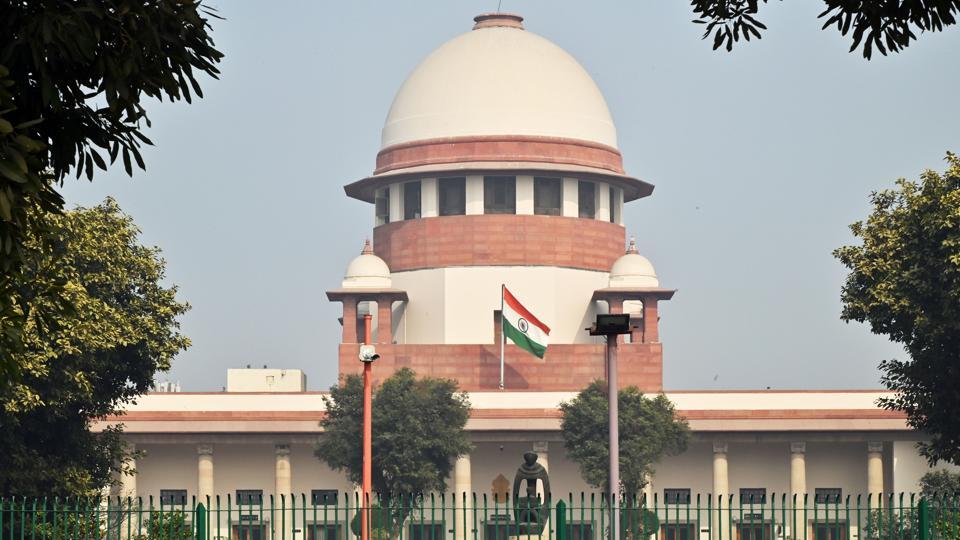
A bench, led by justice BR Gavai, said that the apex court cannot reopen the case three years after delivering the judgment and that those aggrieved over alleged non-compliance of the directions in the 2020 judgment should resort to suitable legal remedies.
“How is your application maintainable? We have become functus officio (an entity whose authority has comes to an end after discharging duties) after delivering the judgment...We cannot reopen the matters through miscellaneous applications in disposed of matters,” said the bench, also comprising justices Dipankar Datta and Aravind Kumar.
According to the bench, Article 144 of the Constitution obligates all civil and judicial authorities to act in aid of the Supreme Court and therefore, the petitioner ought to exercise their legal recourse in view of the constitutional provision.
“Having regards to Article 144, why are these subsequent orders required? If they are not acting as per Article 144, you take appropriate steps...This document (Constitution) contains everything. You must appreciate their vision. The framers (of the Constitution) included this (provision) so that parties are not forced to approach the courts,” it told senior counsel Nakul Dewan.
Dewan was appearing for the applicant, Foundation of Media Professional (FMP), that had moved the plea seeking strict enforcement of the Anuradha Bhasin judgment, especially those with regard to publication of internet suspension orders and the constitution of the review committee to assess the legality of internet suspensions. Dewan complained that suspension orders were not being published, as directed in the 2020 judgment while the country continued witnessing a high number of suspension orders.
According to a report released in February by international digital rights organisation Access Now, India topped the global list of internet shutdowns for the fifth year in a row in 2022 with at least 84 disruptions. Internet access was disrupted for at least 49 times in Jammu & Kashmir, including 16 back-to-back orders for three-day-long curfew-style shutdowns, as per the report. It added that India has accounted for approximately 58% of all documented shutdowns globally since 2016.
The Parliamentary Standing Committee on Communications and Information Technology had also in February asked the Department of Telecommunications (DoT) and the Union ministry of home affairs (MHA) to ensure the states and Union territories strictly complied with the rules and the Supreme Court’s guidelines when imposing telecom or internet shutdowns.
Responding, the bench told the senior counsel that “there can be situations and situations” and hence, it may not be proper to issue any blanket order in this regard. Simultaneously, it added that the maintainability of the application is the first major hurdle for FMP because the court will be loath to entertain a plea in a matter where a judgment has already been delivered.
“We have recently frowned upon the practice of attempts to reopen a case by way of filing miscellaneous applications. In two such cases, we imposed a cost of ₹5 lakh each...We are dismissing your application,” it said.
At this, Dewan requested the bench to let him withdraw the plea even as the senior lawyer pointed out that his application sought to address an issue of larger public interest and was not confined to individuals or against any specific entity. The bench court allowed FMP to withdraw its plea.
The court had in May issued notice on FMP’s plea but during the Thursday hearing, it remained indisposed to entertain the matter any further.
The exercise of the constitutional right of the freedom of speech and expression on the Internet was cemented by the Supreme Court in its 2020 ruling when the court examined Internet shutdowns in Jammu and Kashmir. The court expressly declared the right to freedom of speech and expression over the Internet as a fundamental right.
“We declare that the freedom of speech and expression and the freedom to practice any profession or carry on any trade, business or occupation over the medium of internet enjoys constitutional protection under Article 19(1)(a) and Article 19(1)(g),” ruled the judgment. The court added that any order suspending internet services indefinitely is “impermissible” and suspension of Internet, being a drastic measure, must be considered by the State only if it is necessary and unavoidable.
The judgment obligated the Centre and states to publish suspension orders to enable legal challenges before courts, besides assessment of such orders by review committees. The court held that Internet suspension orders must adhere to the principle of proportionality and must not extend beyond the necessary duration.