
 E-Paper



Cannot deny remission by relying predominantly on presiding judge’s opinion: SC
The Supreme Court said a mechanical approach to rely on the convicting court’s opinion alone to deny pre-mature release of prisoners will subvert the concept of remission and result in despair and frustration among inmates

 Prefer HTon Google


The Supreme Court on Friday said that in granting remissions, state governments should not rely predominantly on the opinion of the presiding judge if it focusses on the crime than on the criminal, as a mechanical approach to rely on the convicting court’s opinion alone to deny pre-mature release of prisoners will subvert the concept of remission and result in despair and frustration among inmates.
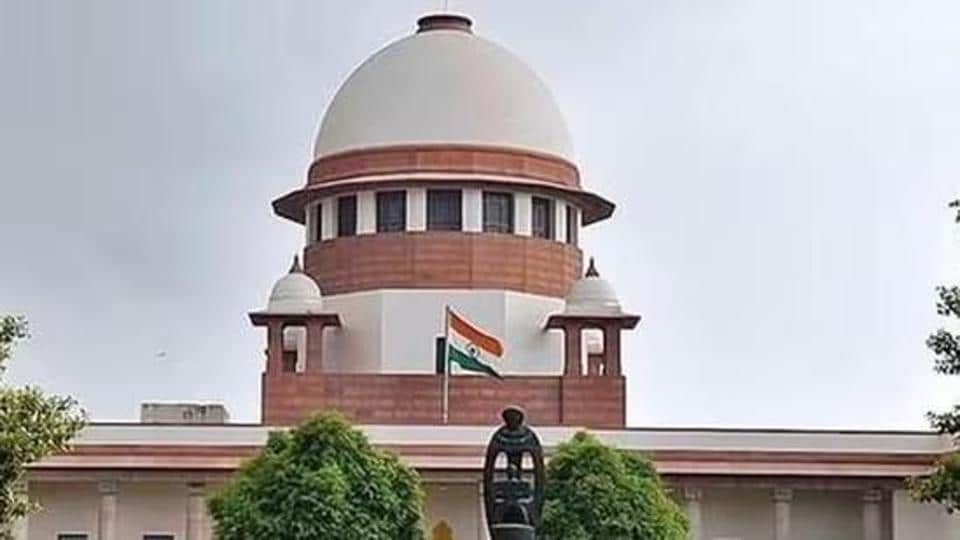
Dealing with a petition filed by Rajendra Mandal, a murder convict in Bihar sentenced to life for causing death of three persons of whom two were policemen, the bench of justices S Ravindra Bhat and PK Mishra said, “In this court’s considered view, overemphasis on the presiding judge’s opinion and complete disregard of comments of other authorities, while arriving at its conclusion, would render the appropriate government’s decision on a remission application, unsustainable.”
This decision comes at a crucial time when the remission granted by the Gujarat government to 11 convicts in the Bilkis Bano gangrape case is under challenge before another bench of the Supreme Court, which is hearing separate petitions filed by Bano and a host of public-spirited persons. One of the grounds to challenge the decision stemmed from the state’s failure to take the opinion of the convicting court in Mumbai, where the convicts were tried. The state relied on the Gujarat court’s opinion saying it is more material as the convicts belong to the state and the Mumbai court cannot be expected to know anything after so many years.
The convict in the present case had undergone 24 years of actual imprisonment and was twice refused remission by the state remission board that relied on the opinion of the presiding judge of the trial court which shot down the remission request twice in 2021 and 2023.
Directing the presiding judge and the remission board to reconsider the remission plea of the convict, the top court said, “The discretion that the executive is empowered with executing a sentence, would be denuded of its content, if the presiding judge’s view – which is formed in all likelihood, largely (if not solely) on the basis of the judicial record – is mechanically followed by the authority concerned. Such an approach has the potential to strikes at the heart and subvert the concept of remission – as a reward and incentive encouraging actions and behaviour geared towards reformation – in a modern legal system.”
Under Section 432(2) of the Code of Criminal Procedure (CrPC), the opinion of the presiding judge of the court, which convicted the prisoner, is to be taken by the appropriate government granting remission to a life convict. This requirement was held to be a mandatory one by the Supreme Court in a Constitution bench decision in Union of India v V. Sriharan (2015) to keep a check on arbitrary exercise of remission powers by state governments.
In the present case, the court clarified that this order is not to suggest that the presiding judge’s opinion will not carry weight. Writing the judgment for the bench, justice Bhat said, “If the presiding judge’s report is only reflective of the facts and circumstances that led to the conclusion of the convict’s guilt, and is merely a reiteration of those circumstances available to the judge at the time of sentencing (some 14 or more years earlier, as the case may be), then the appropriate government should attach weight to this finding, accordingly.” Such report cannot be relied on as carrying predominance if it focusses on the crime, with little or no attention to the criminal, the court added.
The first remission plea was filed after the convict completed 14 years of actual imprisonment. He got favourable reports from the police and probation officer with the judge being the only authority to deny release. The remission board, relying on the adverse opinion by the judge dismissed the release of the convict in May 2021.
The opinion of the trial judge reflected the gravity of the crime and the fact being that two of the deceased were police officers. The remission plea was taken up a second time in April this year. This time, two adverse opinions were given, one by the presiding judge who reiterated the earlier view and another by the Superintendent of Police of Purnea district who stated that the release of the prisoner will create unrest in society. The board, while rejecting the remission, also cited the amended 2002 remission policy contained in the Bihar Jail Manual, which barred prisoners convicted for “organising murders in a systematic manner” to be ineligible for remission.
The top court found both the reports of the presiding judges to be “casual” and which failed to consider the progress made by the convict during the course of his long incarceration in prison.
The bench said, “If a stereotypical approach in denying the benefit of remission, which ultimately results in premature release, is repeatedly adopted, the entire idea of limiting incarceration for long periods would be defeated. This could result in a sense of despair and frustration among inmates, who might consider themselves reformed– but continue to be condemned in prison.”
The court noted that the second rejection was wrong in law as successive judgments of the top court have held that the remission policy applicable is the one prevailing at the time of conviction of the prisoner or any policy which is more liberal in favour of the prisoner. In the present case, Rajendra Mandal was convicted by the trial court in May 2001 and clearly the 2002 pre-mature release policy will be inapplicable to him. Also, the old pre-2002 policy did not mention of any criteria to deprive him of remission.
The court directed the presiding judge to provide a fresh opinion giving reasons within a month after examining the judicial record. Based on the new opinion, the remission board was directed to consider afresh petitioner’s application for remission “in a positive manner” taking into account the reports of the police and other authorities, the post-prison record of the convict, the remissions earned (even for good conduct), his age, health condition, family circumstances, and his potential for social engagement.
The convict had crossed the age of 60 and was tried with two other accused for indiscriminately firing at the three persons at a village fair. The Patna high court had affirmed their conviction and punishment in September 2005. Owing to lack of means and awareness, Mandal could not approach the Supreme Court and hence the high court order against him attained finality.
The court said, “Given the long period of incarceration already suffered by the petitioner and his age, the remission board should endeavour to consider the application at the earliest and render its decision, preferably within three months.”


