
 E-Paper



Supreme Court stays Karnataka high court order allowing trial of husband in rape case
The Supreme Court on Tuesday stayed the Karnataka high court’s March 13 judgment which held that a man can be tried for raping his wife despite the immunity against marital rape provided to husbands under the Indian Penal Code


New Delhi: The Supreme Court on Tuesday stayed the Karnataka high court’s March 13 judgment which held that a man can be tried for raping his wife despite the immunity against marital rape provided to husbands under the Indian Penal Code (IPC).
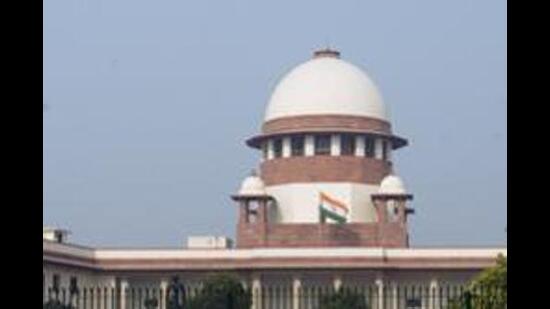
A bench, led by chief justice of India NV Ramana, also put in abeyance the criminal proceedings against the husband petitioner in the case pending before the Bengaluru trial court.
The bench will hear the matter again after a week.
In May, the top court had sought responses from the Centre, the Karnataka government, and the complainant’s wife in the appeal filed by a man against the high court’s judgment in March.
On March 23, the Karnataka high court refused to drop the rape charge levelled against the man by his wife under Section 376 of IPC, holding that a marriage cannot confer any special male privilege “for unleashing of a brutal beast”.
“If it is punishable to a man, it should be punishable to a man albeit, the man being a husband... no exemption in law can be so absolute that it becomes a licence for commission of crime against society,” the high court held while rejecting the man’s contention that Exception 2 of Section 375 (rape) of the IPC makes husbands immune to the marital rape charge provided the wife is not a minor.
On May 11, the Delhi high court failed to give a decisive verdict on the criminalisation of marital rape as it ruled on a bunch of petitions challenging the immunity given to husbands under the law. The two judges on the HC bench delivered split verdict, leaving it to the apex court to take the final call.
While the issue is yet to be taken up by the Supreme Court, in 2017, the top court interfered with Exception 2 of Section 375, but only to the extent that it protected husbands from prosecution under the rape charge if the wife was not below 15 years. The Supreme Court read down the exception clause to hold that a wife must not be below 18 for the immunity to operate.
At the same time, it clarified that no opinion was being rendered on the issue of marital rape. “We make it clear that we have refrained from making any observation about the marital rape of a woman, who is 18 years of age and above, since that issue is not before us at all. Therefore, we should not be understood to advert to that issue even collaterally,” said the 2017 judgment.
The 172nd report of the Law Commission of India on “Review of Rape Laws” in March 2000 said it would not recommend deletion of the exception clause in Section 375 “since that may amount to excessive interference with the marital relationship”.
However, the justice JS Verma committee, which was set up to propose amendments in criminal laws in the wake of the gang rape of a paramedical student in December 2012, made a contrary recommendation. The committee received around 80,000 suggestions and finalised its 644-page report in 2013, proposing that “the exception for marital rape be removed” and the law must “specify that a marital or other relationship between the perpetrator and victim is not a valid defence against the crimes of rape or sexual violation”.
The committee recommended the criminalisation of marital rape since the state of being married does not generate automatic consent to sexual acts. While a spate of other recommendations made by this panel was accepted and the criminal law was amended in 2013, the exhortation on marital rape was not heeded to by the government.
In 2015, a bunch of PILs filed by NGO RIT Foundation, All India Democratic Women’s Association, and two individuals, urged the Delhi high court to strike down the exception in the Indian rape laws on the grounds that it discriminated against married women who were sexually assaulted by their husbands.
The Union government, which was put to a notice, filed its reply in the case before the Delhi high court in 2017, stating that it must be ensured that marital rape does not become a phenomenon that destabilises the institution of marriage and “an easy tool for harassing the husbands”.
On February 7, the high court gave the government till February 21 to make its position clear, seeking a “yes-or-no” answer. That was not to be.
The Union government’s subsequent affidavit sought more time for consultations and asked that the hearing be deferred. With the Centre sticking to its position, the high court, on February 21, reserved its judgment in the case, noting that “there is no terminal date for ending the consultations”.


