
 E-Paper



Supreme Court to hear pleas seeking to criminalise marital rape on May 9
The Union government on Wednesday sought a week to clarify its stand on making marital rape a criminal offence even as the Supreme Court fixed May 9 as the date to commence extensive arguments on a clutch of petitions demanding a change in the legal regime.

 Prefer HTon Google


The Union government on Wednesday sought a week to clarify its stand on making marital rape a criminal offence even as the Supreme Court fixed May 9 as the date to commence extensive arguments on a clutch of petitions demanding a change in the legal regime.
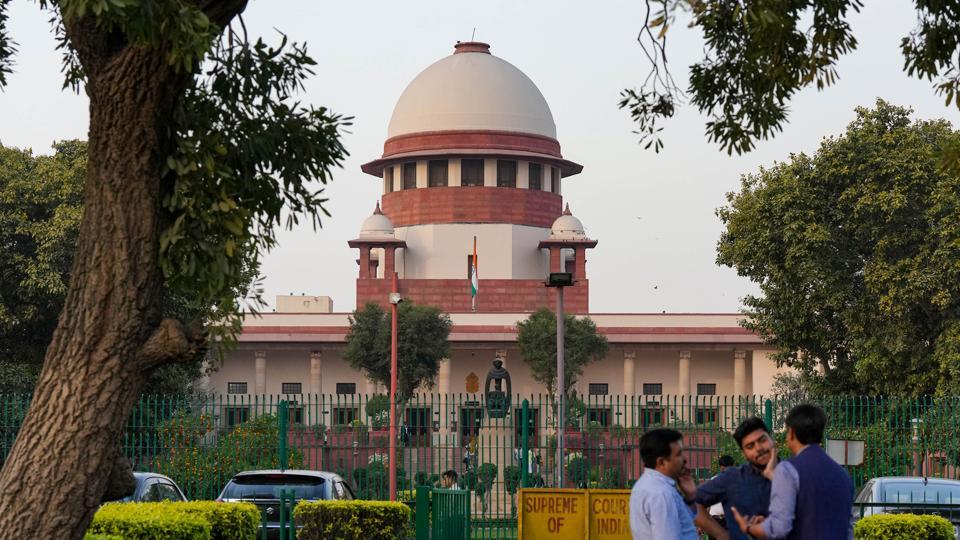
A bench, headed by Chief Justice of India Dhananjaya Y Chandrachud, asked all the parties to complete documentary pleadings in the matter before setting down the matter for May 9.
Solicitor general Tushar Mehta, representing the Centre, informed the bench that the government’s affidavit has gone for vetting by the competent authority and that it should be filed within a week. He also requested for sufficient time to argue the matter, saying this is an issue that will have “social ramifications”.
Also read: Approach govt to recall demonetised notes: SC
Senior advocate Indira Jaising, who mentioned the case before the CJI for fixing a date of hearing, informed the bench that she would commence the arguments on behalf of the parties supporting criminalisation of marital rape. Senior counsel Colin Gonsalves, Gopal Sankaranarayanan and advocate Karuna Nundy will argue after Jaising concludes. Senior counsel Siddharth Dave and advocate Jaikriti Jadeja will also appear in the matter for a man whose trial for raping his wife was approved by the Karnataka high court in a March 2022 ruling.
In January, the bench had asked the government to convey its stand on the issue by way of filing an affidavit by February 15 while the Centre maintained that the subject cannot be looked at only through the prism of legalities and that its social impact will also have to be taken into account. The court, on that day, added that it is “not necessary” to await different rulings of high courts since the two judges in the Delhi high court have already delivered spilt rulings in May 2022.
The bench is seized of a batch of petitions relating to the exception to Section 375 of the Indian Penal Code, which exempts forcible sexual intercourse by a man with his own wife from the offence of rape.
While a set of public interest litigation (PILs) have challenged the validity of the immunity clause in the IPC on the grounds of discrimination against married women who were sexually assaulted by their husbands, the split verdict by the Delhi high court in May 2022 is also pending before the top court for a final word.
The judges of the Delhi high court disagreed with each other in their 2022 judgment with one judge terming the clause protecting husbands from prosecution for non-consensual sex with their wives as “morally repugnant”, while the other saying it did not violate any law and could continue to exist.
The third petition before the Supreme Court is an appeal by the man challenging the Karnataka high court’s order clearing the way for his trial for raping his wife. In this matter, the Bharatiya Janata Party-ruled Karnataka government filed its affidavit in November, supporting the criminal prosecution of the husband. The Basavaraj Bommai-government claimed that the IPC permits the prosecution of a man for raping his wife and, therefore, a husband’s trial under Section 375 of IPC is valid.
While delivering a judgment in a case related to the medical termination of pregnancy, the Supreme Court said in September that the pregnancy of a married woman due to forcible sex by her husband can be treated as rape under the Medical Termination of Pregnancy Act, in what was the first legal recognition of “marital rape” under an Indian statute.
In 2017, the top court interfered with Exception 2 of Section 375, but only to the extent that it protected husbands from prosecution under the rape charge if the wife was not below 15 years. The Supreme Court read down the exception clause to hold that a wife must not be below 18 for the immunity to operate.
At the same time, it clarified that no opinion was being rendered on the issue of marital rape. “We make it clear that we have refrained from making any observation about the marital rape of a woman, who is 18 years of age and above, since that issue is not before us at all. Therefore, we should not be understood to advert to that issue even collaterally,” said the 2017 judgment.
The 172nd report of the Law Commission of India on “Review of Rape Laws” in March 2000 said it would not recommend deletion of the exception clause in Section 375 “since that may amount to excessive interference with the marital relationship”.
Also read: SC okays judicial review of Armed Forces Tribunal decisions by high courts
However, the justice JS Verma committee, which was set up to propose amendments in criminal laws in the wake of the gang-rape of a paramedical student in December 2012, made a contrary recommendation. The committee received around 80,000 suggestions and finalised its 644-page report in 2013, proposing that “the exception for marital rape be removed” and the law must “specify that a marital or other relationship between the perpetrator or victim is not a valid defence against the crimes of rape or sexual violation”.
The committee recommended the criminalisation of marital rape since the state of being married does not generate automatic consent to sexual acts. While a raft of other recommendations made by this panel were accepted and the criminal law was amended in 2013, the exhortation on marital rape was not heeded to by the government.


