
 E-Paper



SC okays judicial review of Armed Forces Tribunal decisions by high courts
The Court’s order became necessary due to a 2015 decision by the top court placing restriction on the high court’s power under Article 226 to entertain matters arising out of AFT

 Prefer HTon Google


High courts cannot be denied from correcting orders passed by the Armed Forces Tribunal (AFT), held the Supreme Court in a recent judgment that allowed high courts to interfere with pension and service-related matters decided by the tribunal.
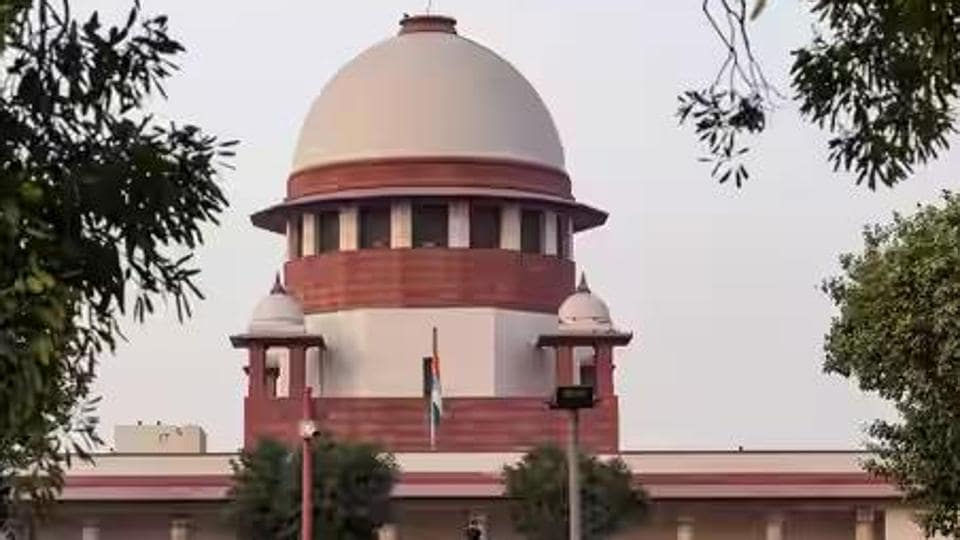
The Court’s order became necessary due to a 2015 decision by the top court placing restriction on the high court’s power under Article 226 to entertain matters arising out of AFT.
This decision hampered the litigants before AFT to seek redress of their grievances as an appeal to the Supreme Court could only lie in matters raising “a point of law of general public importance”.
Since pension and service disputes were purely personal matters, litigants before AFT were denied of a valuable right of judicial redress before high courts.
Also Read: Armed Forces Tribunal stays action in matter related to Mi-17 friendly fire incident till Sept 30
The judgment passed on Monday by a three-judge bench headed by justice Sanjay Kishan Kaul overruled the 2015 verdict (Union of India v Shri Kant Sharma) by a two-judge bench and said, “To deny the High Court to correct any error which the Armed Forces Tribunal may fall into, even in exercising jurisdiction under Article 226, would be against the constitutional scheme.”
The Court noted that the said decision was contrary to three Constitution bench decisions which held that the power of judicial review under Article 226 is part of the basic structure of the Constitution and all the decisions of a tribunal would be subject to the High Court’s writ jurisdiction.
Citing these judgements, the bench, also comprising justices AS Oka and BV Nagarathna said, “We are unable to appreciate the observations in the case of Major General Shri Kant Sharma & Anr, which sought to put an embargo on the exercise of jurisdiction under Article 226 of the Constitution, diluting a very significant provision of the Constitution which also forms the part of basic structure.”
The Centre had taken a stand that Section 30 of the Armed Forces Tribunal Act, 2007 clearly provided that an appeal against final order of the AFT will lie only in the Supreme Court provided that it involves a question of law of public importance and the tribunal certifies that the case raises an issue of this nature.
Additional Solicitor General Sanjay Jain along with senior advocate R Balasubramanian argued that AFT is a specialised tribunal and allowing high courts to interfere in service matters will lead to re-appreciation of evidence, making it a court of second appeal.
The bench said, “The first independent judicial scrutiny is only by the AFT. To say that in some matters, a judicial scrutiny would amount to a second appeal, would not be the correct way to look at it. What should be kept in mind is that in administrative jurisprudence, at least two independent judicial scrutinies should not be denied, in our view.”
Moreover, the Court was of the opinion that a high court judge having immense experience should be trusted of being conscious of the parameters within which the power under Article 226 is to be exercised.
“We would loath to carve out any exceptions... Irrespective of the nature of the matter, if there is a denial of a fundamental right under Part III of the Constitution or there is a jurisdictional error or error apparent on the face of the record, the High Court can exercise its jurisdiction,” the judgment written by justice Kaul said.
The aggrieved litigants who lost before the high courts due to the 2015 SC decision that came in their way were led by senior advocate Arvind Datar and advocate K Parameshwar.
They submitted that a 7-judge bench decision of the top court in L Chandra Kumar (1997) opined that the power of judicial review under Article 226 extends to all decisions of a tribunal. This decision was reiterated by a 2020 Constitution bench.
According to them, the 2015 decision was contrary to the above two decisions.
Moreover, the high courts have the power of judicial review in respect of court martial proceedings. This was held by the top court in a 1990 decision by a five-judge bench in S.N Mukherjee v Union of India.
Further, they argued that pension and service benefits are matters personal to litigants and do not involve any point of law of “general public importance” and if the litigants are denied from approaching high courts, they lose out on a forum for their grievance redressal.
On examining these decisions, the bench held, “There is no per se restriction on the exercise of power under Article 226 of the Constitution by the High Court. However, in respect of matters of self-discipline, the principles already stand enunciated.”


