
 E-Paper



Supreme Court turns down plea to scrutinise CIC picks
The SC turned down the plea to examine the dissent note moved by the Leader of Opposition in Lok Sabha

 Prefer HTon Google


The Supreme Court on Tuesday said that it does not wish to scrutinise the candidates shortlisted for the appointment of the chief information commissioner as it turned down the plea to examine the dissent note moved by the Leader of Opposition in Lok Sabha as part of the Selection Committee proceedings chaired by Prime Minister Narendra Modi in December last year.
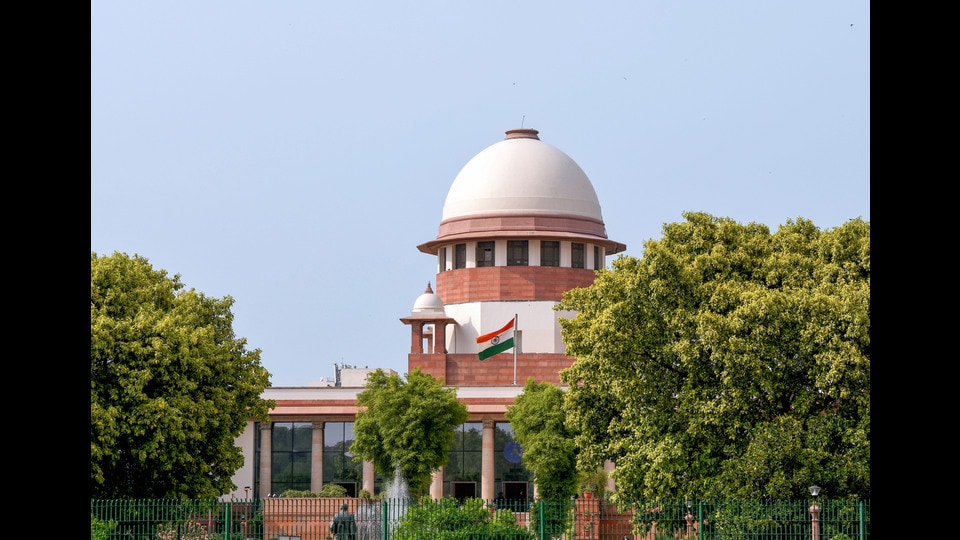
Hearing a petition filed by RTI activist Anjali Bhardwaj and two others for timely filling up of posts in the Central Information Commission (CIC) and state information commissions (SIC) where this issue was raised, the court clarified that its purpose is not to hold a trial of the names considered against each post and in any case, the PM-led selection panel is not expected to pick an “ineligible” person.
A bench headed by Chief Justice of India (CJI) Surya Kant said, “There is no question of holding a trial here. The requirement under the RTI Act is to appoint chief information commissioner and information commissioners. If somebody has expressed a dissenting note, what is the difference? Do we expect this much that the Selection Committee headed by the Prime Minister will appoint an ineligible person.”
Besides the PM as chair, the three-member Selection Committee meeting was attended by the Leader of Opposition and Union home minister Amit Shah. The meeting was crucial as the CIC has been headless since September 2025 besides seven posts of information commissioners lying vacant. Following the deliberations, former law secretary Raj Kumar Goyal, a 1990 batch IAS officer, was appointed as chief information commissioner along with seven new information commissioners who took oath in December.
Advocate Prashant Bhushan appearing for the petitioners told the bench that in the past appointments of ineligible persons has attracted scrutiny of these selections as he referred to the 2019 judgment by the court which required Centre to maintain transparency in these appointments by uploading Search Committee compositions and minutes of their meetings on the website.
Though the posts stood filled, Bhushan said that no information is forthcoming on the qualifications of these persons, the shortlisted candidates and the criteria adopted for their selection.
The bench, also comprising justices Joymalya Bagchi and NV Anjaria said, “Our interest is to see that these institutions should become functional. If somebody challenges their selection, we will see. The scope of these proceedings is to ensure posts are filled up. Who is eligible or qualified, our purpose cannot be to hold a trial on inter-se merit.”
Additional solicitor general (ASG) KM Nataraj informed the bench that nothing survives now as the 10-member CIC is functioning without any vacancies. “The purpose of his plea has been fulfilled. This petition cannot be kept pending to examine every appointment,” he said.
The court asked Nataraj to file a status report placing on record the decisions taken by the government giving details of Search Committee as required to be furnished under the mandate of the court’s 2019 judgment on appointments under RTI Act.
Bhushan further informed the bench that SICs in several states were either headless or have to tackle huge pendency on account of vacant posts of information commissioners. These states included Jharkhand, Maharashtra, Himachal Pradesh, Bihar, Madhya Pradesh, Karnataka, Assam, Tamil Nadu, West Bengal among others. The court was critical of the case pendency being 65,000 in Maharashtra, 40,000 in Tamil Nadu and almost 30,000 in Bihar.
The court observed that in states where the less than 100 RTI appeals or complaints are filed, an alternate to setting up SIC would be to ensure as an ad-hoc measure to assign additional responsibility of SIC to the state human rights commission chairperson who is usually a retired chief justice of a high court.
“Any institution you create is a burden on the public exchequer,” the court said, as it granted two months as an outer limit for all posts in SICs to be filled up.
The petition by Bhardwaj pointed out that in 2019, the top court’s judgment held, “This Right to Information Act is enacted not only to sub-serve and ensure freedom of speech. On proper implementation, it has the potential to bring about good governance which is an integral part of any vibrant democracy.” The PIL said that transparency institutions guarantee citizens their fundamental right to know in a democracy and alleged that by keeping them vacant, the attempt is to deny this right by making such institutions redundant.


