
 E-Paper



As Covid-19 cases rise, surveillance and management now top on govt agenda
In a little over two weeks, from 50 positive cases, India has seen an increase in the number of Covid-19-positive patients to 878, suggesting the spread of infection within the community although local scientists deny this.


As the number of coronavirus disease (Covid-19) patients increases, India has turned aggressive and changed its approach to combating the disease from screening people at entry points to the country to reinforcing community surveillance and disease management.
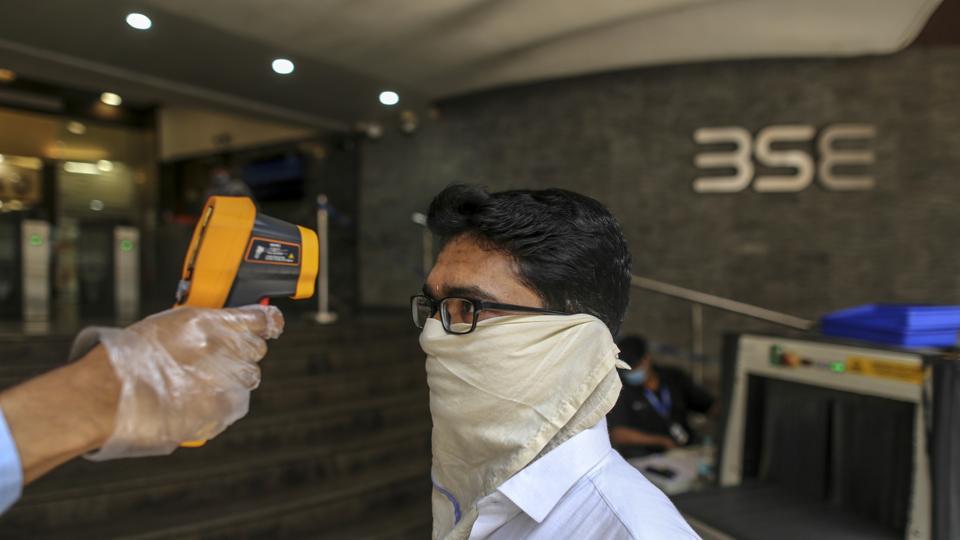
In a little over two weeks, from 50 positive cases, India has seen an increase in the number of Covid-19-positive patients to 878, suggesting the spread of infection within the community although local scientists deny this. And from no deaths until March 11, 18 people have succumbed to the viral infection as of Friday, March 27.
“When the disease has spread to 192 countries, then it means screening at entry points will serve no purpose. India anyway is in a state of lockdown that will show benefits if people follow the do’s and don’ts. Since the disease is here what we need to do now is improve our case management and strengthen surveillance within the community. Our efforts now are concentrating on not letting it spread further,” said Lav Aggarwal, joint secretary in the Union ministry of health and family welfare.
Infrastructure scale-up
Since the number of Covid-19 infections is rising, the government will need more hospital beds to keep patients in isolation; for treatment of critically ill patients, there will be an increased need for ventilators. Keeping the surge in cases in mind, the centre has directed the states and Union Territories to create a dedicated facility for Covid-19 positive cases. Close to 20 states have already started identifying hospitals that can be used to isolate and treat positive cases.
Delhi, for example, has three hospitals run by the Delhi government that are being converted into dedicated facilities for Covid-19 patients. Together, these hospitals will add 3,400 beds for Covid-19 patients, if needed.
The All India Institute of Medical Sciences, Delhi, is also keeping its 800-bed National Cancer Institute in Jhajjar, ready to accommodate a higher number of patients.
To meet the shortage of ventilators in the country, the government has prohibited export of ventilators, and has also asked two public sector undertakings to manufacture about 40,000 ventilator units. The government is also ensuring adequate supply of personal protection equipment (PPE), N-95 masks and hand sanitisers that are instrumental in infection control.
Containing clusters
The initial effort is to stop the spread of infection in certain pockets where cases have seen an unusual jump. The government still maintains there is no community transmission of Covid-19 in the country.
“There is no evidence to support community transmission. Our experts at the Indian Council of Medical Research (ICMR) and other bodies are constantly maintaining a vigil and there is no case to suggest there is spread of transmission within the community that should worry us,” said Aggarwal.
Dr Sujeet K Singh, director, National Centre for Disease Control (NCDC), said, “Localized clustering does not mean community transmission. There have been a few incidences of localized outbreaks, some of which we have managed to contain and some we are in the process of containment. And in most clusters we have managed to trace the source.”
Travel is the culprit, say experts. “If one looks at the numbers, these are mostly travel-related. There has been an increase in numbers because a large number of people have travelled to India in the past few weeks before the lockdown was implemented,” explained Dr Balram Bhargava, director general, ICMR.
Community surveillance
Close to 200,000 people are under close monitoring by the local units of Integrated Disease Surveillance Programme (IDSP). The government is conducting orientation exercises for grassroots-level healthcare workers and also doctors managing patients so that a uniform screening and treatment protocol is followed across India.
“AIIMS, Delhi, has begun conducting webinars to train master trainers that has already been attended by at least 3,000 healthcare workers from across the country,” said Aggarwal.
Introducing antibody testing
India is in the process of introducing antibody-based (blood) test that experts say could be a game changer. “The currently used test – PCR (polymerase chain reaction) -- tells us who are currently sick. We are seeing only the tip of the iceberg. The antibody detection blood test will identify people who already have been infected, even those with mild or no symptoms. It will help us to know how many have been able to fight off the infection and have become what is called corona-blocke’,” says Dr Lalit Kant, a senior infectious disease expert.
“It is being used for contact tracing in some countries. Indian health system has a lot of experience in doing such tests, like the ones for dengue, chikungunya, so it will be easy to ramp up the screening. Great tool for surveillance, and building up epidemiological data,” he added.


