On October 2, a massive public campaign to “say no to single-use plastic” began in India. When Prime Minister Narendra Modi appeals, the nation responds. We have seen it when it came to people foregoing subsidies on cooking gas and rail concessions for senior citizens so that the money could be used to offer subsidies to those who need them the most. Those who could, came forward to give up subsidies and help in nation-building.
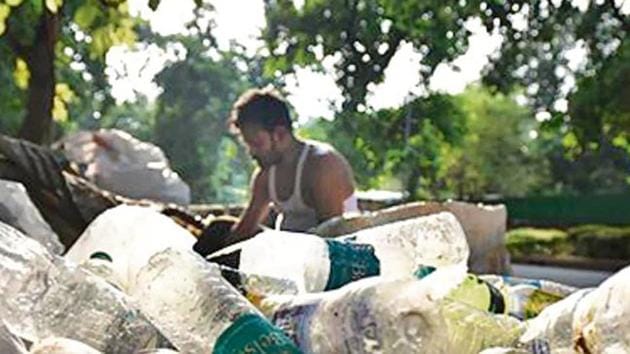
We are expecting active participation of people in collecting plastic waste. About 10,000 tonnes of plastic waste remains uncollected, according to an assessment by the ministry of environment and forests. India’s plastic waste-management rules are being implemented in towns and cities, but not in rural areas, where plastic waste is a big problem.
Swachh Bharat Mission is aimed at making the country open defecation-free and lower pollution levels in rivers and other water bodies. Both these goals have been achieved to a great extent.
Swachh Bharat 2.0 will begin this year by asking people to say no to single-use plastic and find eco-friendly substitutes for plastic commodities that have become a part of our daily lives. For example, carry cloth bags to buy vegetables and groceries instead of using patli panni (thin plastic bag) that most vendors use to hand out their wares.
I visited a waste dump in Mumbai to interact with ragpickers. I asked them, why don’t you collect thin plastic bags? They said they have to pick up 400 bags to collect one kg of plastic. From October 2, we hope that millions of people will pick up thin plastic bags littering the urban and rural landscape for recycling and proper disposal.
{{/usCountry}}I visited a waste dump in Mumbai to interact with ragpickers. I asked them, why don’t you collect thin plastic bags? They said they have to pick up 400 bags to collect one kg of plastic. From October 2, we hope that millions of people will pick up thin plastic bags littering the urban and rural landscape for recycling and proper disposal.
{{/usCountry}}Uncollected plastic waste is a massive problem.
Three years ago, I had conducted a “plastic carry-bags free” campaign along with 200,000 students from 800 institutes and schools in Maharashtra, where students went around their respective school neighbourhoods and collected whatever plastic waste they found.
We managed to collect 100 tonnes of plastic waste in only two hours in Pune, Ratnagiri, Chinchwad and Shirur.
People also need to segregate waste. Prime Minister Narendra Modi is drawing people’s attention towards segregation and waste management. All plastics barring thermocol and flex can be recycled.
Now, we have an element of extended producer responsibility (EPR) in plastic, hazardous and electronic waste management. Industries are taking steps for EPR. Prime Minister Modi is very passionate on this issue and industries have been very supportive of the drive.
The public movement that began on October 2 will be all about behaviour change—to not litter plastic waste but to collect it and dispose of it properly. We will also issue a necessary clarification after October 2 on what has been phased out. All the plastic products we use “only a single time” is the rough definition of single-use plastic. Many states on their own have banned different kinds of single-use plastics.
During our last drive in Pune, we distributed cloth bags with the slogan “plastic nahi, kapda sahi” (no plastic, cloth works) printed on them. The Prime Minister has appealed the people to think twice before accepting a plastic bag. You can at least go to the vegetable vendor with a cloth bag.
The Prime Minister, in the last episode of “Mann Ki Baat,” urged people to take up ‘plogging’, which is collecting plastic waste while jogging or during morning walks. Mahatma Gandhi also offered simple solutions that could be taken up by people at a mass level.
(Prakash Javadekar is India’s minister of environment, forest and climate change; and information and broadcasting)