
 E-Paper



Taliban-linked Haqqani network, not just ISKP, plotted Kabul gurdwara strike: NDS
Five terrorists were killed and eight arrested when commando teams attached with Afghanistan’s lead intelligence agency raided two hideouts of the group in and around Kabul, the NDS said.

 Prefer HTon Google


Afghan security forces have taken down a centre operated jointly by terror groups Haqqani Network and the so-called Islamic State Khorasan Province (ISKP) that was responsible for bloody attacks including one on Kabul’s gurdwara that killed 28 worshippers on March 25, a statement by the National Directorate of Security, or NDS, said has said.
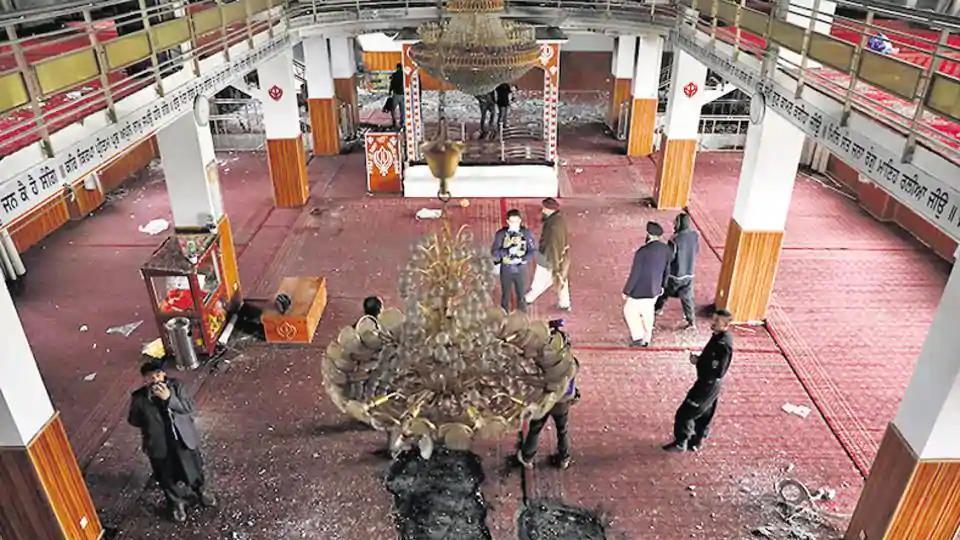
Five terrorists were killed and eight arrested when commando teams attached with Afghanistan’s lead intelligence agency raided two hideouts of the group in and around Kabul, the NDS said.
The statement implies that the two Pakistan proxies in Afghanistan - Aslam Farooqui led ISKP and the Taliban deputy leader Sirajuddin Haqqani-led Haqqani network - which had often targeted each other in the past had taken some steps to work together.
This contrasts with Aslam Farooqui’s claim in the early part of his interrogation that his fighters had been on the run under pressure from the Taliban and had been mostly limited to a eastern Afghanistan district.
Farooqi was arrested by the NDS last month in raids carried out weeks after four gunmen stormed Guru Har Rai Gurdwara in Kabul’s old city and opened fire from automatic weapons on March 25. According to the police, 28 worshippers were killed in this attack on the Sikh shrine that had drawn sharp condemnation.
But Wednesday’s statement by the NDS fits with New Delhi’s assessment that the attack on the gurdwara was ordered by the Taliban at the behest of Pakistani deep state with the larger motive of driving out India from Afghanistan. There are intelligence reports with national security planners in New Delhi that the Taliban, which had stepped up attacks on Afghan security forces after the United States signed a troop withdrawal agreement on February 29, could carry out more attacks on Indian interests and religious minorities.
The NDS said the joint centre destroyed by its forces was controlled by Sanaullah, who was responsible for recruitment for the ISKP and was the urban coordinator of Haqqani Network in Kabul.
It also held this joint cell responsible for the rocket attacks in March on the inauguration ceremony of President Ashraf Ghani and the Bagram air base, the US military’s largest base in Afghanistan. No one was killed in either attack. But 30 people were killed when rockets landed in the Shahid Mazari Mosque where many members of the ethnic Hazara community had gathered to mark the anniversary of the death of a Hazara leader. According to the NDS, this attack was executed by the joint cell.
To be sure, the Taliban has countered the NDS findings, describing it as propaganda. “We have no joint base with ISIS but have fought and eliminated them from the country,” the Taliban spokesman Zabihullah Mujahid tweeted.
Kabul watchers in Delhi attribute the Taliban’s rushed denial to the basic principle in the US-Taliban pact that the Taliban would not allow groups such as the ISKP to use Afghan soil to plan attacks against the US and its allies.
An arrangement between the Taliban-linked Haqqani network and the ISKP implies that even if the Taliban agrees to end violence, it could use other groups such as Aslam Farooqui’s ISKP to keep sending the rockets via its allies.
Afghan officials have accused the Haqqani network, a US-designated terror group, of carrying out major attacks claimed by or blamed on IS-K. The March 25 attack on the gurdwara was one such case.


