
 E-Paper



Pak-backed terror module in Afghanistan that targeted India busted, 37 arrested
Aslam Farooqui-led ISKP’s move to link the Kabul gurdwara attack to Kashmir was a dead giveaway to the involvement of Pakistan’s ISI

 Prefer HTon Google


Afghan security forces have arrested 37 members of the so-called Islamic State Khorasan Province terrorist module that had targeted a Kabul gurdwara last month. The arrests were made in the last 24 hours after Afghan forces caught Aslam Farooqui, the Pakistani national who led the terror group ISKP known to have strong links with Pakistan’s ISI that carries out off-the-shelf jihad at its instance.
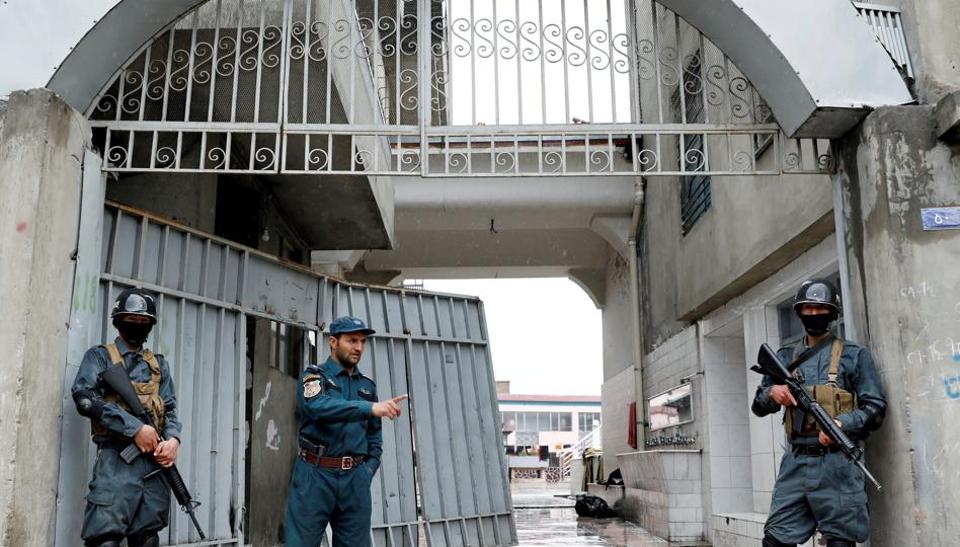
Among the 37 who have been arrested are 14 women and children. A majority of them are Pakistani nationals.
Aslam Farooqui and the members of his module are being interrogated in the presence of US security agencies outside Kabul, people familiar with the developments in Delhi and Kabul told Hindustan Times.
Afghanistan vice president Amrullah Saleh cheered the Afghan intelligence agency for the breakthrough.
“I am sure he is already singing & will sing more to the dismay of his patrons in & out. A treasure of intelligence. Make him talk,” tweeted Saleh, who earlier headed the Afghan intel agency National Directorate of Security. The reference to Farooqui’s patrons is seen to be pointing to Pakistan’s intel agency ISI.
Watch: Watch: Mastermind of Kabul Gurudwara attack, ISKP terrorist Farooqui, captured
The Farooqui-led module had targeted Sikh worshippers at Gurdwara Har Rai in Shor Bazaar Kabul on March 25. The Taliban had rushed to deny its involvement in the gurdwara attack. The ISKP came forward to claim responsibility. But its assertion that the strike was revenge for Muslims in Kashmir was a dead giveaway for Pakistani deep state, people mentioned above said.
ISKP chief Aslam Farooqui’s links with Pakistan’s ISI have been too well known. Farooqi, also known as Abdullah Orakzai, is a former commander of the Lashkar-e-Tayyiba with direct links to the ISI.
Also Read: ISKP chief’s arrest for gurdwara attack brings out clear link to Pakistan’s ISI: Official
His 4,000-strong ISKP group operates with other groups like the Lashkar and Jaish-e-Mohammed. It largely comprises defectors from the Tehrik-i-Taliban Pakistan and other Islamic terrorist outfits active in the Afghan-Pakistan area along the Durand Line including elements from the LeT, Jaish and Haqqani network.
The LeT already has a presence in Kunar and Nangarhar provinces and is in expansion mode. It is trying to get a foothold in the adjoining Nuristan and Laghman provinces and is reported to have set up a training camp in Waygal area of Nuristan. Counter terror operatives in Delhi and Kabul suggest that the Lashkar was in the process of opening two new centres in Kunar province.
Under directions from the ISI, the LeT has been involved in planning and conducting attacks on Indian interests, including Indian Embassy and consulates in Afghanistan in coordination with the Haqqani network, an Indian government official said.
The Jaish-e-Mohammed, another anti-India proxy for the ISI, maintains close links with the Haqqani network and Al Qaeda.
The Jaish has dedicated commanders for 12 provinces including Kunar, Nangarhar, Paktia, Arwan, Kundu, Ghazni, Nimroz, Helmand, Kandahar and Uruzgan provinces, an official said. JeM activities in Afghanistan are controlled by the outfit’s leaders based in Pakistan.


