
 E-Paper



Taliban must seek legitimacy within Afghanistan before international recognition
The Delhi conference is not against the Taliban as it recognises the Sunni Pashtun force as a contender of power in Kabul but it must have the trust of the people of Afghanistan including Shia Hazaras, Uzbeks, Tajiks, and most importantly the women of the country.


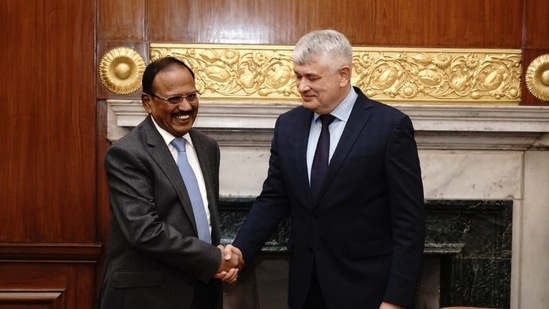
On the eve of the Delhi Afghanistan conference, National Security Advisor Ajit Doval met his Tajik and Uzbek counterparts and concurred that the Taliban regime in Kabul should first seek internal legitimacy within the country before international recognition.
While China and Pakistan have decided to stay away from the Delhi dialogue so that India is kept out of Afghanistan affairs, the NSA dialogue today clearly indicates that Central Asian Republics also want the Taliban to seek recognition from Loya Jirga (tribal council) and the religious council in Afghanistan before getting recognised by the international community. The Delhi conference is not against the Taliban as it recognises the Sunni Pashtun force as a contender of power in Kabul but it must have the trust of the people of Afghanistanncluding Shia Hazaras, Uzbeks, Tajiks, and most importantly the women of the country.
Pakistan is not attending the Delhi conference as it sees India as a spoiler, China has “scheduling issues” but the fact is Pakistan is hosting a troika conference on Afghanistan with China, Russia, the US, Taliban participating in it. It is quite evident that Pakistan and its principal backer China do not want India, which has been part of the humongous humanitarian effort in that country for the past two decades, anywhere in the picture as it eats into their “strategic space.”
| Guest NSAs at the Delhi Afghanistan Conference | Designation |
| Rear Admiral Alu Shakmani | Secretary, Supreme National Security Council, Iran |
| Karim Massimov | Chairman of National Security Committee, Kazakhstan |
| Marat Mukanovich Imankulov | Secretary of the Security Council of Kyrgyz Republic |
| Nikolai P Patrushev | Secretary of the Security Council of the Russian federation |
| Nasrullo Rahmatjon Mahmudzoda | Secretary, Security Council of Tajikistan |
| Charymyrat Kakalyyevvich Amavov | Deputy chairman of cabinet of ministers of Turkmenistan on Security & Secretary, State Security Council |
| Victor Makhmudov | Secretary of the Security Council under the President of Republic of Uzbekistan |
Doval exchanged views with the Tajik counterpart on Afghanistan, with significant convergence of assessments.
They also expressed concerns regarding the sharp rise in terrorist threats emanating from Afghanistan after the Taliban took over the war-torn country in mid-August and announced an interim government in early September. The Tajik side, which has been witnessing the influx of refugees and officials in the previous Afghan government, highlighted the gravity of the situation in Afghanistan.
The looming humanitarian crisis in Afghanistan was also discussed.
Apart from the crisis within Afghanistan, discussions on deepening cooperation in areas like defence, border management and border infrastructure development also took place.
During the meeting with the Uzbek NSA Victor Makhmudov, Afghanistan remained the major focus of discussion and both sides agreed that the future of Afghanistan must be decided by the people of Afghanistan themselves. The two top security advisers shared the view that the legitimacy of any Afghan government within Afghanistan was “important before the issue of its international recognition.”
As Pakistan has been acting as a major impediment in humanitarian access to Afghanistan, they stressed the need for Afghanistan’s neighbours to ensure unhindered access to humanitarian assistance to the people of Afghanistan. They agreed that neighbouring states must play a constructive role in Afghanistan. During the bilateral meet, the NSA highlighted the need for long term economic development of Afghanistan.


