E-Paper



Talks on fossil fuels ramp up at COP28
A third draft of one of the most important documents on which governments will need to come to a consensus was released during the COP28 climate conference on Friday, with experts saying the latest version was still too wide open, even those representing developing nations such as India stressed on the need to ensure equity in climate action commitments.

 Prefer HTon Google


A third draft of one of the most important documents on which governments will need to come to a consensus was released during the COP28 climate conference on Friday, with experts saying the latest version was still too wide open, even those representing developing nations such as India stressed on the need to ensure equity in climate action commitments.
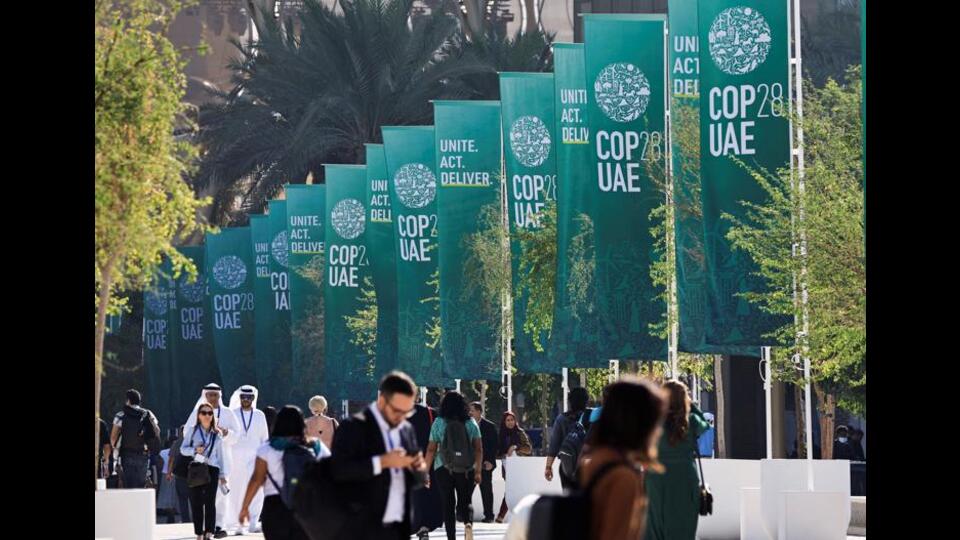
The COP28 entered its second and final week on Friday, with the phasing out of fossil fuels becoming one of the most divisive issues that need to be agreed upon for what will be the first Global Stocktake (GST) document.
The draft released on Friday gave new options for a phase-out of fossil fuels, with four of the five choices including some ways in which one of the leading causes of carbon emissions is abandoned.
“It is still a long way to go because there are lot of options. Everything is on the table. There are some problematic options including the no text option,” one of the observers said, asking not to be named.
Fossil fuels is one of the sharpest lines dividing the negotiations. Developed countries, including the European Union (EU) and the United States are pushing for a phaseout of unabated fossil fuels and a commitment that no new coal projects are initiated.
Developing countries have called such an approach highly inequitable since the cheaper coal power was critical for poorer nations, especially in the absence of adequate climate finance to transition away from fossil fuels.
India’s chief negotiator Naresh Pal Gangwar intervened during the plenary and said: “India is second to none in the desire for an ambitious outcome but that should be founded on equity and feasibility in a nationally determined manner.”
“During the first week, we have shared frankly in what we believe in. This is important to achieve the objectives of the Convention and goals of its Paris Agreement. We believe in the principles of the Convention and its Paris Agreement and sanctity of processes under them,” Gangwar added.
Union environment minister Bhupender Yadav made a strong intervention at a high-level ministerial dialogue on climate finance, saying the lack of definition of climate finance also leads to a lack of trust and transparency among parties. He raised concerns about the transparency in the reporting of whether the long promised USD 100 billion has been really delivered.
The Organisation for Economic Co-operation and Development (OECD) has said that $100 billion has been likely delivered last year as per the COP15 climate pact struck in 2009. But that is yet to be delivered, according to developing country parties.
“The lack of definition leads to a lack of trust and transparency on a matter that should be as clear as crystal. According to the OECD, the estimate of climate finance provided and mobilized by developed countries in 2020 was about USD 83 billion as against an amount of USD 21 to 24.5 billion if the Oxfam estimates from their Climate Finance Shadow Report are taken,” Yadav said during the meeting.
Bolivia, representing the grouping of developing nations under the Like Minded Developing Countries collective, said processes from previous week must be corrected since “in most cases, it did not capture our views in draft texts”. “This is a party-driven process and progress requires the agreement of all parties,” said Diego Pacheco, Bolivia’s climate negotiator.
Bolivia also stressed that “any outcome that does not respect the principles and provisions of the Convention, an outcome without equity and common but differentiated responsibilities (CBDR) in particular… would not fulfil the purpose of the Paris Agreement. Such an outcome would not be acceptable to our group (LMDC).”
Gangwar added that that direct negotiation between parties will help resolve impasses in the coming days.
During the plenary, COP28 President Sultan Al Jaber announced minister pairings -- Dan Jørgensen of Denmark and Barbara Creecy of South Africa were assigned to lead the talks on GST; Yasmine Fouad of Egypt and Steven Guilbeault of Canada on finance; Espen Barth Eide of Norway and Grace Fu of Singapore on mitigation and Maisa Rojas of Chile and Jenny McAllister of Australia leading the talks on adaptation.
Jaber said he expects an “unprecedented” outcome from Dubai next week.
Responding to a question by HT on how the principle of CBDR will be reflected in fossil fuel phase out/ phase down language, Jorgensen said: “CBDR is a very important principle of Paris Agreement. We all have a responsibility to act but that responsibility is differentiated. Some countries need to do more than others. I come from a country that needs to do more than others. Why? Because we have been part of the problem for more than 100 years and we have a certain level of wealth. Developing countries have much lower per capita emissions than my country. This needs to be reflected in phaseout of fossils but also other tracks.”
Creecy of South Africa added: “Ambition is essentially driven by means of implementation. Many developing countries would say that they are severely impacted by climate change, they want to keep 1.5°C within reach and that they are asking developed countries for technology and financial mechanisms to achieve it. This is a party-driven process, having listened very carefully to all the parties that will consult with us to find those landing zones to find that interface between science and equity.”
The third version of the draft – called the “refined textual building blocks” --- relating to the GST continued to have too many options, ran into 27 pages, and had placeholder on global goal of adaptation outcome. It has mostly fleshed out language on contentious issues such as fossil fuels, equity and the depleting carbon budget.
Adaptation refers to preparing for current and future trajectories of the climate crisis, a plan that involves wealthier countries to chip in with climate finance.
The section on fossil fuels contained options to phase out fossil fuels “in line with best available science; or to do so in line with best available science on the 1.5°C pathway; or a “phase-out of unabated fossil fuels recognising the need for a peak” in this decade and entirely abandoning them by 2050; or “phasing out” to achieve net-zero CO2 in energy systems by or around mid-century. A fifth option was “no text.”
No text essentially means that you either agree on them or they disappear from the final text completely.
Even on the issue of equity and historical responsibility there is a lot to reckon with, observers said, adding that said developed country parties were still very uncomfortable on the language.
For example, one of the options is to acknowledge that the carbon budgets consistent with achieving the Paris Agreement temperature goal are now small and being rapidly depleted, and expresses concern that historical cumulative net CO2 emissions between 1850-2019 amounted to about four fifths of the total carbon budget for a 50% probability of limiting global warming to under the Paris Agreement threshold of 1.5°C.
The other option is to say that parties are undertaking climate action from different contexts and starting points, and this implies that there will be differentiated and equitable pathways to achieve the goals of Paris Agreement based on equitable access to the global carbon budget. No text is also an option.
On finance, there are diverse options which shows the differences among developed and developing country parties have very different views on the delivery of the long promised USD 100 billion by developed nations. Among the options is an acknowledgment that there remains a gap in promised funding, and talks about arears, while another appears to acknowledge that adequate funding may have been made available.
“Previous COP declarations have referred to phasing out inefficient fossil fuel subsidies, but this draft text makes special exception for subsidies that address energy poverty. This acknowledges the ground realities in countries like India which subsidies clean cooking fuels that reduce indoor air pollution,” said Ashwini Hinge, associate program director in the climate program at World Resources Institute India.
A second expert said the options on GST are helpful as they focus on the need to phaseout fossil fuel use. “But that ambition risks being undermined by the call for a massive scale-up of risky and speculative carbon capture and removal technologies, which would not only blow a loophole into the energy package but also greenwash new fossil fuel (mostly gas) infrastructure,” Lili Fuhr, Center for International Environmental Law’s Fossil Economy Program director.
“The task remains that governments must agree to a full, fast, fair, and funded phaseout of all fossil fuels and reject dangerous distractions. ‘Abated’ fossil fuels are a myth and a code word for inaction and new fossil fuel subsidies. For the energy package to be agreed here in Dubai, wealthy polluters must not only commit to move first and fastest but also deliver on their obligations and commitments for finance and support to developing countries. Equity is the key to ambition,” Fuhr added.