
 E-Paper



Terms of Trade: Bihar’s politics is like Tamil Nadu… in a way
The idea is to underline how politics in Indian states can be very similar in some respects and yet be very different


Lest the headline wants you to shout in disagreement, please hold back. This edition of the column does not intend to argue something outlandish for the sake of it. The idea is to underline how politics in Indian states can be very similar in some respects and yet be very different. So, what exactly is the similarity between politics in Bihar and Tamil Nadu?
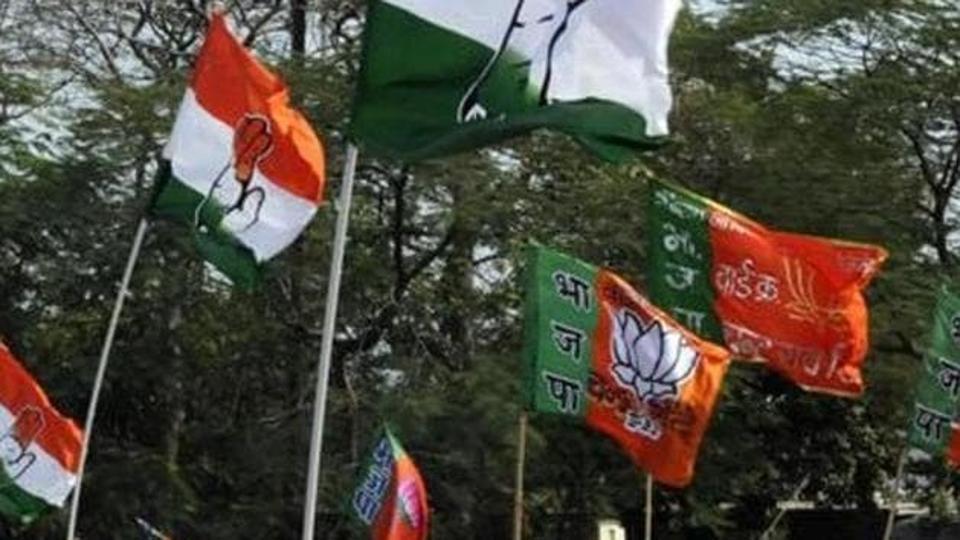
They are the only two major states in India where the Bharatiya Janata Party (BJP) and Congress – only two national parties to reckon with in India – are junior partners of the two state-based parties which have come out from the same ideological stable.
In Bihar, the Congress is a junior partner of the Rashtriya Janata Dal (RJD) and the BJP is an ally of the Janata Dal (United) or JD(U). Sure, the BJP and the JD(U) are contesting equal numbers of seats this time, whereas the RJD-Congress seat sharing ratio is almost three to one. But at least until now, the BJP has had to accept Nitish Kumar’s leadership in the state. Both the RJD and JD(U) are products of the broad socialist stream of politics in north India and have come out of splits in the Janata Dal in Bihar in the 1990s.
In Tamil Nadu, the Congress is now a junior partner of the Dravida Munnetra Kazhagam (DMK) and the BJP has finally aligned itself to the All India Anna Dravida Munnetra Kazhagam (AIADMK). Both the DMK and AIADMK are offshoots of the Dravidian movement and the latter was created out of a split in the DMK in the 1970s after differences between M Karunanidhi and M G Ramachandran.
Both the RJD-JD(U) and the DMK-AIADMK have their core support base in the so-called backward castes, but not necessarily the really socially oppressed, namely, the Scheduled Castes (SCs). In fact, the local vanguards of both the Dravidian and Socialist parties in Tamil Nadu and Bihar have had a history of unleashing violence and oppression on the SCs even though they are committed to the idea of social equality in general. Because, the proverbial upper castes have a bigger share of the population in Bihar than Tamil Nadu, the socialists have not really disenfranchised them from politics like their Dravidian counterparts have.
The similarities broadly end here.
Tamil Nadu is one of the richest, most developed states in the country. Unlike states such as say, Maharashtra, Karnataka or Haryana where opulence is confined to a handful of cities, Tamil Nadu’s well-being is spread in a more egalitarian manner. Tamil Nadu’s success is a result of a multivariate equation being successfully solved: it fought the anti-caste movement and rolled out affirmative action much earlier than others creating a workforce across the social spectrum which was ready to exploit the post-reform growth tailwinds and has seen a broad agreement among political opponents to not undermine capitalist development in the state.
In Bihar, social revolution was defined as capturing state power to replace upper caste feudal lords with the proverbial Subaltern Saheb, if one were to borrow the moniker Sankarshan Thakur used for Lalu Yadav in the biography he wrote of him. Tamil Nadu’s social revolution put the state on an upward economic trajectory. Bihar was more like the Chinese cultural revolution: in the name of fighting inequality and counter-revolutionary tendencies, it destroyed the very site of struggle. Unlike China, Bihar never had a Deng Xiaoping. That Bihar’s material fortunes have not really changed in relative terms only proves that while Nitish Kumar’s regime might have stopped digging inside the hole Lalu era left Bihar in, it has not really been able to take the state out of it. The result of all this has been a flight of material and human capital away from Bihar while it has flocked to Tamil Nadu from not just the country but also abroad.
What has been described above is the most important material difference when it comes to Bihar and Tamil Nadu. There is an equally important difference in the realm of super-structure of culture as well.
Tamil Nadu has been the vanguard of the struggle against the hegemonic political project of making India a nation of Hindi speakers. It fought against such ideas in the early years of independence and continues to oppose it even today. The current day opposition, unlike the one in the early years after independence, one can say, has an element of both superiority complex – the southern states are better off than the Hindi speaking ones on a variety of socio-economic indicators – and anxiety – Tamil Nadu and other southern states are faced with the threat of a growing fiscal and legislative squeeze as their population shrinks in comparison to Hindi speaking states – at the same time. It is this mix of material and cultural push back against the increasingly Hindi-Hindu political centre which has provided DMK a bulwark against the BJP’s hegemonic agenda in Tamil Nadu. No such thing exists against the BJP in Bihar.
The superstructural aspect has important bearings for the larger national political competition between the BJP and Congress led camps. The former has effectively marginalized the latter in Hindi speaking states as the dominant party. The BJP has achieved this feat by better social engineering (irrespective of its core ideology) along with communal polarisation. The latter has actually facilitated the former, because the BJP can accommodate more Hindus of diverse caste groups as it does not have to worry about Muslim representation. Unable to counter the communalism challenge, the Congress has been trying to reengineer itself as a party of lower OBCs and Dalits, which frankly speaking, is like coming to a party fifty years after it started. It has also been parroting the growing Dravidian anxiety against the latter’s concerns of demographic, fiscal and cultural dominance by Hindi speakers. While these concerns are entirely well-meaning, the fact that Congress is making them as a junior partner makes it vulnerable to charges of being anti-Hindi speaking people, a charge often made by the BJP and its allies.
There are many starry-eyed liberal commentators who see a route for the Congress revival against the BJP, by building a broader social-justice coalition from Chennai to Patna. They would do well to realise that the difference between the political situation in Bihar and Tamil Nadu is as important to appreciate as the similarities which is what this column flagged in the beginning.
(Roshan Kishore, HT’s Data and Political Economy Editor, writes a weekly column on the state of the country’s economy and its political fall out, and vice-versa)


