
 E-Paper



Terrorists asked religion, killed men in front of their kids: PM Modi on Pahalgam
In his address to the nation after the ceasefire ‘understanding’ with Pakistan, PM Modi slammed the neighboring country for cross-border terrorism.

 Prefer HTon Google


Prime Minister Narendra Modi said the Pahalgam terror attack prompted the whole nation to stand against terrorism in one voice, as it was a huge pain on a personal level.
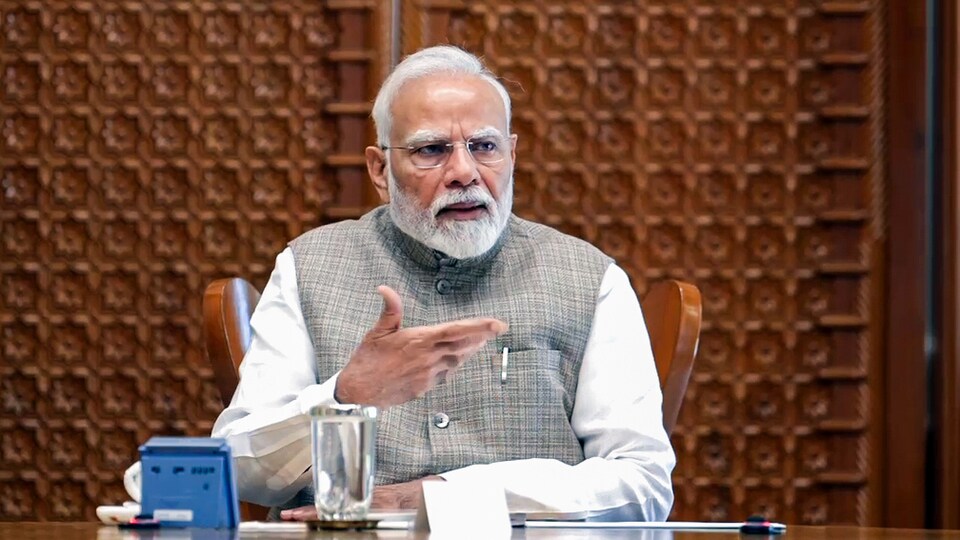
In his address to the nation after the ceasefire ‘understanding’ with Pakistan, PM Modi slammed the neighboring country for cross-border terrorism. He pointed out that the terrorists who killed 26 people in Pahalgam on April 22 asked about the religion before shooting.
The terrorists killed men in front of their families and kids after asking their religion, PM Modi said.
"On a personal level, the pain was huge. This terror attack prompted the whole nation, every citizen, every community, and every political party to stand up against terrorism in one voice. We gave full freedom to the armed forces to finish off the terrorists," PM Modi said in his address to the nation.
Every terrorist now knows the result of taking away the sindoor from the forehead of our sisters and daughters. Late May 6 and early May 7, the whole world saw this pledge being fulfilled," he added.
The terrorists did not even dream of such a decision from India. When Indian missiles and drones struck the terror hubs in Pakistan, it rattled the terror organisations. The terror hubs like Bahawalpur are a sort of university of global terror. Most of the big terror attacks in the world, be it 9/11 or big terror attacks in India, were connected to the terror infrastructure in Pakistan," PM Modi added.
Operation Sindoor was launched in response to a ghastly terror attack in Jammu and Kashmir's Pahalgam last month in which 26 people were killed.
Operation Sindoor by India
PM Narendra Modi had said last month that the perpetrators of the Pahalgam terror attack would face punishment beyond their imagination. New Delhi had also taken several steps to send a strong message to Pakistan over its support for cross-border terrorism and has put the Indus Waters Treaty in abeyance.
The Armed Forces launched precision strikes on terror camps in Pakistan and Pakistan-Occupied Jammu and Kashmir on May 7, in which over 100 terrorists were killed.
The subsequent aggression by Pakistan was effectively repelled by the Indian Armed Forces, who also pounded Pakistan Air Bases. India has said that its response has been firm, focused, and measured to the escalation by Pakistan.
Director general of military operations (DGMO) Lieutenant General Rajiv Ghai said on Sunday that his Pakistan counterpart had proposed that "we cease hostilities".
"My communication with the Pak DGMO was conducted at 15:35 hrs yesterday (Saturday) and resulted in cessation of cross-border firing and air intrusions by either side with effect from 17:00 hrs, May 10, after he proposed that we cease hostilities. We also decided to further speak on May 12 at 12:00 hrs to discuss the modalities that would enable the longevity of this understanding," Lt Gen Ghai said.
"However, disappointingly, expectedly, it took only a couple of hours for the Pakistan Army to violate these arrangements by cross-border and across the Line of Control (LoC) firing, followed by drone intrusions last night and in the early hours of today. These violations were responded to robustly," he added.
Lt Gen Ghai said his counterpart was informed about the violations through a hotline message. India made its intent clear that it would respond to the same "fiercely" if repeated, for which the Chief of Army Staff has granted full authority to the Army Commanders.


