
 E-Paper



T’gana rolls out new scheme to build residential schools
Addressing the gathering later, the chief minister said that the Congress had promised to provide quality education and medical care to the poor along with solving the unemployment problem.


The Telangana government on Friday rolled out a new scheme of constructing Young India integrated residential schools in each of the 119 assembly constituencies in the state, seeking to provide education for students belonging to SCs, STs, OBCs and minorities under one roof.
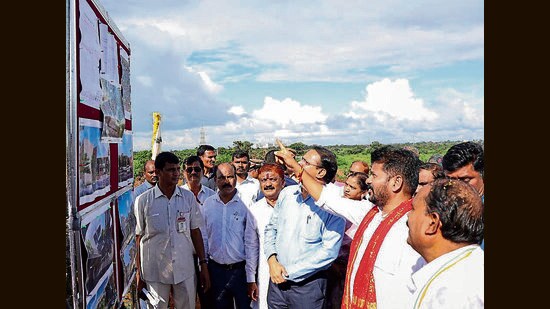
In the first phase, the foundation stone was laid for the Young India integrated residential schools in 28 constituencies. Telangana chief minister A Revanth Reddy laid the foundation stone for the school at Kondurg in Shadnagar assembly constituency of Rangareddy district.
Addressing the gathering later, the chief minister said that the Congress had promised to provide quality education and medical care to the poor along with solving the unemployment problem. “We are establishing Young India integrated residential schools to bring quality education to the poor students,” he explained.
Revanth Reddy alleged that the previous BRS government had deprived the poor children of education. “It had closed down 5,000 government schools in the name of restructuring. Despite indulging in heavy borrowings to the extent of ₹7 lakh crore and spending more than ₹22 lakh crore on the state budget in the last 10 years, the previous government had not spent even ₹10,000 crore on providing infrastructure in the government schools,” he said.
The chief minister said soon after coming to power, his government had begun cleansing the education sector. “We have completed the process of promotions and transfers of teachers and instilled confidence in them,” he said.
Addressing a separate meeting after laying the foundation stone for the residential school at Govindapuram village of Bonakal block in Madhira constituency in Khammam district, deputy chief minister Mallu Bhatti Vikramarka said the new scheme would bring revolutionary changes in the education sector that would ultimately pave way for transformation of the society.
“The work on integrated residential schools was initiated along with deliberations on syllabus and facilities to provide quality human resources to future generations who can compete at global level,” he said.
He allayed apprehensions that with the construction of integrated residential schools, existing SC, ST, minority, general residential schools would be closed down. “The existing residential schools for different communities would continue and permanent buildings would be constructed for them,” he said.
An official statement from the chief minister’s office said the integrated residential schools will offer English medium education with international standards from Class 4 to 12 to SC, ST, BC, OC, and minority students, all under one roof.
“This fosters a competitive spirit and eliminates discrimination based on caste and religion, ensuring every child has an equal opportunity to succeed,” it said.
The official statement said that each school, built on a 20-25 acres of land, will be a “mini education hub”, and will have modern infrastructure, including smart boards, digital libraries, computer labs, dedicated grounds for cricket, football, basketball, and tennis, promoting holistic development. The total estimated cost of establishing the schools is around ₹5,000 crore, the statement added.


