
 E-Paper



Paradoxical that voting right isn’t fundamental: Supreme Court
Despite the constitutional declaration, the bench lamented, the right to vote has been held to be a “statutory right“ by the SC, and not a fundamental right.

 Prefer HTon Google


The Supreme Court has called it paradoxical that the right to vote is not assigned the status of a fundamental right while democracy has been recognised as a basic feature of the Indian Constitution.
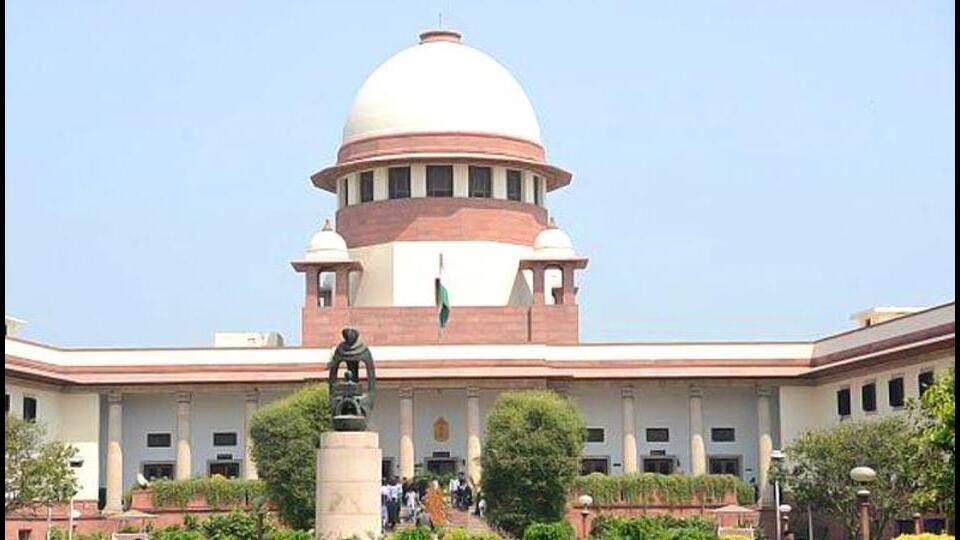
“Democracy has been held to be a part of one of the essential features of the Constitution. Yet, somewhat paradoxically, the right to vote has not been recognised as a fundamental right yet; it was termed as a mere statutory right,” stressed a bench of justices S Ravindra Bhat and Aravind Kumar in a judgment on Monday.
The bench was dealing with an election petition case when it underscored the importance of the right to vote and a constitutional provision enabling every eligible citizen of India to exercise common suffrage.
“The right to vote, based on an informed choice, is a crucial component of the essence of democracy. This right is precious and was the result of a long and arduous fight for freedom, for Swaraj, where the citizen has an inalienable right to exercise her or his right to franchise,” noted the court, adding the right finds articulation in Article 326 of the Constitution.
Read | Voting a choice, cannot make it mandatory: Delhi High Court
Article 326 lays down that every person who is a citizen of India and is not less than 18 years of age and is not otherwise disqualified under this Constitution or any law made by an appropriate legislature on the ground of unresidency, unsoundness of mind, offence or corrupt or illegal conduct, shall be entitled to be registered as a voter at any election.
Despite the constitutional declaration, the bench lamented, the right to vote has been held to be a “statutory right“ by the Supreme Court, and not a fundamental right. The bench pointed out that in a 1982 judgment, the top court said that the right to vote, if not a fundamental right, is certainly a constitutional right because this right originates from the Constitution and is in accordance with the constitutional mandate contained in Article 326.
In the present case, the bench was dealing with a petition filed by Bhim Rao Baswanth Rao Patil, a BRS MP from Telangana. Patil appealed against an order of the Telangana high court, which refused to quash an election petition against him without a trial.
Congress leader K Madan Mohan Rao, who lost the 2019 Lok Sabha elections to Pail, filed the election petition, complaining that Patil did not disclose in his poll affidavit about his past conviction under the Minimum Wages Act and the Payment of Wages Act and had a pending case under the same law. Patil, on his part, cited rules to argue that he was required to disclose only about such offences and convictions where the maximum punishment is two years in jail or more.
But the Supreme Court affirmed the Telngana high court judgment, highlighting the voter’s right to know about the antecedents of the candidates. “The elector or voter’s right to know about the full background of a candidate -- evolved through court decisions-- is an added dimension to the rich tapestry of our constitutional jurisprudence,” it held.
The bench maintained that allowing the election petition to be junked at the threshold stage would be a denial of a full-fledged trial, based on the acknowledgement that material facts were not suppressed. Stating that the facts of the case must be contested in an election petition, the court dismissed Patil’s plea.
A five-judge bench in Kuldip Nayar Vs Union of India & Ors (2006) had held that the right to vote is not a fundamental right but just a statutory right.
In March this year, another five-judge bench sought to open a new vista for declaration of the right to vote as a fundamental right as it ruled on revamping the selection mechanism for the chief election commissioner (CEC) and election commissioners.
In Anoop Baranwal Vs Union of India, five judges on the bench were unanimous that the right to vote should be a constitutional right, but four of them stopped short of issuing a judicial declaration in this regard, deferring to judicial discipline and propriety.
While justices KM Joseph, Aniruddha Bose, Hrishikesh Roy and CT Ravikumar cited the 2006 judgment in the Kuldip Nayar case to exercise restraint against overruling a judgment by a bench of coordinate strength, justice Ajay Rastogi said that it is time for the constitution bench to declare that the right to vote is a fundamental right. By 4-1, this bench said that it need not finally pronounce on this aspect since another five-judge bench in the Kuldip Nayar case has proceeded to hold that there is no constitutional right to vote.



