Yesterday, Kannada literature enthusiasts were thrilled to hear that a collection of short stories called “Heart Lamp” by Kannada writer Banu Mushtaq (translated by Deepa Bhasthi) was one of only 13 books on the longlist of the prestigious International Booker Prize, presented annually to the best work of fiction translated into English. The last time a Kannada author (UR Ananthamurthy) was on that list was 2013, so the jubilation is warranted. But who is Banu Mushtaq?
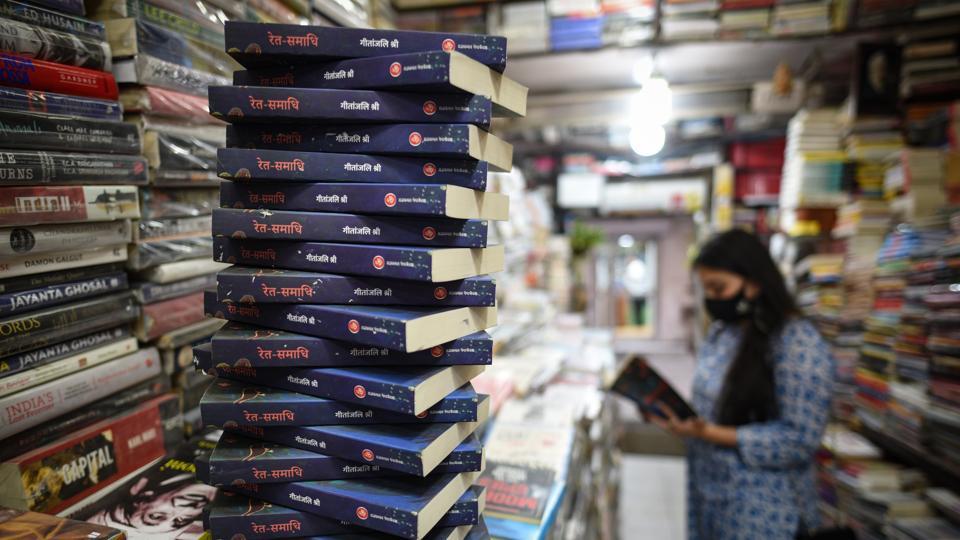
The first Bandaya Sahitya Sammelana was held in Bangalore on March 10 and 11, 1979, the year Banu Mushtaq turned 25 (Hindustan Times)
To answer that adequately, we must travel back to the early 1970s, when Banu Mushtaq was a young woman in Hassan, studying to be a lawyer. The euphoria of Indian independence had passed, and a new, impatient generation was beginning to challenge everything that had gone before. In Karnataka, the non-brahmin movements that had arisen in the early years of the century, during the reign of Nalvadi Krishnaraja Wadiyar, had pitched traditionally landowning communities like Lingayats and Vokkaligas into positions of political power, leading to growing dissatisfaction among Dalits, left on the margins for far too long.
In April 1968, extremist Dalit lawyer and writer B Shyam Sunder founded the militant outfit called the Bheem Sena in Gulbarga. The Sena, which sought to create a separate country for Dalits, became hugely popular, especially because it invited other marginalised groups like Muslims and backward classes to be part of its fight. Unfortunately for the Sena, Shyam Sunder passed away in 1975, and the movement dissipated of its own accord.
Meanwhile, in 1972, D Devaraj Urs was elected chief minister of Karnataka. He ushered in radical land reform which granted land to its actual tiller, a huge victory for Dalit and other bonded labourers. One of his ministers, B Basavalingappa, also worked tirelessly to abolish the practice of manual scavenging, garnering a huge following among Dalits. In November 1973, at a public gathering in Mysore, Basavalingappa urged students to read English books over Kannada ones because the latter only represented upper-caste concerns. He also expressed anger against Kannada journalists who routinely misquoted him, saying they were “boosa” (cattle fodder, i.e., of little worth) writers. The next day, media reports alleged that Basavalingappa had equated Kannada literature itself to “boosa”. A huge political storm ensued, and the minister was forced to resign.
But Dalit thinkers and writers like the teenage poet Siddalingaiah, then a student at the Government Arts and Science College in Bangalore, and his classmate, DR Nagaraj, who would go on to become a celebrated cultural critic, stood solidly behind Basavalingappa. Even renowned non-Dalit writers like Kuvempu, UR Ananthamurthy and the firebrand journalist P Lankesh agreed that Kannada literature had some soul-searching to do. Eventually, the “Boosa controversy” would go on to have entirely unexpected consequences – it would not only ignite a statewide Dalit consciousness with the founding of the Dalit Sangharsha Samiti (DSS) in Bhadravati in April 1974, but also create a whole new paradigm for a socially responsible Kannada literature called Bandaya (rebel) Sahitya, which would bring the voices of Dalit, Muslim, and women writers to the proscenium of the Kannada literary stage.
It is perhaps unsurprising that Bandaya’s founders were none other than Siddalingaiah, whose poems became anthems sung at the start and close of every DSS event, and his homie DR Nagaraj, who coined its slogan ‘Khadgavaagali Kavya!’ (Let poetry become a sword!)
The first Bandaya Sahitya Sammelana was held in Bangalore on March 10 and 11, 1979, the year Banu Mushtaq turned 25. It was in that fertile, well-prepared soil, waiting expressly to receive writers like her – young, talented, unafraid, and endowed with a fierce social and political consciousness – that Banu planted herself, and blossomed.
(Roopa Pai is a writer who has carried on a longtime love affair with her hometown Bengaluru)
Get the latest India News, breaking headlines and real-time updates from across the country. Stay informed about politics, government policies, crime, weather major national developments and Karnataka Bandh LIVE.
Home/India News/The Pen As Sword: A Short History Of Rebellion

 E-Paper




 Prefer HTon Google