
 E-Paper



The year ahead: Science is the new battlefield, new borders are digital
One of the questions that 2023 may answer is, how strongly will China respond to these technology controls by the US and its partners.

 Prefer HTon Google


One year ends and another starts with Indian and Chinese troops clashing near Tawang, squadrons of Chinese fighter jets entering Taiwanese airspace, North Korean drones flying over Seoul, and Ukraine and Russia preparing for a winter of war. Not much peace on earth, seems to be the message for 2023. But the really momentous developments in geopolitics are not in the military dimension, they are in the technology sphere.
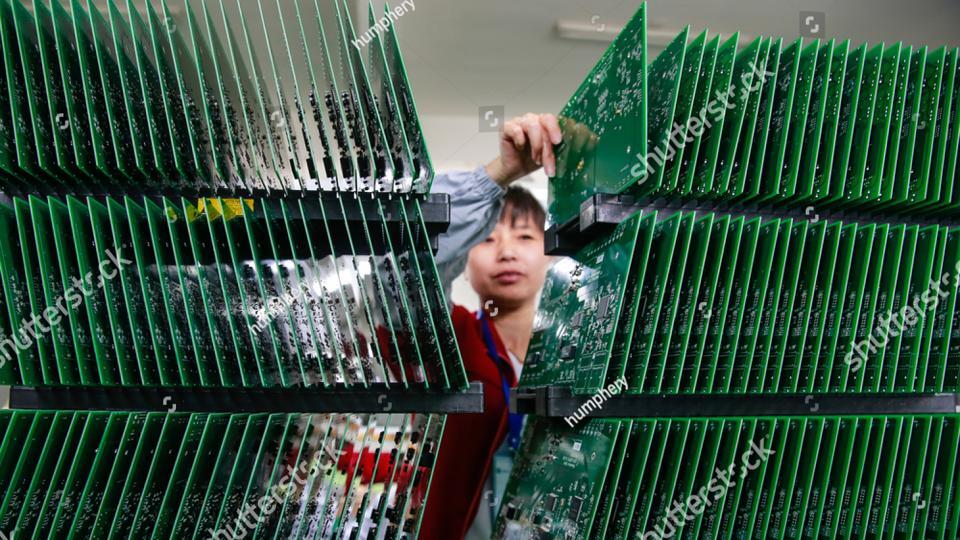
Tech is the word that you hear in the corridors of power. The US government brought 2022 to a close with the CHIPS Act and regulations banning third parties from working with Chinese semiconductor firms. Beijing responded by announcing a $143-billion programme to preserve its microchip sovereignty. Japan had already announced an economic security fund of $40 billion for critical technologies. India has quietly set up its own $5 billion venture-capital fund. And there is more to come.
In the past, governments’ tech announcements were the stuff of yawns. Countries allocated funds to reassure citizens that they were keeping up with the Joneses. The billions being spent today are more strategic. Much of it is about supply-chain resilience, a nondescript term that reflects a growing trend; countries don’t want to be tech-dependent on countries they don’t trust, and they want to keep chunks of the economy free of unfriendly firms.
See how India’s 5G rollout was crafted to align with the Quad (Japan-Australia-India-US) and keep out China. It goes deeper. The new US chip regulations are not only about ensuring that technology isn’t stolen by China, they are about knee-capping Beijing’s ability to manufacture advanced chips altogether.
As US National Security Advisor Jake Sullivan said in September, the US had previously sought to “stay only a couple of generations ahead” of the rest when it came to technology. “Given the foundational nature of certain technologies, such as advanced logic and memory chips, we must maintain as large of a lead as possible.”
In 2023, the US will roll out even more such measures. One game-changer will be controls on financial flows to the Chinese tech sector. Politico reports that the Biden administration will issue an executive order that would allow it to regulate US investments into China. There will be similar orders to stop TikTok and similar Chinese apps from collecting data in the US. India is ahead in this race, having banned TikTok and a slew of other Chinese apps in 2020, in a move that sought to tighten digital borders after clashes at the geographical border that year.
Similar moves will likely cover a number of other sectors such as clean energy, biotechnology, quantum computing and artificial intelligence. The Quad’s 23 working groups are a list of the other sensitive technologies and affiliated economic activities such as rare-earths mining.
Yet, everyone knows it’s impossible to be self-sufficient. Working out what is and isn’t strategic will be difficult and many billions will be spent wastefully by governments in the years to come. Expect a large number of redundant derelict microchip factories to dot the landscape in the coming decade.
The US accepts that to battle China over strategic technology it needs to work with other countries. Hence its investment in the Quad. India is not a major innovator yet, but it brings in lots of skilled manpower for, say, labour-intensive artificial intelligence. And if one needs to relocate corporate supply chains to a place that is both “safe and secure” as well as low-cost, India is among the best options.
Next year will see whether one vital region, Europe, is sufficiently traumatised by the Ukraine war to sign up for the US vision. Washington has been arguing that Russia’s weaponisation of Europe’s energy dependency is a warning; don’t do the same with digital technology and China.
All this change will not be easy. Taiwan, the semiconductor superpower, is setting up microchip fabrication plants in the US and Japan and looking closely at India, though these sites make little economic sense. The main driver for all this: geopolitics. New Delhi’s game is to get electronics assembly moved to India and then slowly get the component-makers to follow. They are already having success with iPhones; as much as 25% of the world’s iPhones may be assembled in India by 2025. But even allied governments want to ensure that they keep some footloose supply chains and associated funding. Watch out for cases of domestic industrial policy and strategic friend-shoring clashing in the coming years.
One of the questions that 2023 may answer is, how strongly will China respond to these technology controls by the US and its partners. Beijing has used carrots, sticks and bribes in its attempts to win over countries in Asia. It has had some success in Southeast Asia but none with most of the larger Asian countries. Beijing typically hasn’t retaliated economically, preferring to use military jabs. This may be because its past use of economic sanctions — against the Philippines, Australia and Japan, for example — caused hornet’s nests of local anger. Perhaps China is confident that it cannot be cut out of anyone’s external trade story. India, for example, is conscious that much of its pharmaceutical industry and solar power sector are dependent on Chinese inputs. What 2023 will underline is that, despite Ukraine and Tawang, as India’s foreign minister S Jaishankar put it recently, “Technology today is at the heart of geopolitics.”
(Pramit Pal Chaudhuri is South Asia practice head at Eurasia Group and former foreign editor, Hindustan Times)


