
 E-Paper



There are certain fights you can win only by being cautious: Dr Ashutosh Tewari
Dr Tewari and his colleague Michael J McCarry have led a hospital-wide effort that has sent two consignments of 25 ventilators and 100 sleep apnea machines with kits to convert them to ventilators, along with other medical equipment to India


Dr Ashutosh “Ash” Tewari, chair of the department of urology at Mount Sinai hospital in New York, has mobilised, collected and shipped crucial life-saving equipment to India, driven by the death of a childhood friend in the second wave of cases and inspired by a colleague’s humanitarian work in Honduras.
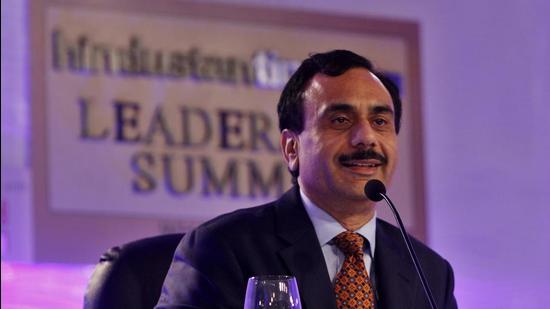
Tewari was himself infected by Covid-19 in the early days of the pandemic, when New York had turned into the epicentre, and spent two weeks in the ICU at the hospital where he works, looked after by his colleagues.
Tewari and his colleague, Michael J McCarry, who is senior vice-president of perioperative services, have led a hospital-wide effort that has sent two consignments of 25 ventilators and 100 sleep apnea machines with kits to convert them to ventilators, along with other medical equipment to India, through chartered flights in three separate shipments.
Baba Kalyani of Kalyani Forge and actor Anupam Kher have been a great help, Tewari said, in ensuring his help reached the right places and people. Dr Tewari spoke to Hindustan Times recently. Here are edited excerpts from the interview:
Could you talk a bit about your own infection? How do you think you might have contracted it?
I was in New York, which was the epicentre of the pandemic, and I was always at work, like my other colleagues. I got it and brought it back home to my wife and daughter, who was with us. My daughter got it from me; she had given birth just a few weeks before.
Several doctors got it, and I am one of the lucky ones who is here to talk about it.
Also Read | Indian experts urge faster inoculations ahead of free Covid-19 shots
When was this?
It was in the second half of April and first half of May 2020. I was in the ICU for two weeks.
And at that stage, there was no remdesivir (a therapeutic medicine that reduced the severity of the illness and brought rare cheer in the grim pre-vaccine world). There were none of these other therapeutics (such as convalescent plasma and dexamethasone, a common steroid that was used to treat then US President Donald Trump)?
That’s the reason I complement my own institution. They had initiated a clinical trial on remdesivir. And I got it. When I do clinical trials now, I appreciate why it’s important to go through them.
As you recovered, what did you think was going right or wrong in the US at the time?
I focus on what we did right rather than what we did wrong. I don’t have the bandwidth to focus on what happens the other way around. I think that with high population density, some places will have more Covid infections. What we did right was to figure it out in terms of the molecular structure, treatment protocols, medications, figuring out different phases of infection, and Covid-19 long-haulers (people who are left with long-term effects from the illness).
We became so innovative in my hospital that while we were figuring out how to get more ventilators, my colleagues in the ICU figured out how to use one ventilator between two patients; they figured out how to make an ICU in our hospital lobby; they t figured out how to create a hospital in the Central Park. Just being innovative and then focusing on the only one thing that we have to deal with.
My summary of the whole process is that certain fights you can win by being strong and feisty, but there are certain fights where you can be victorious only by being cautious. This is one in which we have to be cautious, don’t underestimate the enemy, take all the precautions you can, and deal with it. If you still end up getting it, don’t lose hope; there is life after Covid.
This is a good time to segue to what’s happening in India, which has touched you personally as you lost a childhood friend to the second wave of Covid-19. As a medical professional, what do you think is happening in India?
India is facing the same thing which all other big-number countries have had to deal with. I am a big fan of Indian doctors because it’s a very organic system: doctors, nurses, technicians, nursing homes, clinics, hospitals, big hospitals, all those things they combine in a very interconnected way. I know of my friends who are doctors—they were on non-stop phone calls; they created a network of support systems; they were not sleeping. And that inspires me.
But there comes a point when the human hand cannot fix everything, specially Covid. They need gadgets (and equipment) such as oxygen concentrators or ventilators. They (shortages) were an issue here as well and there was no surprise that it was happening in India.
Share some personal experiences that you had about Covid as regards India, which really motivated you.
I know how innovative the Indian system is. But I was sad that people were dying. I did not want people dying because of the lack of access to equipment. I am far from the battlefield right now in India, and my connections are through WhatsApp, video chats, phone calls and text messages. This is not an easy time, and hopefully. things will change. Covid affected people very close to me, and I lost friends.
Could you talk a little bit about that, if it’s not too painful to recount?
It was late in the night. His adult kids were talking to me about what to do for their father. They tried to go to different hospitals. Nothing was available. They made it to one with great difficulty, but it was not equipped to treat Covid patients; it wasn’t one of the so-called Covid-designated hospitals. They did everything possible, but they did not have all the gadgets that were needed, and he did not live through the night.
Which city was this? And was it during the second wave in April?
Kanpur (Dr Tewari’s hometown). Yes, it was during the second wave.
Was this the tipping point when you decided you needed to do something?
That was the trigger. On one side, I was sad, but I can channelise my sadness into something positive. I think this story has, what you call, serendipity. So, it is happening in April, and in early April, I was talking to a friend of mine who is a senior vice-president at Mount Sinai — nothing to do with India — and he told me that he is doing some things for Covid patients in Honduras. He started talking to me about how innovative he has been in terms of modifying the BiPAP machines (Bilevel Positive Airway Pressure machine, a non-invasive form of therapy for patients suffering from sleep apnea) and he was telling me that the machine has saved 100 people; and these are small gadgets.
So, I was curious about it, and suddenly this happens (his friend’s death). I said I wish I had something (like this) to give to my friend.
At that moment, he said, “you should get this”. And then, he spoke to the (hospital) leadership, and I spoke to the dean and the president of the hospital.
The next question was, how will I get them to India. That is when I thought of friends who are resourceful. I reached out to Mr Kalyani of Bharat Forge (Babasaheb Neelkanth Kalyani, chairman and managing director).
I said, “Baba, I have lots of gadgets, can you get them to India?” He said, “Sure”. I did not care where this equipment went as long as they ended up in good hands. So I reached out to Anupam Kher, whom I had met at social events in New York. He also said, “Why not? I will figure it out”.
I started with couple of hundred items, and then the cascade happened. That small consignment led other people to look at what I was doing, and they started reaching out to me. We have sent two consignments, and the third one is waiting to go soon.
So you are collecting the equipment, Baba Kalyani is flying it to India, and Anupam Kher is essentially distributing them?
That’s right. And then, every now and then if I have requests, I just share the list with them.
Have you thought of travelling to India anytime soon?
Yeah, as soon as travelling gets easier, I will.
And you still have a lot of family there?
My mom is there, fully vaccinated; I lost my father some time ago. I have a typical Indian family with lots of chachas, mamas, cousins, mausis and buas (uncles, cousins, aunts). That’s who I am.


