
 E-Paper



These 2 tribunals decided the fate of illegal immigrants in Assam
As many as 4 million applicants, out of 32.9 million have not made it to the final draft of the National Register of Citizens (NRC) in Assam made public on July 30.

 Prefer HTon Google


As many as 4 million applicants, out of 32.9 million have not made it to the final draft of the National Register of Citizens (NRC) in Assam made public on July 30. While it’s not yet clear who will decide their fate, the issue of illegal immigrants in Assam has been historically determined by two tribunals.
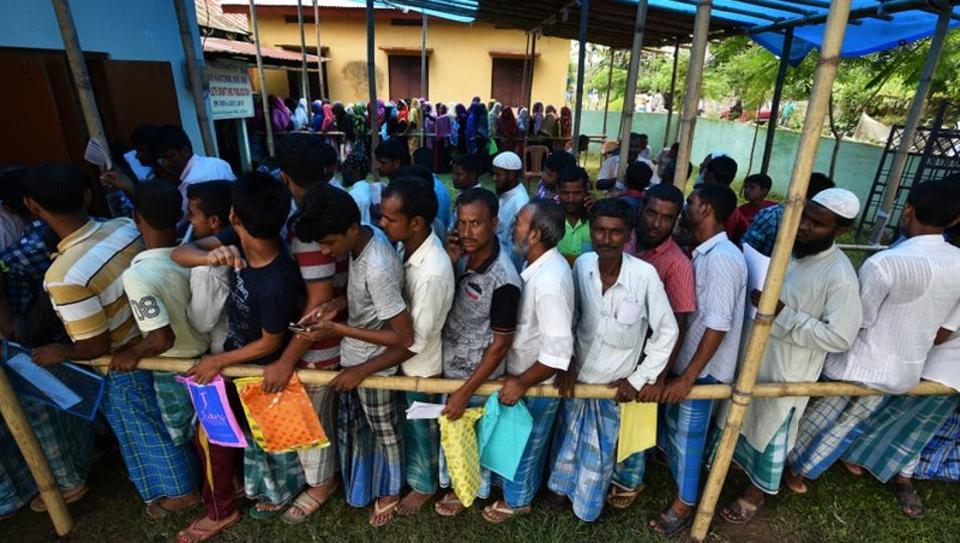
The first is the Foreigners Tribunal (FT), set up by the Assam government in 1964, to identify the legal status of suspected foreigners in Assam. There are 100 FTs in Assam as on date.
The second is the Illegal Migrants Determination Tribunal, or IM (DT), established in 1985, with special provisions for Assam. It only considered the cases of those who had allegedly entered India after March 25, 1971; crucially, these placed the onus of proving citizenship on the accuser, rather than the accused. The IM (DT) Act was subsequently struck down by the Supreme Court as being unconstitutional in 2005.
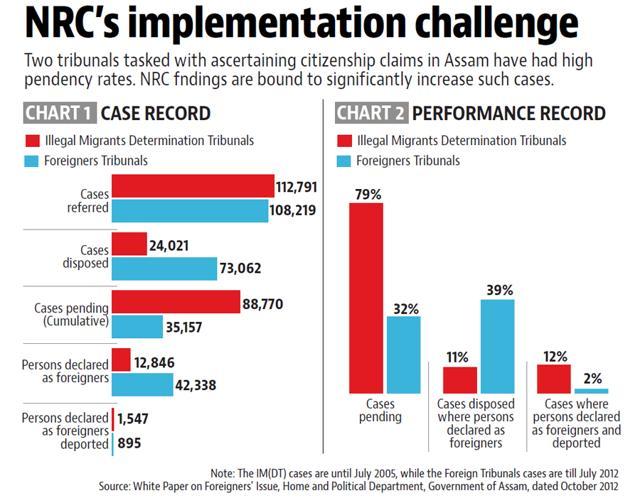
High pendency has plagued the working of the two tribunals, according to data from a 2012 white paper issued by the Assam government. Between 1985 and 2012, about 221,000 cases were referred to the two tribunals. During this period, they disposed of only about 97,000 cases.
In these, they declared about 55,000 individuals as foreigners, leading to the deportation of 2,442 individuals (Chart 1). Between the two tribunals, the IM (DT) courts have been seen to be far less efficient and also less likely in declaring a person a foreigner. However, they were more likely to effect deportations (Chart 2).
The high pendency in the two tribunals has been attributed to the lack of judicial supervision, long vacancies of members and inadequate staff. And now, in Assam, there are 4 million cases to be heard.
(Arjun Srinivas is a recipient of the Mint-Hindustan Times-HowIndiaLives Data Fellowship 2018.)


