E-Paper



Thick haze of pollutants, shallow fog shroud Delhi, minimum temp below normal
Persistent cold northwesterly winds were expected to dip the mercury by 1-2°C over the weekend in the national capital and make nights colder

 Prefer HTon Google


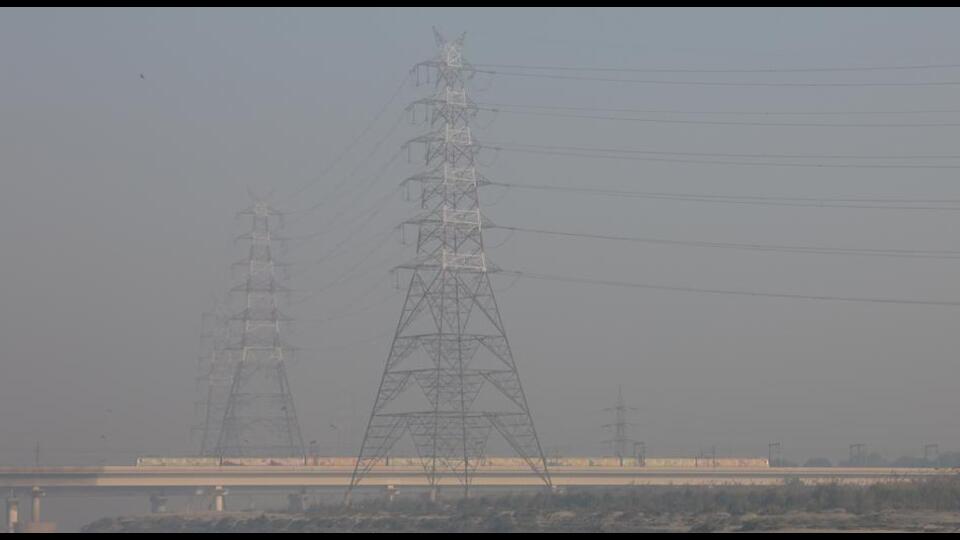
A thick haze of pollutants and shallow fog shrouded Delhi in the early hours of Friday, even as the minimum temperature of 12.7°C was two degrees below normal. Persistent cold northwesterly winds were expected to dip the mercury by 1-2°C over the weekend. On Monday, the minimum temperature was expected to be below 10°C. The mercury dipped below 15°C for the first time this season on Thursday.
An India Meteorological Department (IMD) official said a gradual dip in night-time temperature will continue. “The mercury usually dips after snowfall and when northwesterly winds blow. Clear skies also add to the effect as the surface heating that occurs during the day is lost into the atmosphere at night.”
On Friday, the Lodhi Road weather station recorded the lowest minimum of 11.2°C, followed by 11.4°C at Ayanagar, as the air quality remained “very poor”. Smog was recorded until 9am, before visibility began to improve as the sun came out.
The 24-hour rolling average AQI was 309 at 9am. As many as 26 out of the 39 active air quality stations recorded an AQI of over 300, and the remaining 13 over 200. The AQI was 311 (very poor) at 4pm on Thursday.
HT’s analysis of air quality data from the city’s 39 active ambient air quality stations on November 5 showed missing data, suspicious measurement patterns, and algorithmic loopholes in how the average AQI is calculated. It flagged how these factors combine to produce readings which may not accurately reflect ground conditions – meaning the actual AQI may be even worse.
The AQI shot up by over 100 points on Thursday, following the intrusion of stubble smoke, firecracker emissions from Gurpurab, and local emissions, leading to a smoke-filled sky until wind speed picked up from 10am onwards. Delhi recorded similar conditions, with calm winds leading to poor visibility as smog impacted the city skyline.
The contribution of stubble smoke was at a season high of 9.5% on Thursday, but is forecast to touch 38% on Friday, the Decision Support System (DSS) shows. The contribution is forecast to be 25.30% on Saturday and 31.76% on Sunday. Before Thursday, the highest contribution of stubble burning to Delhi’s air was 5.87% on October 28.
Past data shows stubble fires become a serious contributor to the yearly choke in Delhi, typically peaking in the first week of November. The peak single-day contribution last year was 35.1% on November 1. It was at a peak of 35% on November 3, 2023, the same as 2022 (35% on November 3). It was 48% on November 6 in 2021.
Experts said, despite floods in Punjab this year, which saw late harvesting and subsequent stubble burning, red dots are quickly beginning to accumulate on satellite imagery. “Wednesday night saw a lot of local emissions accumulating, namely, firecrackers and vehicles. Winds remained low till early Thursday and only picked up around noon, dispersing pollutants to an extent,” said Sunil Dahiya, founder and lead analyst of the think-tank EnviroCatalysts.
“Forecasts show westerly to north-westerly winds at transport level are likely to blow in the city over the next few days, meaning stubble smoke will be a key contributor ahead.”