
 E-Paper



Timely surgery along with antifungal medicines lifesaving for mucormycosis patients
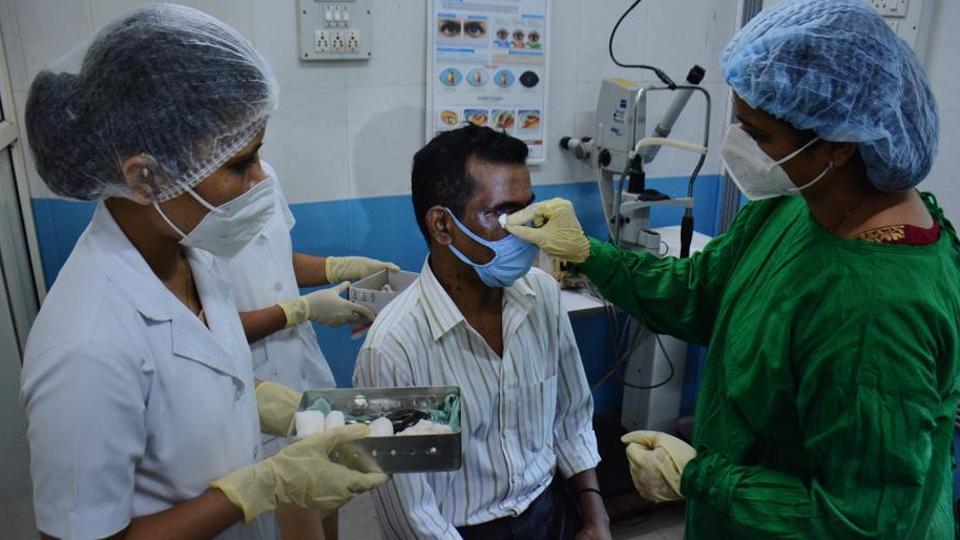
Mucormycosis is a rare and deadly fungal infection that usually happens in immunocompromised patients such as those who have cancer or have had transplant surgery. It usually happens in the nose and eye and results in death of tissue resulting in a black discolouration.


Timely surgery along with administration of antifungal medicines significantly reduced mortality in patients with Covid-19 Associated Mucormycosis (CAM), found a pre-print study of 155 patients by doctors from Max Hospital-Saket. The hospital recorded 11.9% mortality among those who received surgical intervention along with drugs as compared to 50% in those who did not receive surgery.
The age of the patient also significantly co-related to whether they survived, with the hospital recording 9.8% mortality in those below the age of 45 years and 40% mortality in those above the age of 75 years.
The data from the hospital shows that diabetes and use of steroid for the treatment of the underlying coronavirus disease (Covid-19) were significant risk factors for getting the fungal infection – 91.6% of the patients had a history of use of steroid and 78.7% had diabetes.
The severity of Covid-19 was also a risk factor – 73.6% of the patients who came back with mucormycosis needed hospitalisation for their initial Covid-19.
“We need to understand that mucormycosis is not a new disease; diabetes and use of steroids that can suppress the immune system are known risk factors. In addition, Covid-19 also increases the risk of the infection. Ferritin level are high in Covid-19 patients; ferritin contains iron which also predisposes people to mucormycosis,” said Dr Budhiraja.
However, the mortality did not depend on the diabetes status or steroid use, as per the study that was recently uploaded on the pre-print server Medrxiv.
“The two things that save a CAM patient are early diagnosis and aggressive treatment. Surgeries saved lives. What we realised was that medical management – by only administering antifungal medicines – resulted in higher mortality. If you see the data, over 70% of the patients who developed mucormycosis were diabetics and we had to determine whether they should undergo surgery. 135 of the 155 patients included in our study underwent surgery,” said Dr Sandeep Budhiraja, first author of the paper and the clinical director of Max healthcare.
Higher deaths were reported in patients who were in intensive care units as opposed to wards; and in those who were on mechanical ventilators as opposed to non-invasive ventilators.
“This is a natural co-relation; ICU admission and need for mechanical ventilation are indicative of the severity of the disease. Most patients recovered from Covid-19 and reached the hospital with mucormycosis on an average three weeks later,” said Dr Budhiraja. Only 18 of the 155 patients had simultaneous Covid-19 and mucormycosis infections.
Mortality was also high – 50% -- in disseminated mucormycosis, where the patient had the infection in their sinus as well as lungs. Nearly 9.9% mortality was reported in patients who had the infection only in their nose, 23.9% in those with the infection in their nose and eye, and 18.2% in those with infection in their nose, eye, and brain.
Mucormycosis is a rare and deadly fungal infection that usually happens in immunocompromised patients such as those who have cancer or have had transplant surgery. It usually happens in the nose and eye and results in death of tissue resulting in a black discolouration. Surgery for mucormycosis removed this necrotised or dead tissue. If left untreated, the infection can kill nearly half of those it infects. The Max study, however, put the average mortality in patients with CAM at 16.8%.
Dr Budhiraja also said none of the 155 patients were from their hospital but had been referred from other hospitals and states. “It is clear that those who had extensive disease had poorer outcome. Around 40 of the patients came to us with extensive spread of the disease – there was a delay not only in reporting to hospitals but also in starting treatment with antifungals due to shortage of Amphotericin B at the time,” said Dr Budhiraja.


