
 E-Paper



Tirupati laddu: A centuries-old tradition in the eye of the storm
The trust which manages the affairs of the Tirupati temple, has said it has received several complaints over the poor quality of “laddu” in the last few years.

 Prefer HTon Google


The latest controversy over the alleged usage of ghee adulterated with animal fat in the preparation of the famed Tirupati laddu, when YS Jagan Mohan Reddy was the Andhra Pradesh chief minister, has kicked up not just a political controversy, but also a nationwide outrage among millions of devotees of Lord Venkateshwara of Tirumala over the sacrilege of “laddu prasadam.”
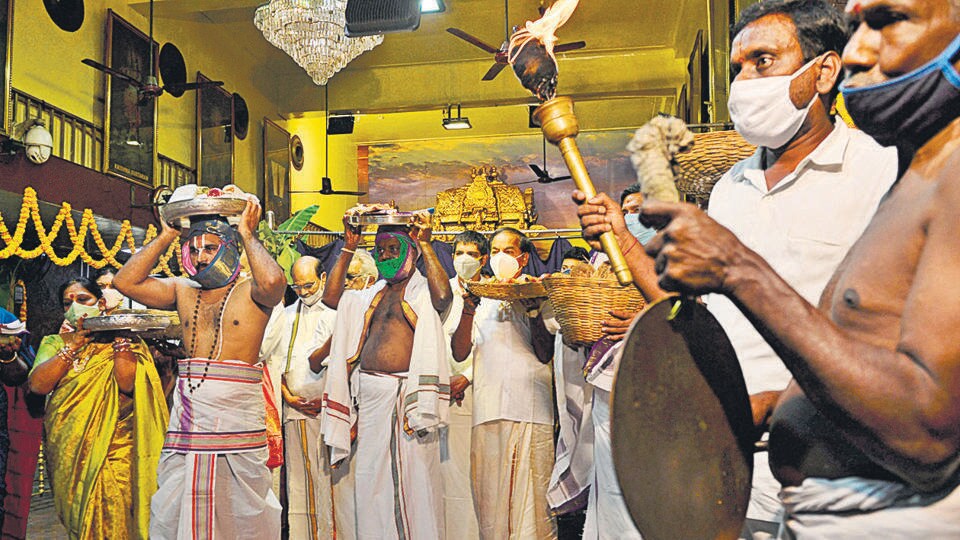
Also Read: CJI Chandrachud offers prayers at Tirumala Temple amid Tirupati Laddu row
The authorities of the Tirumala Tirupati Devasthanams (TTD), which administers the affairs of the temple, have said that it has received several complaints from the pilgrims over the poor quality of “laddu” in the last few years.
“It was found that suppliers were supplying poor quality ghee, which lacks aroma and taste, and was possibly adulterated,” TTD executive officer J Shyamala Rao said in his report to the state government, following the latest controversy.
He added that the TTD lab has the facility to test certain basic parameters, including moisture, testing for fatty acids, mineral oil, added colour, melting point and iodine value, but not adulteration with foreign fats.
“So, no test for adulteration was ever done nor were the samples sent to outside labs for such tests,” he said, adding that the National Dairy Development Board has come forward to donate the adulteration testing equipment worth ₹75 lakh to the TTD.
Former chief priest of the Tirumala temple and advisor to the TTD on “agama sastra” (temple rituals) AV Ramana Deekshitulu alleged that he had complained to the authorities several times about the deterioration in the quality of “laddu” and other prasadams at the temple in the past few years, but nobody paid heed to his complaints.
“I had been in the service of Lord Venkateshwara for the past 50 years, but never had I come across the adulteration of any raw material used in the preparation of laddu. It was only in the last three or four years that there were complaints of poor quality of prasadam,” the priest said.
Also Read: IPS officer to head SIT in Tirupati laddu case
HISTORY OF TIRUMALA LADDU
Noted Right to Information (RTI) activist BKSR Iyengar, who has been fighting on the issues pertaining to Tirumala temple, said that there has been no archaeological evidence about the present form of Tirupati laddu, which has become a matter of sentiment for millions of devotees.
“There was a mention of ‘Tirumala laddu’ in the songs of popular 15th century saint and composer Annamacharya, but it was not a popular offering to the Lord. Perhaps, it was very small in size and offered to the devotees as prasadam,” he said.
Dr V Thimmappa, a history professor of Sri Venkateshwara University in Tirupati, in his research paper “Preparation of Tirumala Srivari Laddu: A Critical Study,” said that historical records show that the offering of the prasadam to the presiding deity began during the time of Pallava dynasty in the ninth century.
It was originally cooked rice. In the subsequent centuries, several other forms of “Naivedyam” (offering) such as sukkiyam, appam, manohara padi and vada are were offered to god. Manohara padi can be the earlier form of laddu, which was documented in 1715.
“In 19th century, then then Madras presidency began sale of prasadams to pilgrims as well. There was more demand for vadas from pilgrims because it could be preserved for several days,” he said.
In the early 20th century, the Madras government started selling sweet bundi, which was the initial form of laddu. It was in 1940, eight years after the establishment of TTD, that the “sweet bundi” took the shape of laddu, he added.
According to Thimmappa, the architect of the present day laddu is Kalyanam Iyengar, a spiritual saint who introduced the Mirasidar (hereditary trustees) system to prepare laddus. “These Mirasidars enjoyed the privilege to prepare laddus and get their share till 2001 — out of each lot of 51 laddus, 11 were given to the Mirasi Brahmin families. The Mirasidar system was abolished in 2001, after the TTD won a legal battle in the Supreme Court against the hereditary system.
HOW TIRUPATI LADDU IS MADE
Traditionally, Tirupati laddus are made in the temple kitchen, referred to as “potu”, located in the inner circle of the temple, on the left side of the sanctum sanctorum. The raw materials are transported into the kitchen through conveyer belts. Earlier, the cooking used to be done using firewood, but it was replaced by LPG fuel in 1984.
According to the TTD manual, the preparation of laddus is done as per “dittam,” a list of ingredients mentioned in the “Aagama Sastra”. However, slight modifications were made in the list in the last few decades to enhance the taste of laddus.
At present, for the preparation of around 2.5 lakh laddus per day, the authorities use about 10 tonnes of Bengal gram (besan) flour, 10 tonnes of sugar, 700 kg of cashew nuts, 150 kg of cardamom, 300 to 500 litres of ghee, 500 kg of sugar candy and 540 kg of raisins.
“More than 600 people are employed in this laborious process of preparing the laddus. To support the preparation, the temple’s kitchens went through heavy customisation, such as installing escalator belts and bundi boxes,” a TTD official said.
In February last year, then TTD executive officer AV Dharma Reddy announced that the board was importing ultra-modern machines from Germany, Switzerland and Australia at a cost of ₹50 crore, which can prepare six lakh laddus a day. The machines were supposed to land in December, but so far, there was no information about the same.
Iyengar said that the TTD had imported a similar laddu-making machine from London in 1997, but it was not used till 2006 and finally, it was dismantled. “In fact, usage of machines for preparation of laddus was against the Agama principles,” he said.
In order to prevent black marketing of Tirupati laddus, in 2008, the TTD registered them for a geographical indication (GI) tag. In 2009, it obtained patent rights to Tirupati laddus under the category foodstuff under the GI Act 1999.
“This has prevented others from preparing or naming the sweet with the same name. In 2017, as part of their cuisine series, the Indian government unveiled a postal stamp that commemorated the Tirupati Laddu,” he said.
INSCRIPTIONS ON QUALITY OF PRASADAM
Iyengar said that there were archaeological evidences on how the emperors and kings used to take utmost precautions in the preparation of prasadams offered to Lord Venkateshwara.
“There are around 1,150 inscriptions in Kannada, Sanskrit, Tamil and Telugu on the temples of Tirumala and Tirupati, including 700 on the walls of the Lord Venkateshwara temple on Tirumala, some of them dating back to 8th century AD,” he said.
“This inscription is engraved on the north wall in the first prakara (outer wall) of the Tirumala temple. It mentions that how to take extreme precautions for transportation of ghee to lord Venkateswara temple,” he said.


