E-Paper



‘Too much passion, little reason’: SC on SIR pleas
The Supreme Court questioned the credibility of claims regarding wrongful voter deletions in Bihar, emphasizing the need for proper appeals before further inquiry.

 Prefer HTon Google


“Too much of passion, little of reason,” the Supreme Court remarked on Thursday as it heard petitions challenging the ongoing special intensive revision (SIR) of electoral rolls in Bihar and the alleged deletion of nearly 3.66 lakh voters from the final rolls.
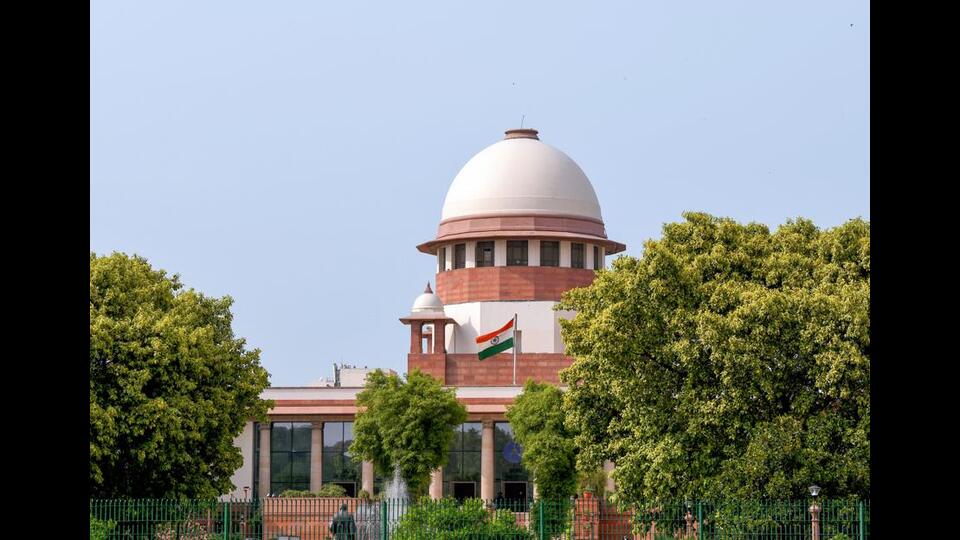
A bench of justices Surya Kant and Joymalya Bagchi, while hearing the matter for the third time in as many weeks, expressed concern over the absence of credible material before it to establish wrongful deletions, observing that most allegations were yet to be tested through the statutory appeal mechanism available under the law.
“An appeal can just be made by saying that ‘My name has not been included and no order has been passed’. Where is even one such appeal? There seems to be too much of passion, little of reason. Let appeals be filed first,” the bench told advocate Prashant Bhushan, who appeared for petitioner NGO Association for Democratic Reforms (ADR).
The court stressed that anyone aggrieved by deletion from the electoral rolls must first exhaust the remedy of appeal before the designated authorities under the Registration of Electors Rules, 1960, adding that even those who have received cryptic or incorrect orders could still approach the appellate forum.
The remarks came after senior advocate Rakesh Dwivedi, appearing for the Election Commission of India (ECI), pointed out discrepancies in an affidavit filed by ADR on behalf of a person who claimed his name had been wrongfully deleted. Dwivedi told the court that the individual was never on the draft rolls, had not submitted the voter enumeration form, and that the electoral details provided pertained to another person -- a woman registered at a different polling booth.
“This affidavit is completely false...the person claims to be on the draft list but was not there at all. Even the EPIC number mentioned corresponds to a lady voter. There are no annexures, and the notary stamp appears to have been reused,” submitted Dwivedi, arguing that such examples erode the credibility of the petitioners’ claims of mass exclusions.
The bench appeared persuaded by the submission. “Now there is a doubt whether such person exists at all,” observed the court, questioning how such an affidavit could have been submitted without verification.
Bhushan urged the court to direct an inquiry by the state legal services authority into the veracity of the affidavit, but the bench disagreed. “The facts are incorrect and ECI has demonstrated it. If the person is not residing at the given address and the voter at that number is someone else, what is there for the legal services authority to inquire?” the court asked.
When Bhushan said he had brought 20 more affidavits from affected individuals, the bench responded sharply: “After this affidavit, what is the authenticity of others? We are not in the business of inquiring. Some verification had to be done at your end.”
The judges further questioned why those who claimed to have been excluded were not availing of the assistance already provided through the state and district legal services authorities, which the court had earlier directed on September 1 to assist such voters. “Why can’t these people approach the legal services authorities for filing appeals against the orders of the Electoral Registration Officers (EROs)?” the bench asked.
In its fresh directions on Thursday, the court reiterated and expanded its earlier order. It requested the executive chairman of the Bihar State Legal Services Authority to send communications to all district legal services authorities, instructing them to provide free legal aid, assign para-legal volunteers, and facilitate the filing of appeals by excluded voters.
“Let each village have a list of Booth Level Officers (BLOs) and the numbers of para-legal volunteers who will help in filing these appeals. The officers shall also provide facilities to draft the appeals and counsel from the panel to file such appeals,” the bench ordered, adding that a status report be submitted within a week. The court also clarified that these directions would apply not only to those excluded from the final electoral rolls but also to those whose names were left out during the draft stage.
At the same time, the bench indicated it would examine, on the next date of hearing, whether the appellate authorities should be directed to dispose of such appeals within a fixed time frame. The matter will now be heard on October 16. Bihar goes to polls on November 6 and 11.
On October 6, the Commission announced that Bihar will go to polls in two phases -- on November 6 and November 11, with counting scheduled for November 14. Of the state’s 243 seats, 121 constituencies will vote in the first phase and the rest in the second. The election will be conducted on the basis of the final electoral roll of 74.2 million voters.
During the hearing, psephologist Yogendra Yadav, who was permitted to address the bench, said that while no one disputed ECI’s right to revise electoral rolls, the special intensive revision had been “weaponised .” He said SIR caused the largest-ever shrinkage of electoral rolls in India’s history. He contended that the SIR process had led to “systemic and structural exclusion,” disproportionately affecting women voters, and pointed to instances of “gibberish” entries, such as house numbers marked ‘0’, multiple voters listed under one household, and even data in Tamil and Kannada.
The bench, however, replied that a widening gap between the adult population and the number of registered voters in Bihar had been flagged since 2014-15, justifying the need for a revision. “You see, from 2020 onwards, the voter-to-population ratio had fallen sharply -- SIR was needed,” it said. Yadav replied that the problem had already been corrected in 2023, but the revision continued unnecessarily.
The bench observed that while irregularities could not be ruled out, the electoral process must also be viewed with institutional trust. “We also have to proceed on the premise that authorities are acting as per law,” said the court, adding that the court’s endeavour was to ensure every eligible voter was included without disrupting the ongoing election schedule.
On October 7, the bench had directed the ECI to provide details of the 3.66 lakh additional deletions made from the final rolls during the SIR exercise in Bihar, clarifying that it would not embark on a “roving inquiry” without credible proof of wrongful exclusion.
At that time, Bhushan, along with senior advocates Abhishek Manu Singhvi and Gopal Sankaranarayanan argued that the SIR disproportionately affected women, Muslims, and marginalised communities. ECI, however, maintained that all deletions were made after due verification, each accompanied by a written order, and that fresh names added were genuine first-time voters.
The court had then observed that intervention at this stage would only be “in aid of the electoral process so that confidence in it is fortified,” and had allowed the petitioners to file affidavits identifying affected individuals.