
 E-Paper



Tracking NTR’s journey: From superstar to political stalwart
It was a sensation when NTR entered politics by floating Telugu Desam Party in March 1982 with the slogan of upholding the self-respect of the Telugus and coming to power in then combined Andhra Pradesh within nine months, dismantling the decades-old Congress, which was dominating the state politics till then.

 Prefer HTon Google


When the 33-year-old actor walked into the sets of Vijaya-Vauhini Studios in Madras (now Chennai) in 1956, donning the make-up of Lord Krishna, the entire crew in the studio, including director K V Reddy, was dumbfounded. Soon, some of the crew members rushed to him to touch his feet and others offered him aarti.
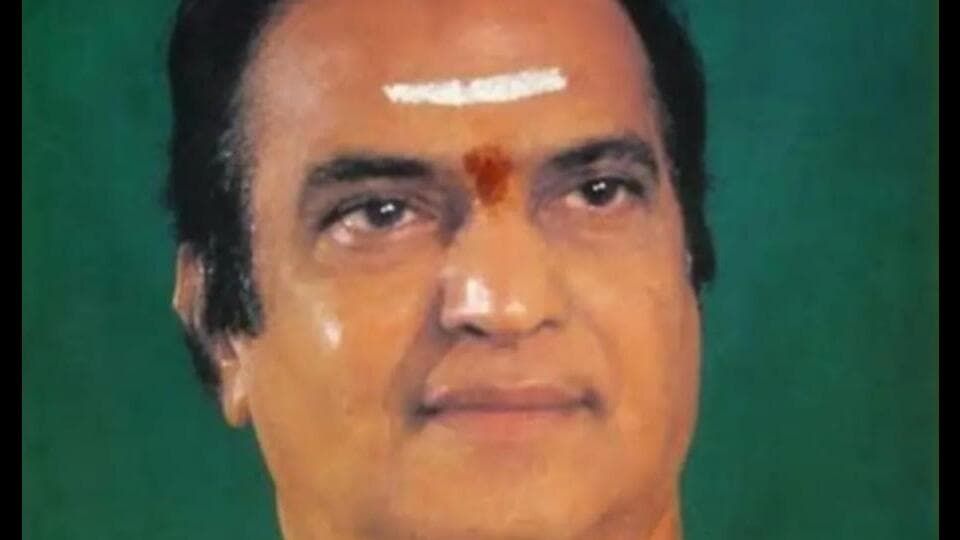
That was Nandamuri Taraka Rama Rao, aka NTR. Such was the charm he had weaved around the people of Telugu states that for the next six decades, he was virtually treated as a demi-god. Take any mythological character – Krishna, Rama, Vishnu, Shiva and Lord Venkateshwara, he was a perfect fit into that role. He was an uncrowned king of the Tollywood till the end of 1970s.
And it was a sensation when NTR entered politics by floating Telugu Desam Party in March 1982 with the slogan of upholding the self-respect of the Telugus and coming to power in then combined Andhra Pradesh within nine months, dismantling the decades-old Congress, which was dominating the state politics till then.
NTR took the Congress-led Central government by horns and played an important role in floating the National Front by pulling down the Rajiv Gandhi government in 2009. His untimely death due to sudden heart attack on January 18, 1996, brought to an end an era in Indian cinema and also a brief role in Indian politics.
He was voted “Greatest Indian Actor of All Time” in a national poll conducted by CNN-IBN in 2013 on the occasion of the Centenary of Indian Cinema
NTR’S birth centenary begins
Starting Saturday, the people of Telangana and Andhra Pradesh celebrate the birth centenary NTR, who had left an indelible impact on them for over five decades.
The celebrations began at NTR Ghat in Hyderabad at 7.30 am with the screening of a short film “NTR Mahonnatudu” by NTR Sata Jayanti Utsava Samithi (NTR Birth Centenary Celebrations Committee) headed by veteran film director K Raghavendra Rao.
Simultaneously, in NTR’s native village of Nimmakuru in Krishna district, all the family members of NTR kick-started the centenary celebrations under the auspices of his younger son and actor-turned-politician Nandamuri Balakrishna, according to a statement from the family.
NTR’s daughter and former Union minister Daggubati Purandeshwari said NTR Satha Jayanti Utsav Samithi will organise a series of events every month for the next one year in both the Telugu states at Tirupati, Ongole, Vijayawada, Visakhapatnam, Rajamahendravaram, Warangal, Khammam, Nizamabad, Hyderabad and other places.
“Eminent personalities in the fields of literature, arts, social services, political, agriculture, health will be felicitated with the NTR Puraskarams,” she said
NTR, a legend in films
Born on May 28, 1923 at Nimmakuru village of Gudivada block in Krishna district, NTR was given in adoption to his paternal uncle. He completed his schooling in Vijayawada, he did his Bachelor of Arts in Andhra Christian College, Guntur.
After doing some petty jobs like an attendant in a civil court and a partner in a tobacco products distribution company, NTR passed a Madras Service Commission exam to become a sub-registrar in Prathipadu in Guntur district in 1947, which was those days a highly secured job. But he quit the job within three months to try his luck as an actor in Telugu films.
His first break in films came with a small role of a constable in the film “Mana Desam” in 1949, followed by a side-hero character in “Palletoori Pilla” in 1950. After that he never looked back.
But what made him the “man of the masses” was his portrayal of the roles of Hindu deities, particularly, Krishna, Vishnu and Rama.
Particularly, NTR had immortalised the character of Lord Krishna, a role which he had played in 17 films. “There was a time when NTR’s portrait as Lord Krishna adorned walls of millions of people in the South Indian states. People have not seen real Lord Krishna and whenever they close eyes to worship the god, only NTR’s image used to appear before them,” said Nandamuri Lakshmi Parvathi, second wife of NTR, who married her in 1993, eight years after the death of his first wife Basava Tarakam.
“Though I don’t remember which year it was, but the Birla group had taken the portrait of NTR for carving out the image of Lord Krishna for a temple in Rajasthan,” she said.
“Such was the aura NTR had among the fans that after he had played the role of Lord Venkateshwara of Tirumala in the film Sri Venkateshwara Mahatmyam in 1960, pilgrims returning from Tirumala used to go to his residence in Madras to have a darshan of NTR,” retired IAS officer K Lakshminaryana, who wrote a biography on NTR.
Not just the godly characters, the versatile actor also played many other negative mythological roles such as that of Ravana, Duryodhana and even Keechaka, besides other softer roles like that of Bhishma, Karna and Vishwamitra and even that of a eunuch – Brihannala of Mahabharata.
He also played the “Robin Hood” type folklore characters in several films. “He acted in more than 300 films and more than 80 per cent of his films were super hits,” Lakshmi Parvathi said.
A revolution in politics
Following an incident of alleged humiliation meted out to former chief minister T Anjaiah by then Congress general secretary Rajiv Gandhi at Hyderabad airport in February 1982, NTR stormed into politics with a plank of “self-respect of Telugus.”
Apparently angered by the way the Congress was treating its chief ministers as doormats, NTR floated the Telugu Desam Party on March 29, 1982, in a most dramatic manner. “Many people, including experienced Congress leaders brushed him aside as a non-serious candidate and the people were more enthusiastic because of his filmy glamour and nothing more,” said Ramesh Kandula, a senior journalist, who wrote a book “Maverick Messiah,” on the political journey of NTR.
But NTR proved all of them wrong. He toured the length and breadth of the state on his “Chaitanya Ratham,” a remodelled Chevrolet van, driven by his son N Harikrishna between June, 1982 and January, 1983 with occasional breaks. He drew tens of thousands of crowds to his road-side meetings and most were charmed by his oratory and dramatic appeal, calling upon them to fight for their self-respect.
According to Lakshminarayana, NTR transformed from a mass hero in films to a mass leader in politics by announcing several schemes like ₹2 a kg rice and pucca houses for the poor. Under his leadership, the TDP swept to power in the January 1983 elections with a massive mandate – winning 201 seats in the 294-member assembly. And NTR took over as the first non-Congress chief minister of Andhra Pradesh on January 9, 1983.
During his 13-year-long journey in politics, NTR faced several ups and downs. Within 18 months of coming to power for the first time, in August 1984, NTR faced a great betrayal from his own colleague Nadendla Bhaskar Rao, wo usurped power with the support of then Governor Ramlal.
NTR fought back the crisis strongly. Despite his fragile health, he launched a crusade against the undemocratic attitude of the Congress and travelled to different parts of the state in his Chaitanya Ratham again in the next few days. With majority of the MLAs backing NTR, Bhaskar Rao failed to prove the majority within a month and had to step down, paving way for the return of NTR to power again.
According to Kandula, the first time that NTR had grabbed national attention and entered into confrontation with the Centre was a few months before the August 1984 crisis, when he walked out of a National Development Council (NDC) meeting, to protest the dismissal of the Farooq Abdullah government in J&K.
“He did not give any clue to his officials about his plan to deviate from the prepared draft and deliver a political speech at the meeting. That angered Indira Gandhi which ultimately led to his ouster from power,” he said.
Between 1985 and 1989, NTR took several landmark decisions, some of them proved controversial – like doing away with hierarchical patwari system (village revenue officers) and reduction of retirement of state government employees from 58 years to 55 years, which resulted in premature retirement of 30,000 employees. He lost power in the early elections to the state assembly held in 1989.
Between 1989 and 1994, NTR focussing on building his national image by playing a key role in the formation of National Front, a coalition of non-Congress parties including DMK and Asom Ganaparishad. It also had the support of the BJP on one side and the Left front on the other.
In 1993, NTR married Lakshmi Parvathi, who had served him when he was hospitalised due to brief illness, eight years after the death of his first wife due to cancer. Her entry into NTR’s life led to a rift between him and his family members, particularly his son-in-law N Chandrababu Naidu.
The rift within the family and the party widened after NTR returned to power for a third term in December 1994 assembly elections in the state. Naidu, who was wary of Lakshmi Parvathi’s attempts to grab power, engineered a coup against NTR in August 1995 and dethroned his own father-in-law.
NTR tried to resist the revolt, but was powerless as Naidu successfully lured the majority of the TDP MLAs – 191 out of 219 MLAs TDP had won in 1994. Naidu took over the party and became the chief minister on September 1, 1995. Within four months, NTR passed away on January 18, 1996, at the age of 73.


