E-Paper



Trump airs tariff demand ahead of talks with Modi
Trump’s remarks soured some of the optimism generated by Pompeo’s talks with Modi and foreign minister S Jaishankar in New Delhi on Wednesday.

 Prefer HTon Google


A day ahead of his meeting with Prime Minister Narendra Modi on the margins of the Group of 20 (G20) Summit in Japan, US President Donald Trump sent a tough message to India on Thursday, describing retaliatory tariff hikes imposed on American products by New Delhi as “unacceptable” and demanding their withdrawal.
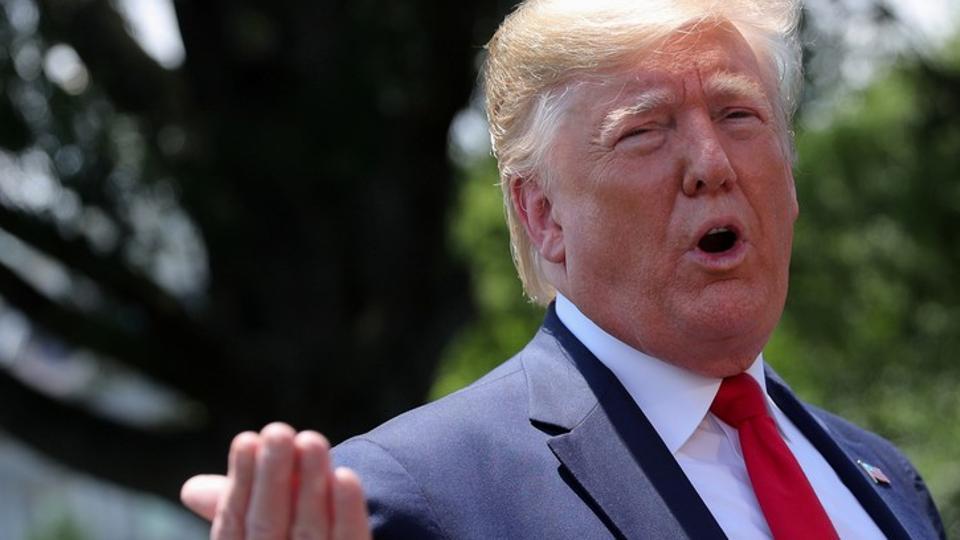
Trump’s demand, made in a tweet before his arrival in Osaka for the G20 meeting, came just a day after forward-looking discussions between secretary of state Mike Pompeo and India’s top leadership that had seemingly set the stage for both sides to work through differences on key issues such as trade and Indian arms purchases from Russia.
“I look forward to speaking with Prime Minister Modi about the fact that India, for years having put very high Tariffs against the United States, just recently increased the Tariffs even further. This is unacceptable and the Tariffs must be withdrawn!” Trump tweeted, without specifying the levies he was referring to.
Trump’s remarks soured some of the optimism generated by Pompeo’s talks with Modi and foreign minister S Jaishankar in New Delhi on Wednesday.
Differences on trade-related matters, including market access for American products and India’s proposed data localisation rules, have been bubbling over in the past few months.
After the US withdrew duty-free export benefits to India under the Generalised System of Preferences (GSP) programme on June 5, New Delhi retaliated by imposing tariffs on 29 American products, including almonds and fresh apples, affecting $5.6 billion of imports from the US.
These differences figured prominently in Pompeo’s meetings on Wednesday with Modi and Jaishankar. People familiar with the talks had described Pompeo’s approach as “accommodative” and “very problem-solving”.
There was no official response to Trump’s tweet although people familiar with the developments said the Indian side was focussed on the largely positive outcome of Pompeo’s meetings and looking to the Modi-Trump meeting on Friday to thrash out these issues.
“On the issue of high tariffs, a lot of it is born out of misconceptions. One or two items on which India charges high tariffs are all permitted under WTO {World Trade Organization} rules. The US applies high tariffs on items they are concerned about; for example, it charges 330% duties on some tobacco imports, which is higher than the 100% on Harley-Davidson motorcycles that we often hear about,” said a person who declined to be named.
“We’re aware of the president’s deep interest in trade issues, and there have been a lot of achievements on this front. There was double-digit growth in trade in the last three years and the trade deficit, about which the US complains so much, was reduced by double digits in the same period,” the person added.
Goods and services trade between India and the US totalled an estimated $142.1 billion in 2018. India recorded a decrease in the deficit from $22.9 billion in 2017 to $21.3 billion in 2018.
The people cited above made it clear India wasn’t a high tariff economy and WTO reports showed India’s tariffs were largely in line with those of other developing countries and, in some cases, lower than those of developed nations.
At a news conference on Wednesday, Jaishankar and Pompeo acknowledged that issues such as market access, tariffs, GSP, data localisation and the impact of US sanctions that have halted Iranian oil imports had figured in their discussions. They also said both sides would focus on working through these issues.
“We need to filter through the noise and get down to the basics of the relationship,” Jaishankar had said.
Neelam Deo, a former ambassador and director of Gateway House, a Mumbai-based foreign policy think tank, said it was necessary to look beyond Trump’s tweets, which sometimes offered contradictory views. “This is the typical Trump hyberbole,” she said.
“It was clear at the news conference by Pompeo and Jaishankar, and Pompeo’s subsequent speech in New Delhi that the two sides had discussed live issues and accepted each other’s positions,” Deo said.