
 E-Paper



Two western disturbances likely to affect northwest India: IMD on cold wave
With the frigid northwesterly winds from the Himalayas setting in over the plains, it is likely to get even colder in the region in the next two days.

 Prefer HTon Google


Cold wave conditions over northwest India are likely to abate from January 19 as two western disturbances are likely to affect the western Himalayan region in quick succession, the Indian Meteorological Department said on Monday. The first western disturbance is likely to affect the Western Himalayan region from the night of January 18 followed by the second western disturbance from the night of January 20. Under the influence of these two systems, the IMD said, the cold wave, which is sweeping through northwest India, is likely to abate from Thursday. (Also Read | Cold wave grips Delhi; mercury dips to lowest this season)
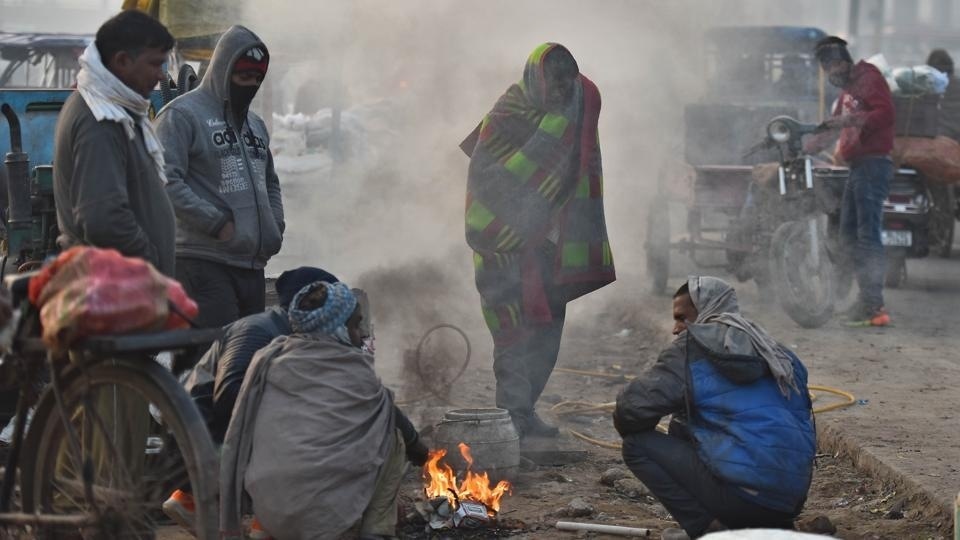
But before the stinging weather abates, the minimum temperature is very likely to fall further about 2°C over many parts of northwest India till Tuesday morning.
The Met department predicted that cold wave to severe cold wave conditions will prevail over parts of Rajasthan, Punjab and Haryana, Chandigarh and Delhi till January 18. The cold wave condition is also very likely in isolated pockets of Uttar Pradesh and Bihar from January 17-19 and over Madhya Pradesh, Himachal Pradesh, and Saurashtra and Kutch on January 17 and 18.
The IMD declares a cold wave in the region when the minimum temperature is 4.5°C or more below the normal, or when it drops to 4°C. Safdarjung
“Dense to very dense fog very likely in isolated pockets during night & morning hours over Sub Himalayan West Bengal & Sikkim during 16th to 18th; Dense fog very likely in isolated pockets over Himachal Pradesh, Uttarakhand during 16th-18th; over Bihar during 16th-19th; over Odisha on 16th & 17th and over Assam & Meghalaya and Tripura during 16th-20th January 2023,” the IMD said in a release.
“Cold Day conditions very likely in isolated pockets over Himachal Pradesh, Uttarakhand, Rajasthan, West Madhya Pradesh on 16th; over Sub Himalayan West Bengal & Sikkim during 16th & 17th January 2023,” it added.
The weather forecasting agency also warned about the increased likelihood of various illnesses like flu, running/stuffy nose or nosebleed due to the cold wave conditions in Rajasthan, Punjab and Haryana, Chandigarh and Delhi for the next two days.


