E-Paper



Two western disturbances may bring rain in Himalayan region next week: IMD
Two western disturbances in quick succession are likely to affect Western Himalayan region next week


Two western disturbances in quick succession are likely to affect Western Himalayan region during next week with the possibility of isolated heavy rainfall/snowfall on January 23, according to the India meteorological department.
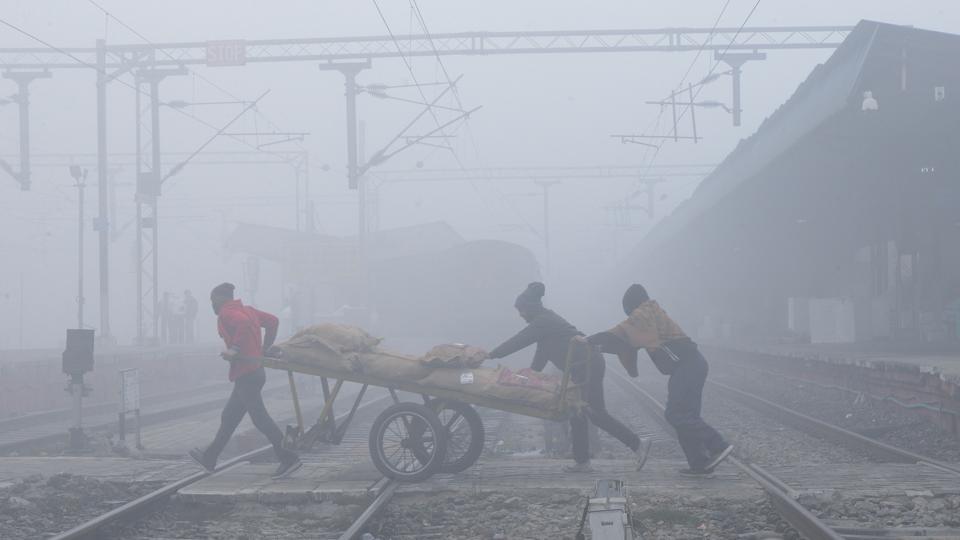
Isolated to scattered rainfall is likely over adjoining plains of northwest India during January 22 to 24. Dense to very dense fog conditions are very likely to continue over northwest India and Bihar during the next 2-3 days.
There is 92% rain deficiency over northwest India in the first 17 days of January with no rainfall or snowfall over Uttarakhand; 92% deficiency over Himachal Pradesh; 97% deficiency over Jammu and Kashmir and Ladakh. HT had reported on January 11 that North-west India is experiencing one of its driest winters on record, with an 84.8% rainfall deficiency in December and 84% in the first ten days of January, leaving the region’s hills parched and starved of snow at the height of the winter season. Some meteorologists said it was akin to a drought over the Himalayas. In 2024, the deficiency in December was only 18% but around 81.4% deficiency in January 2025.
“The WDs that are approaching may reduce the rainfall deficiency over hills and northern plains. But it will not help compensate for the deficiency since December. The second WD approaching around January 22 may be intense and may bring rainfall,” said M Mohapatra, director general, IMD.
So far the western disturbances moved in northern latitudes above the Indian region and hence did not affect the Western Himalayas.
“The main reason for such dry conditions is that western disturbances did not affect the Western Himalayan region this winter,” Mohapatra had said on January 11.
No significant change is likely in minimum temperatures over northwest India during next four days and thereafter rise by 3-5°C during subsequent three days. Conditions are becoming favourable for cessation of northeast monsoon rains over Tamil Nadu, Puducherry, Karaikal, Kerala and Mahe and adjoining areas of Coastal Andhra Pradesh & Yanam, Rayalaseema and South Interior Karnataka during next 48 hours. A western disturbance as a cyclonic circulation is lying over south Pakistan & neighbourhood. An induced cyclonic circulation is lying over central Rajasthan & neighbourhood in lower tropospheric level.
Subtropical westerly Jet Stream with core winds of the order of 135 knots at 12.6 km above mean sea level prevails over Northeast India. Two western disturbances in quick succession are likely to affect Northwest India until January 21.
Minimum temperatures were 1-4°C at most places over Himachal Pradesh; at some parts over Jammu & Kashmir and Ladakh; at isolated places over northwest Punjab and Uttarakhand; 5°-9°C at many places over remaining parts of Punjab, most parts of Haryana, Chandigarh & Delhi, Uttar Pradesh, southwest Bihar, north Rajasthan , north Madhya Pradesh, north Chhattisgarh, Jharkhand; at some parts of interior Odisha, Sikkim and at isolated pockets of Gangetic West Bengal. It is 10°C and above for remaining parts of the country except higher reaches of Western Himalayan region where it was less than 0°C.
Minimum temperatures were above normal by (2°C to 5°C) over Central India and adjoining western India and below normal (-2°C to -4°C) over some parts of Uttar Pradesh, Jharkhand, north Chhattisgarh, interior Odisha, Telangana and Rayalaseema and near normal over rest parts of the country. The lowest minimum temperature of 1.7°C was observed at Amritsar (Punjab) over the plains of India.
According to the latest bulletin by National Oceanic and Atmospheric Administration (NOAA) on January 12, presently La Nina conditions are present. Equatorial sea surface temperatures (SSTs) are below average across the east central and eastern Pacific Ocean. Atmospheric anomalies over the tropical Pacific Ocean are consistent with La Nina. There is a 75% chance of a transition to ENSO-neutral during January-March 2026. There is a 58% chance of transition to El Nino conditions during July, August, September.
El Nino years are associated with weak monsoon and very harsh summers in India.Another El Nino emerging in 2026 would mean more temperature records as it accentuates the warming influence of climate change. The World Meteorological Organisation has cautioned that it should be factored that naturally occurring climate events such as La Nina and El Nino on climate patterns are taking place in the broader context of human-induced climate change, which is increasing global temperatures, exacerbating extreme weather and climate, and impacting seasonal rainfall and temperature patterns.