
 E-Paper



Will implement common code soon but not in haste, says Dhami
The issue got a fresh fillip on June 27, when Prime Minister Narendra Modi spoke to BJP booth workers and made a strong case for UCC


Uniform Civil Code (UCC) will be implemented in Uttarakhand soon but not in a haste, chief minister Pushkar Singh Dhami said on Tuesday after meeting Prime Minister Narendra Modi in Delhi.
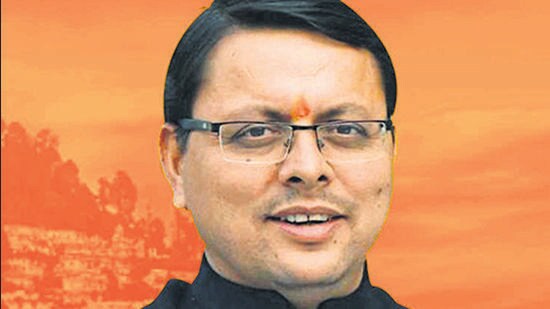
“We will bring it (UCC) soon, we will not delay it, nor will we do anything in haste,” Dhami told reporters in Delhi. “We don’t want anything to go wrong. Work is being done with due diligence on the matter.”
Asked if the tribal communities will be exempted from UCC, Dhami said, “We have not got the UCC draft committee’s complete report. When the report will be submitted, then it would be possible to comment on this.”
The chief minister, who also met Union home minister Amit Shah on Monday late evening, denied having discussion on UCC with the two top leaders.
He said he discussed various matters, including assistance for the people affected in Joshimath and the preparedness for natural disasters in view of the arrival of the monsoon season. He added that he also apprised them of the law-and-order situation in the state, Kanwar yatra and Char Dham Yatra.
The Prime Minister has assured of cooperation for rehabilitation package to affected people in Joshimath, Dhami said.
“I informed the Prime Minister about the Char Dham Yatra that has already seen over 34 lakh (3.4 million) pilgrims, which is a record compared to previous years,” he said. “I also apprised the Prime Minister about the progress of Kedarnath reconstruction and development works and informed him about the Kanwar yatra, which has started today with people from across the country coming to Haridwar.”
The chief minister said he also informed Modi about the GST collection in Uttarakhand increasing by 23%.
UCC refers to a common set of laws that will subsume customary laws across faiths and tribes and govern issues such as marriage, divorce, inheritance and maintenance. In the Constitution, it is a part of the non-justiciable directive principles of state policy. In a 2018 consultation paper, the law commission said UCC was “neither necessary nor desirable at this stage”. Earlier this month, the law commission again sought views and suggestions on UCC from the public and recognised religious organisations. Moreover, some states such as Uttarakhand have set up panels to explore implementation of UCC.
The issue got a fresh fillip on June 27, when Prime Minister Narendra Modi spoke to BJP booth workers and made a strong case for UCC. “These days, people are being provoked by the UCC. You tell me, if there is one law for one person in a home, and another law for another person, can that house function?” Modi asked. As the crowd roared in denial, Modi said, “Then how can a country work with such a hypocritical system? We have to remember that even the Constitution of India talks of common rights.”
On June 30, the five-member UCC draft committee, constituted by the state government on May 27 last year, announced that a draft report has been completed and the same will be submitted to the state government soon. “It is going to strengthen the secular fabric of the country and will be good for everyone,” UCC panel chairperson Justice (retd) Ranjana Prakash Desai said.
The committee received 230,000 suggestions, met 63 times, while its sub-committee met over 140 times and interacted with over 20,000 people, the former Supreme Court judge added.
An official familiar with developments in the UCC panel, requesting anonymity, said the draft, with focus on women, will incorporate suggestions including a ban on polygamy/polyandry. It will also include recommendations such as uniform child adoption laws, increasing the minimum age of marriage for women from 18 to 21 years, equal share in parental property for Muslim women, mandatory registration of live-in relationships, reverse inheritance provisions to help parents get share in the property/earnings of their daughter-in-law, given the fact that many soldiers from the state get martyred during duty, the official added.


