
 E-Paper



Union minister R K Singh advocates nuclear power amid storage challenges
Union power minister R K Singh emphasised the need to build a suitable ecosystem in response to current challenges in storing renewable energy and acknowledged the importance of coal and nuclear energy as interim solutions, given their continuous power generation capabilities

 Prefer HTon Google


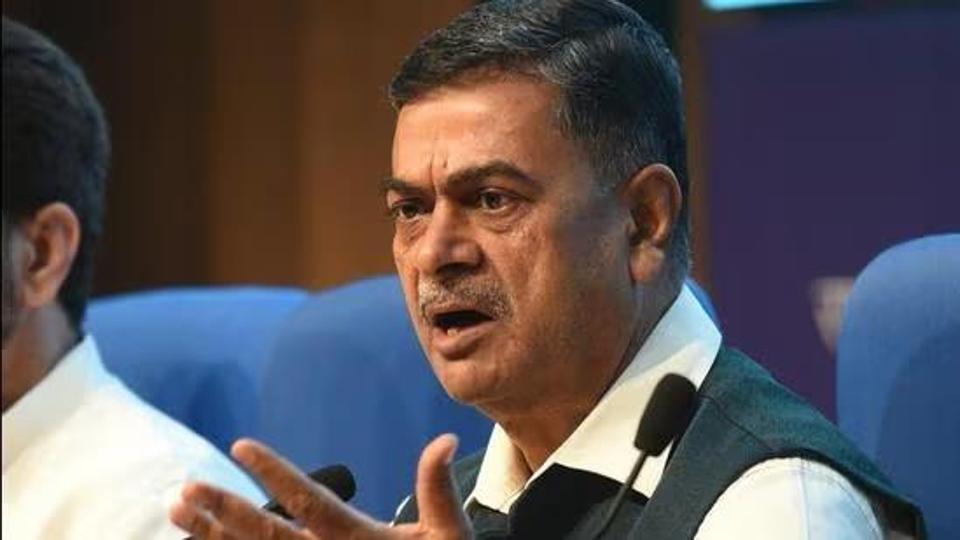
India has the potential to generate upto 100 Giga Watts of power using nuclear source, Union minister for power, new and renewable Energy, R K Singh, said on Friday emphasising the need to build a suitable ecosystem in response to current challenges in storing renewable energy.
India, at the 26th session of the United Nations Framework Convention on Climate Change (COP 26) in November 2021, announced its target to achieve net zero carbon emissions by 2070.
“To achieve net zero, we need round the clock energy from clean energy sources, but storage capacity challenges persist worldwide. So, we need nuclear power,” Singh told reporters on the sidelines of a conference on ‘Energy Transition in India – Road Travelled and Opportunities Ahead’ in Gujarat’s Gandhinagar.
He said that the Indian government (through Solar Energy Corporation of India) invited bids for a battery energy storage system (BESS), hailed as the world’s largest such project, but it did not work out eventually due to the high costs involved.
“We bid for a storage capacity of 1,000 MWh – the biggest bid in the world – at ₹10 per kWh. However, this cost of storing one unit for one hour at ₹10 raised concerns, considering the cost of power generation from renewable sources is ₹2.40 per unit. Selling this stored energy at ₹14 per unit to customers is not feasible, making it crucial to address the storage issue before we can provide round-the-clock renewable energy,” according to Singh.
Singh acknowledged the importance of coal and nuclear energy as interim solutions, given their continuous power generation capabilities.
“We burn coal, but our emissions are controlled due to advanced mechanisms. Our consumption is lower than other countries, and we must consider coal or nuclear as solutions until the storage challenge is resolved,” he said.
Talking about the current state of nuclear power in India, the minister said, “We have 7,000 MW of installed nuclear capacity, and we are expanding it to 15,000 MW. We have the capability to further increase it to 50-60 GW or even 100 GW for sustained round-the-clock clean energy generation.”
Highlighting the challenges faced in the past, Singh said that when the country turned to nuclear for power generation, they encountered various obstacles. “There were many who did not want us to go there. Having overcome these challenges, we now need to build a robust ecosystem for expansion in nuclear energy generation. This includes the establishment of more factories dedicated to generating power using nuclear energy,” he said.
The Minister emphasised the need to expand nuclear capabilities, stating, “We have less nuclear fuel, and for round-the-clock generation, we must invest in nuclear energy expansion. Our goal is to create a self-sufficient ecosystem that can contribute significantly to India’s energy needs while aligning with global efforts to combat climate change.”
Regarding numerous idle gas-fired power plants in the country, the minister said a cartel is behind the substantial increase in international natural gas prices, posing viability challenges for such power projects to run in the country.
About a large number of gas fired power plants lying idle across the country, the minister said that there is a cartel that is behind the huge hike of natural gas prices in the international markets, making it unviable to gas fired power plants in India.
He urged developed nations, with per capita greenhouse gas emissions two to three times the global average, to decrease their emissions—an issue he proposed to be addressed at the ongoing COP28 or the UN Climate Change Conference. The minister dismissed the phasing out of coal power plants by India as a “diversionary tactic topic” promoted by “anti-development forces,” highlighting that the country has one of the world’s lowest per capita emissions.
“Our emission intensity is 2.19 tonnes per capita per annum which is one of the lowest in the world, while global average is 6.8 tonnes. We are the only country which has achieved our NDCs (nationally determined contributions) nine years in advance. We had pledged that by 2030, 40% of the country’ energy generation will be through non-fossil fuels. This target has been achieved before time as the country’s non-fossil fuel capacity at present stands at 43%,” Singh said.


