
 E-Paper



‘Unsatisfactory responses led to proposal to create appeals panel for social media content’
The government late Monday night uploaded a fresh draft of the amendments that propose the appellate grievance redressal panel


New Delhi: Complaints about the unsatisfactory responses from grievance officers regarding content takedown prompted the government to propose the creation of an additional appeals panel to take final calls on social media content, Union minister of state for electronics and information technology Rajeev Chandrasekhar said on Tuesday.
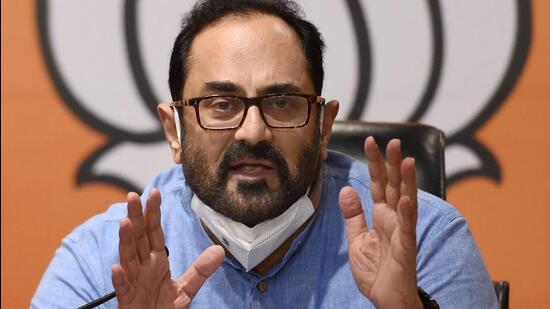
“It is a part of the Indian justice system that citizens should have recourse to an appeal if they are not satisfied with the response of an intermediary regarding blocking access to content. It is not always practical or feasible for a citizen to always approach a court.”
The government late Monday night uploaded a fresh draft of the amendments that propose the appellate grievance redressal panel. This came days after it appeared to pull down the first draft after pushback from the tech community. The composition of the panel is yet to be decided but the Centre will appoint it by a gazette notification. The Centre’s earlier draft proposal last week triggered pushback from experts, who said the plan was aimed at “bringing social media companies under direct government control”.
Chandrasekhar underlined the proposed amendments are at a discussion stage and added the government is open to other effective solutions to tackle the problem. He said the government wants to make the space accountable. “It is only after the grievance officer acts on a complaint that the panel can be approached.” He promised safeguards related to the amendments to the Information Technology Rules, 2021, which have been controversial and suspended by high courts.
“This is an additional avenue for those who cannot afford to go to court. The government is also open to the industry setting up its own self-regulatory mechanism,” Chandrasekhar said. He added the panel would bridge the gap between conduct expected from an intermediary and the conduct. “An intermediary cannot arbitrarily decide what content to action. There must be a mechanism to ensure that they are also accountable to the digital citizen. The government cannot condone any action that violates the Constitution.”
The government will hold consultations with stakeholders and experts in June to chalk out the nuances and feasibility of the proposed amendments. “This is an umbrella document that aims to level the playing field. This will keep evolving to keep with the times. But one thing is clear: no intermediary can use anonymity as a cover for criminality,” Chandrasekhar said.
The rules governing social media companies are proposed to be amended by setting up the panel that experts have said will effectively take the final call on what content stays up or is taken down from websites such as Twitter and Facebook. It will be mandatory for the intermediary to follow the panel’s decision. The amendments have been made public for inputs which the government will accept over the next 30 days.
The proposed changes also include a 72-hour deadline for companies to act on complaints if they fall under one of 10 types of violations defined, including copyright infringements, defamatory content and false information.
If an intermediary – the legal classification of a social media company – fails to adhere to the rules, they will be liable to lose their “safe harbour” status under the parent Information Technology Act, which exempts these companies from liability for what is posted by its users.


