
 E-Paper



‘Urban Naxals’ stalled Sardar Sarovar Dam work for years: PM Modi
These “urban Naxals” are still active and stall development projects with political support, the PM told environment ministers from various states after virtually inaugurating the National Conference Environment Ministers at Ekta Nagar in Gujarat’s Narmada district.


“Urban Naxals” stalled the construction of Sardar Sarovar Dam on Narmada river, Prime Minister Narendra Modi said on Friday, alleging that the “anti-development elements” ran a campaign that it would harm the environment.
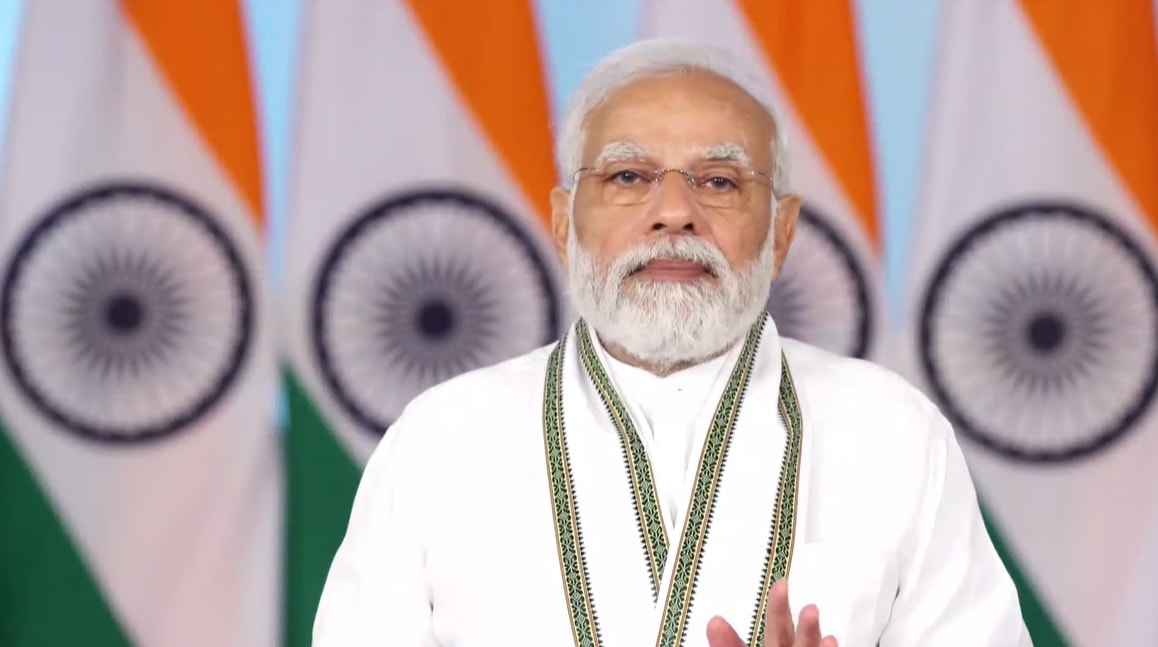
These “urban Naxals” are still active and stall development projects with political support, the PM told environment ministers from various states after virtually inaugurating the National Conference Environment Ministers at Ekta Nagar in Gujarat’s Narmada district.
“Urban Naxals and anti-development elements having political backing had stalled the construction of the Sardar Sarovar dam by running a campaign that the project will harm the environment. Huge amount of money was wasted due to this delay,” the PM said, as he addressed the event in the state scheduled to go to polls in December.
“Urban Naxal” is a term often used by some segments of the political spectrum, particularly on the right, to describe rivals on the left.
Last month, Gujarat chief minister Bhupendra Patel also alleged that “urban Naxals” opposed the Sardar Sarovar dam to deprive the state and arid Kutch region of water and development. He had labelled activist and Narmada Bachao Andolan leader Medha Patkar as an “urban Naxal”.
Congratulating the people of Gujarat for thwarting conspiracies about the dam, the PM said, “The dam that was being described as a threat to environment, has today become synonymous with protecting the environment.”
The area surrounding the dam has now become a “teerth kshetra”, or a place of pilgrimage, for environment lovers, he said, referring to the Statue of Unity and tourist attractions, such as jungle safari, valley of flowers, and gardens near the 182-metre-tall monument.
At the event, Modi also urged state governments to ensure that projects aimed at bringing “ease of doing business” or “ease of life” do not get stalled.
“These people stall projects by influencing even the judiciary and the World Bank. I urge you to make sure that projects aimed at bringing ‘ease of doing business’ or ‘ease of life’ do not get unnecessarily stalled in the name of the environment,” he said.
“The states should adopt a balanced approach in granting environment clearance to counter the conspiracy of such people,” he added.
Conceptualised in 1946, the construction of Sardar Sarovar dam ran into various controversies, including inter-state disputes, land acquisition and environmental clearance issues, along with controversies around rehabilitation of people displaced by the project.
Amid the controversies, the World Bank in 1993, withdrew its assistance for increasing the height of the dam.
The dam was finally completed in 2017, and PM Modi, in September that year, dedicated it to the nation.
Addressing the ministers’ conference on Friday, the PM expressed displeasure over the unnecessary delay in the issuance of environmental clearances for various projects.
“Nearly 6,000 applications for environmental clearance and nearly 6,500 for forest clearance are still pending in different states. Such pendency escalates project cost. All of us need to try to reduce this pendency. Only genuine ones should be kept pending,” Modi said.
He said that granting speedy environment clearance will prove to be a “win-win” situation for both economy and environment, as he cited the recently built Pragati Maidan tunnel in Delhi as an example.
“By using this tunnel, vehicles are saving nearly 55 lakh litres of fuel every year,” he said. “This resulted in reduction of 13,000 tonnes of carbon emission. We would have needed six lakh trees to absorb this much carbon. Flyovers, roads and railway projects help in reducing carbon emission. Do not ignore this angle while granting environment clearances,” he said.
The country is a rapidly developing economy, and is continuously strengthening its ecology, the PM said.
“Our forest cover has increased and the area of wetlands is also increasing rapidly. Today’s new India is moving ahead with new thinking and new approaches. Today India is also a rapidly developing economy and is continuously strengthening its ecology.”
“A new enthusiasm has returned from the homecoming of Cheetah in Madhya Pradesh a few days ago,” he said, adding that the populations of Gir lions, tigers, elephants, one-horned rhinos and leopards have increased in the country over the years.
The cheetah was reintroduced in the country last week, with the release eight big cats at Kuno National Park in Madhya Pradesh, in an intercontinental translocation project. The wild cats, which were declared extinct in the country in 1952, were brought in from Namibia.
The PM urged environment ministers across the country to learn the best practices in environmental conservation. “I would urge all environment ministers to promote a circular economy as much as possible in the states,” he said.
With agency inputs


