
 E-Paper



US panel asks State Department to declare India ‘country of particular concern’
This is the fourth year in a row that the USCIRF has made a similar recommendation with regard to India.

 Prefer HTon Google


Alleging that central, state and local governments in India had “promoted and enforced” religiously discriminatory policies, the United States Commission on Independent Religious Freedom (USICRF) has once again asked the State Department to categorise India as a “country of particular concern” (CPC), impose sanctions on agencies and officials responsible for “severe violations of religious freedom” and ban their travel to the US. It has also asked the US Congress to take up the issue of religious freedom in India in hearings, briefings, letters and Congressional delegations.
Read here: Frequent shootings put US mass killings on a torrid pace
This is the fourth year in a row that the USCIRF has made a similar recommendation with regard to India. The report defines CPC as countries where a government engages in or tolerates “severe violations of religious freedom”. USCIRF is a bipartisan government advisory body that was created by an Act of the Congress in 1998.
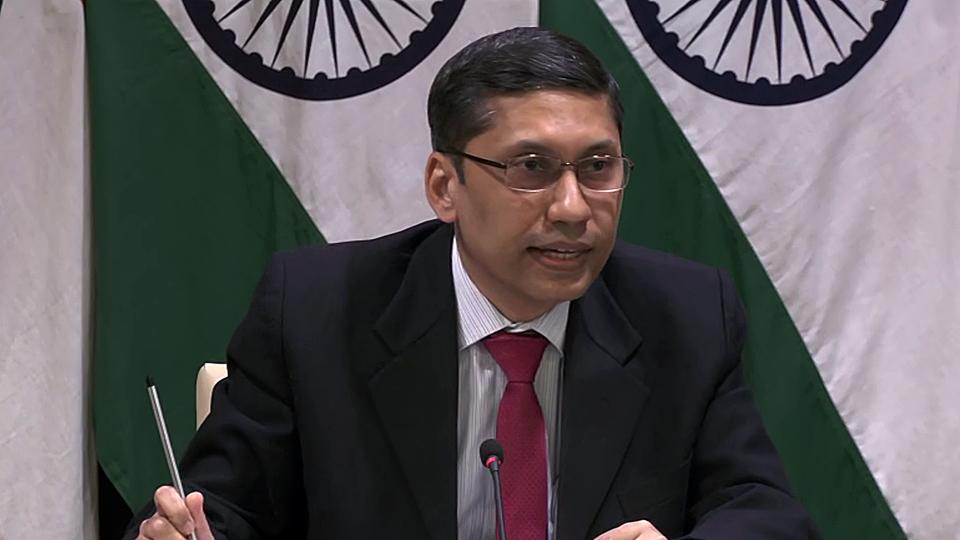
The ministry of external affairs has consistently rejected USCIRF reports. In a statement on Tuesday evening, responding to the latest report, MEA spokesperson Arindam Bagchi said that USCIRF continues to “regurgitate biased and motivated comments about India”. “We reject such misrepresentation of facts, which only serves to discredit USCIRF itself. We would urge USCIRF to desist from such efforts and develop a better understanding of India, its plurality, its democratic ethos and its constitutional mechanisms.”
In 2022, India had said the report was biased and inaccurate, and reflected “a severe lack of understanding of India and its constitutional framework, its plurality and its democratic ethos”. The government had said that the commission had a motivated agenda and it continued to misrepresent facts time and again.
The Joe Biden administration, which has made deepening the strategic relationship with India a key priority, has chosen not to heed the call. While top American officials have, occasionally, expressed concern about developments in India, the dominant mood in the top echelons of White House and State Department is to recognise India’s political complexity, have a degree of humility given America’s own troubling democratic record in recent years, focus on the bilateral relationship and ensure India is a partner in the evolving Indo-Pacific security architecture with an eye on China. From President Biden to National Security Advisor Jake Sullivan, from Secretary of State Antony J Blinken to Senate majority leader Chuck Schumer, from commerce secretary Gina Raimondo to House Speaker Kevin McCarthy, top American leaders have consistently lauded the relationship with India and highlighted the country’s democratic credentials.
But the USCIRF report said that in 2022, conditions of religious freedom continued to dip in India and governments at all levels promoted and enforced discriminatory policies including through “laws targeting religious conversion, interfaith relationships, the wearing of hijabs, and cow slaughter, which negatively impact Muslims, Christians, Sikhs, Dalits, and Adivasis”.
“The national government also continued to suppress critical voices—particularly religious minorities and those advocating on their behalf—including through surveillance, harassment, demolition of property, and detention under the Unlawful Activities Prevention Act (UAPA) and by targeting nongovernmental organizations (NGOs) under the Foreign Contribution Regulation Act (FCRA),” the report states.
The report, in particular, criticises India for laws against conversion, claiming that 12 states had criminalised conversion in various circumstances and that these disproportionately target Muslims and Christians.
The report flagged the passage of the Citizenship (Amendment) Act and the National Register of Citizens in Assam as instances of discriminatory policies, and claims that only 92 of the 700 cases filed during the protests against CAA have reached trial while many peaceful protesters languish in jail. In addition, it points to vigilantism around cow protection. “Violent attacks were also perpetrated across India under the justification of protecting cows from slaughter or transport, which is illegal in 18 states. Examples of violence against Christians, Muslims, and Dalits around suspicions of cow smuggling were reported in Bihar, Uttar Pradesh, and Delhi.”
Diaspora groups offered mixed reactions to the report. While the Indian American Muslim Council (IAMC) welcomed the report and asked the State Department to act on the recommendation, the Foundation for India and Indian Diaspora Studies pointed to the gaps in the report.
Read here: Was not informed about US classified materials leak, says Zelensky: Report
Khanderao Kand, FIIDS president, said that while USCIRF was attempting to revive its case “against India”, it was doing so with a weaker set of data points. “It conveniently lists delays in court cases but conveniently omits the fact that the Assam High Court actually ordered the implementation of the NRC, not the government. Furthermore, the report fails to acknowledge the cultural and economic significance of cows to Indian villagers, not to mention the constitutional ban on cow slaughter. It conveniently ignores the fact that the bulldozed houses were illegal and notified, and the list of omissions goes on.” Kand said the report also failed to mention the targeted killings of Hindus in Kashmir and questioned its objectivity, fairness, intentions and credibility.


