E-Paper



US House members on both sides of aisle acknowledge importance of India-US ties
Members of the Republican and Democratic parties, who sit on the subcommittee of South and Central Asia, questioned a panel of experts about the relationship

 Prefer HTon Google


Questions about India’s ties with Russia, competition with China, and the future of New Delhi-Washington relations dominated proceedings during a hearing on the US-India relationship in the US House of Representatives on Wednesday. Members of the Republican and Democratic parties, who sit on the subcommittee of South and Central Asia, questioned a panel of experts about the relationship during the hearing.
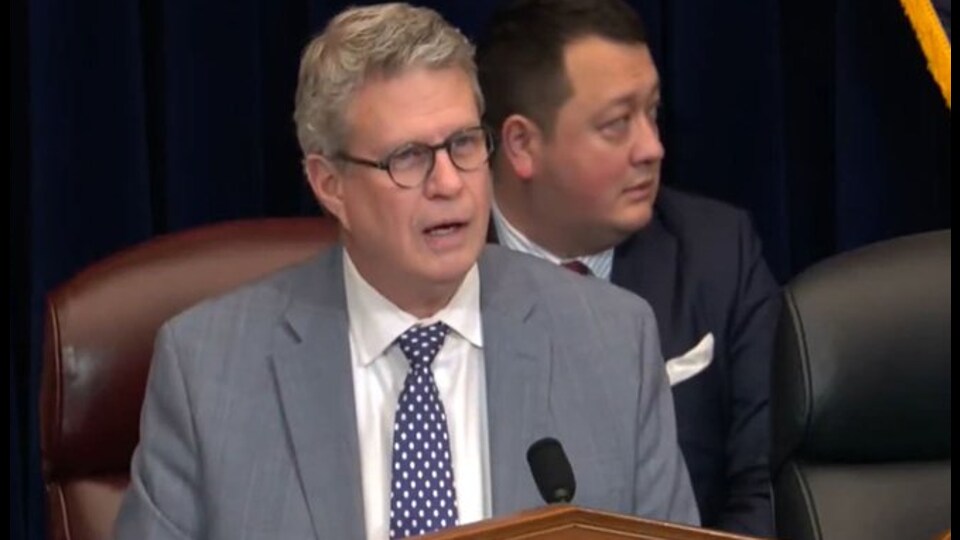
Representatives on both sides of the aisle acknowledged the importance of the partnership and its value to both nations. “The US-India relationship is no longer just important. It is a defining relationship of the 21st century. If America wants a free Indo-Pacific, resilient supply chains, and a world where democracy, and not authoritarianism, sets the rules, then our partnership with India is critical,” said senior Republican Congressman Bill Huizenga, who helms the subcommittee on South Asia.
Democratic Congresswoman Sydney Kamlager-Dove, who is the ranking member leading her party’s representatives on the committee, said the US relationship with India will be defining for both countries in how they are placing themselves in the 21st-century world order. “It is essential to sustain US leadership in all the sectors that will shape the future —defence, climate, energy, AI, space, and emerging technologies.”
Representatives emphasised that the bilateral partnership remains critical to handling the rise of China, which is a concern for both nations.
Huizenga said that close naval cooperation between the two countries to secure lines of communication and trade in the Indian Ocean acts as a check to China’s growing maritime power.
Republican Congressman Jefferson Shreve focused on the possibility of America and India cutting dependence on China in their pharmaceutical supply chains.
Congressman James Moylan, another Republican, focused on the importance of India’s position within the Quad.
The hearing also saw partisan division on the Trump administration’s handling of ties with India. Representatives, specifically from the Democratic party, criticised the 50% tariff levied on Indian goods and restrictions on H-1B visa holders.
“Unless Donald Trump changes course, he will be the American President who lost India. Or more accurately, he will be the President who chased India away,” said Kamlager-Dove, a representative from California. Kamlager-Dove added Trump’s “personal obsession” with winning a Nobel Peace Prize had contributed to a difficult time in US-India relations.
At one point in the proceedings, a member of Kamlager-Dove’s staff held up a picture of Prime Minister Narendra Modi sitting next to Russian President Vladimir Putin with the text “Trump’s failed foreign policy”. Both Republican and Democratic members raised concerns about India’s close ties to Russia.
Other Democratic representatives questioned the recent restrictions placed on legal immigration, including H-1B visas. “This President has threatened people-to-people ties by shutting down legal pathways to immigrate, reminiscent of a legacy of discriminatory quotas that made it extremely difficult for Indians to immigrate in the first place,” said Indian-American Democratic representative Pramila Jayapal.
Jayapal, who said she had also been on an H-1B visa, flagged rising cases of anti-Indian hatred, calling them a matter of particular concern.