E-Paper



US, India not doing enough on trade, investment: US Asst Secy of Commerce David Fogel
In an exclusive interview to HT, Fogel, added that while tariffs had created disruption in economic relations, investment commitments to US from countries around the world have continued unabated

 Prefer HTon Google


US Assistant Secretary of Commerce David Fogel has pitched for Indian investments in sectors like critical minerals, pharmaceuticals and automotives in the US, adding that both countries are not doing enough on trade and investment.
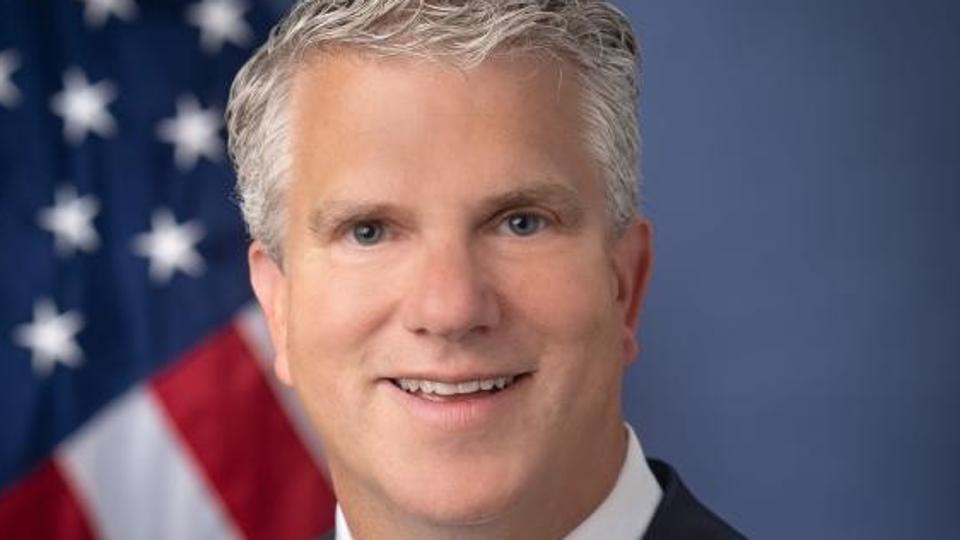
In an exclusive interview to HT during the SelectUSA investment summit, Fogel, who is also Director General of the US and Foreign Commercial Service, added that while tariffs have created a significant disruption in economic relations, investment commitments to the US from countries around the world have continued. US Ambassador to India Sergio Gor announced that Indian companies had announced $1.1 billion in US investment commitments during the summit.
Edited excerpts:
Q. Both India and America have concerns about overproduction from China. Could I ask you what US companies and Indian companies together can do to handle that challenge?
A. We’re looking for as many allies as we can have in terms of trade. So we want to work together. India has the fifth largest economy in the world. It is number one in terms of population. We’re longtime allies, and we want to enhance our relationship with India. That’s a big priority, because there’s so much opportunity to be fair. We’re not doing enough with India in terms of the potential, and so I think that’s the focus. And to the extent that has benefits vis-a-vis other economic competitors of ours, that’s a big plus.
But we’re just focused on growing the pie and growing the trade between the US and India.
Q. Are there any specific industries you’re trying to get Indian companies interested in when it comes to investing in the US?
A. We’re pretty agnostic as to industry. We let the companies and the countries influence that. Certainly we have certain priorities in terms of sectors overall that we’re looking to rebuild in America. Critical minerals is one. Semiconductors is another. Pharmaceuticals and automotives as well. Those overall are strategic sectors for us. But we love the fact that Indian pharma companies are looking to invest in America, including the announcements that were made here at the SelectUSA summit. This has historically been a strong suit for India. So we welcome that.
Q. What exactly is the pitch that you’re making about coming into the United States and setting up a presence there?
A. The pitch is that it is a golden era in America. There’s a kind of a reindustrialization renaissance happening in America. People recognize it’s always been the number one destination for foreign direct investment. But today, even more so, under President Trump and Secretary Lutnick, we’ve seen a record amount of investment commitments from abroad in the trillions of dollars. Part of that is due to the trade deals that we’ve been negotiating. But even independent of the trade deals, we’ve seen massive investment commitments. The main reason is America is the most hospitable place for business and foreign investment under President Trump. We have less regulation and we have a favourable tax regime. We have the rule of law, predictability, stable capital markets and the most robust capital markets in the world. So it’s very attractive.
Q. How do you see the trade agreement between India and the US opening up opportunities to bring in more investment into the United States?
A. Well, it depends on the agreement. Some of them have explicit investment commitments as part of the deal. For example, Japan, Korea and Taiwan are three of several agreements that have explicit investment commitments. India is still being sort of finalized, is my understanding.
I think there was an agreement in principle, it’s being revisited. But the investment commitments are a pretty important component of these trade agreements, because it demonstrates that closer economic ties lead to closer national security ties over time, bringing countries together. Economic interdependence is important, and that’s the message the President is trying to send.
Q. Indian companies have concerns about the unpredictability in US tariff policies, especially after the US Supreme Court’s decision striking down President Trump’s reciprocal tariffs. How are you addressing that uncertainty?
A. From our perspective, we don’t think there’s much uncertainty. Frankly, when the tariffs were first announced, there was definitely a big disruption, because it was a big change in policy, but then things settled down over the next couple of months, and things became pretty predictable. Countries started recognizing that there was a pretty consistent tariff rate that would apply. The Supreme Court decision put that a little bit in question, but then immediately we came out with a new tariff regime with different authorities and basically settled back at a similar rate. We’ve had a number of countries come out and say, notwithstanding the Supreme Court decision, they have reiterated their commitment to the trade agreements that were reached. I think they’re doing that because they see these agreements as mutually beneficial economically. It’s not a one way street. It’s about mutual benefit. More open trade between two countries is going to be more beneficial for both countries. And that’s, I think, the sort of the big misunderstanding here is that it’s all about America. It’s not just for the benefit of Americans. It is for both countries.