
 E-Paper



Use of single-use plastic on rise in spite of crackdown in Bengaluru
Despite the ban on the product since 2016, usage of SUP went up during the Covid-19 pandemic as the fear of having to share steel cutlery and plates forced eateries and other establishments to rely on the product to serve the customers.


Despite several bans and restrictions, the consumption of single-use plastic (SUP) has increased in Bengaluru, according to government officials, who have intensified their crackdown on these materials.
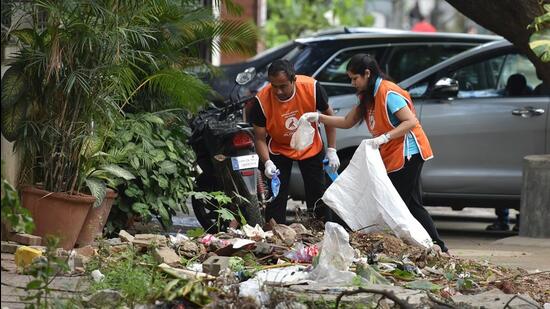
“It is a continuous process and we are cracking down on the usage of single-use plastic items in different zones (of Bengaluru). On Monday, we seized around 1000kg of SUP,” Bruhat Bengaluru Mahanagara Palike special commissioner (solid waste management) Harish Kumar said on Wednesday.
He said that most of these plastic items are coming from other states to Karnataka where demand for these products has seen a sharp increase.
Despite the ban on the product since 2016, usage of SUP went up during the Covid-19 pandemic as the fear of having to share steel cutlery and plates forced eateries and other establishments to rely on the product to serve the customers.
The dependence on disposables like plastic cutlery, cups, containers, low-micron count carry bags, garbage bags and higher consumption of packaged drinking water as a safety measure to avoid contracting Covid-19 has put on back burner the efforts to ring in a “revolution” to phase out SUP use as outlined by Prime Minister Narendra Modi in his 2019 Independence Day speech.
The government had banned 19 items on this list, according to its statement on June 28. The items include earbuds with plastic sticks, plastic sticks for balloons, plastic flags, candy sticks, ice- cream sticks, polystyrene (thermocol) for decoration, plastic plates, cups, glasses, cutlery such as forks, spoons, knives, straw, trays, wrapping or packaging films around sweet boxes, invitation cards, cigarette packets, plastic or PVC banners less than 100 micron, stirrers.
The city corporations were already in a fix over face masks, shields, protective gear and other hazardous waste finding its way into regular piles of garbage and the increased use of SUP has added to the challenges since most of waste is dumped into landfills or found on streets where it enters drains and adds to the possibilities of water logging. The risk of polluting water bodies is also at an all time high.
Calling the laws banning the plastic items “inconsistent” the All India Plastic Manufacturers Association argues that they (laws) don’t focus on raising awareness.
India’s per capita consumption of plastic remains at 10.4 kg per annum as against 18 kg in Singapore, 22 kg in China and 34 kg in USA.
Manufacturers say that there is not enough incentive for the producers to shift to bioplastics.There is no awareness regarding the product that has the potential to mitigate the harm caused by regular SUP, said a manufacturer, wishing not to be named .
“The alternative suggested by the government and the availability for its base raw material is a concern. Raw materials like starch, cellulose, sugarcane have to be provided by farmers..... But the technology to go with the alternative takes time and so does the certifications for various tests,” said president of the Karnataka State Polymer Association Vijay Kumar.“But alternatives like biopolymers and compostables are available,” Kumar added.The association replaced the word “plastic” with “polymer” to rid itself of the negativity associated with the product.
Kumar said that SUP accounts for just 3% of the total plastic produced and consumed in the country. This, according to estimates, is around 2 lakh metric tonnes per year as alternatives are at least five times more expensive than the regular products.
He said that the per-capita consumption of plastic is currently 11 to 13kg in India and is likely to see an increase of 20-23% in the short-term period.


