E-Paper



Violence in Nagaland: Mobs torch buildings over local body polls, army deployed
Angry mobs protesting against holding of urban local body (ULB) polls with reservation for women burned down several government buildings in Nagaland’s capital Kohima

 Prefer HTon Google


Angry mobs protesting against holding of urban local body (ULB) polls with reservation for women burned down several government buildings in Nagaland’s capital Kohima on Thursday, prompting the administration to clamp prohibitory orders and deploy additional security personnel.
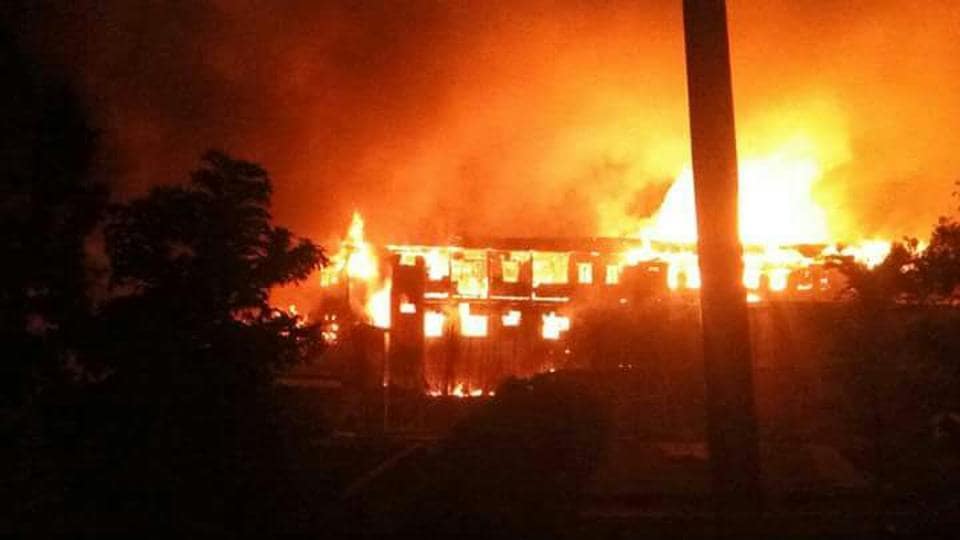
Thousands of youths armed with spears, machetes and catapults went on a rampage and burned down several buildings and ransacked others as the violence shifted from Dimapur to Kohima.
Police told HT that the Kohima municipal council office and some other buildings were set ablaze. A senior officer said there was “total breakdown of law and order”. Kohima had been on the edge for some time and most of the security had been concentrated around the state secretariat which left other areas vulnerable.
“Mobs are on rampage and the situation is very tense. Our men are on the ground trying to control the situation. We, are being assisted by Assam Rifles” Nagaland’s director general of police (DGP) LL Doungel told HT.
Kohima superintendent of police Joseph Hesso stated that the situation was very tense, but refused to divulge more.
According to an agency report, five columns of the army have been deployed to control the situation.
Read | Nagaland continues to remain tense; curfew still on in some parts
Mobile internet services have been blocked and additional forces sent to handle the situation.
Two persons were killed and several others injured in police firing in Nagaland’s commercial hub of Dimapur on Tuesday night during violent protests against the elections.
Chief minister TR Zeliang, who had earlier signed a deal with tribal bodies opposed to the polls, to postpone the election by two months, gave a go-ahead for polling on February 1 following intervention by the Gauhati high court.

On Wednesday, the bodies of the two youths were brought to Kohima -- and the scene of the protests also moved to the state capital.
Tribal organisations, upset with the state government, have decided to continue with their protests till Chief Minister Zeliang steps down.
“There is anger among the people. Unless the situation improves, we will continue our protests,” Kevichata Sechi, vice president of Angami Youth Organisation, told HT.
Read | Chaos in Nagaland as govt decides to go ahead with civic polls after HC order
Nagaland’s powerful tribal organisations are opposed to holding of ULB polls with 33% reservation for women. They say it violates Article 371A of the constitution that grants special status to Nagaland and safeguards its traditional laws. Tribal laws do not allow women in administrative positions.
Nagaland has never elected a woman legislator since it got statehood in 1963.
(With agency inputs)